 WeeklySA_Admin
ADVERSE: A Ugandan man wrongly diagnosed with HIV spent seven years on antiretroviral treatment before tests proved he was negative. The High Court ruled the clinic negligent and awarded more than R1-million damages for the life-altering error, holding out a cautionary tale for South Africa for reliance on healthcare facilities for testing and treatment, warns a legal expert Mtho Maphumulo in this article…
By Mtho Maphumulo
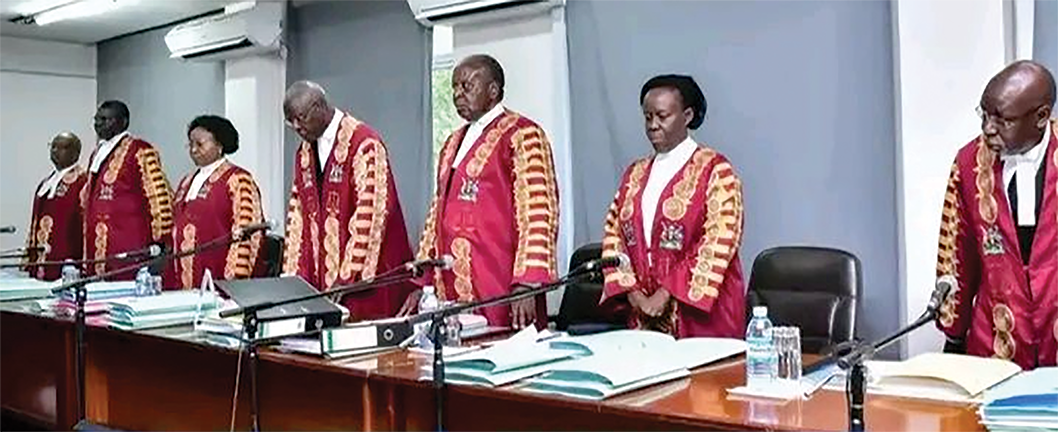
The High Court of Uganda, sitting at Jinja, delivered a noteworthy judgment in an HIV misdiagnosis and medical negligence case on February 18 this year.
In July 2016, the plaintiff attended the defendant’s facility for HIV testing and was diagnosed as HIV positive.
He was immediately enrolled on antiretroviral therapy (ARVs), which he took for approximately seven years, experiencing persistent adverse side effects throughout.
In 2022, when the plaintiff sought National Social Security Fund (NSSF) benefits, independent PCR testing returned HIV negative results.
Subsequent retesting by the defendant also confirmed a negative result in January 2023. The plaintiff alleges that as a consequence of the misdiagnosis, he lost his marriage, employment, and social standing.
Evidence revealed that the defendant failed to perform quality control on testing kits on the material day, altered register entries without countersignature, and could not produce standard operating procedures as required by national guidelines.
The issues were: whether the defendant was negligent in conducting the HIV test; whether erroneous results were issued; and whether ARVs were negligently dispensed for seven years, and what remedies were available.
Court findings
Applying existing principles from case law, the court found that the defendant breached its duty of care. The defendant’s conduct was inconsistent with WHO Guidelines on HIV Testing Services (2015), which require that materially inconsistent results be reported as inconclusive and the client to return for retesting after 14 days.
The defendant failed to follow this protocol and instead used a third test as a “tiebreaker” to issue a positive diagnosis.
The court concluded that, on a balance of probabilities, the Plaintiff was never HIV positive and the Defendant issued erroneous results in contravention of section 17 and section 48 of the HIV and AIDS Prevention and Control Act.
Relying on the English tort law decided case of Cassidy v Ministry of Health, the court held that hospitals owe a duty to ensure treatment is appropriate to the patient’s actual condition, and where the foundational diagnosis is flawed, continued treatment becomes wrongful.
The court awarded UGX 140 000 000 (R720 000) as general damages and UGX 50 000 000 (R260 000) as aggravated damages, together with interest at 10% per annum and costs.
Relevance for SA
This judgment is relevant for South Africa given the country’s significant HIV/AIDS burden and reliance on healthcare facilities for testing and treatment.
It reinforces that compliance with internal protocols does not absolve healthcare providers where international best practice standards are not followed – therefore, there has to be consistence in the protocols, unless deviations is necessary based on the context.
The court’s reliance on statutory provisions concerning HIV testing standards provides a useful comparator for practitioners applying the National Health Act.
The emphasis on human dignity resonates with South Africa’s constitutional framework, and the approach to quantifying damages for medical negligence involving prolonged suffering offers useful guidance. – GoLegal
* The writer, Mtho Maphumulo, is a Senior Associate in the dispute resolution department at Adams & Adams, with a specific focus on insurance and financial sector law matters. Adams & Adams is an internationally recognised full-service corporate law firm, based in South Africa