 WeeklySA_Admin
TURN-AROUND: A total 18 network corridors across the country prioritised for rehabilitation in the coming months following rampant vandalism
By WSAM Reporter
The Passenger Rail Agency of South Africa (PRASA) today reiterated its commitment to the full recovery of commuter rail services nationally, though still facing a mammoth task ahead in repairing the devastated rail networks across the country
“Considerable progress has been made in restoring commuter services nationally, with 18 corridors recovered nationally, and 16 corridors prioritised for recovery in this financial year,” PRASA said in statement.
PRASA expressed confidence that it will deliver on its plans given its turnaround momentum. But the state agency still faced gigantic challenges when it comes to rehabilitation of the network, such as security, lack of scarce skills, security, tender hijacking, large-scale damage to networks in the aftermath of flooding in KZN and the Cape Flats) and sourcing of material.
The cost of flood damages to the country’s rail infrastructure in KwaZulu-Natal stood between R2,6 billion and R2,9 billion. With a network of over 30,000km (18,600 miles) of track, South Africa had the most advanced railway system on the continent, but it has been ripped up – and still is – stripped by criminals looking to make money from scrap metal.
The agency announced that:
- Eight lines recovered in the Western Cape region, with six of these lines in operation with the new Electric Motor Units, otherwise known Isitimela Sabantu.
- Trains were running on the Central, Southern and Northern corridors, stopping at 88 stations out of 121 stations in the province.
- Five corridors in the Western Cape earmarked for recovery in this financial year – Nyanga to Philippi; Philippi to Chris Hani; and Philippi to Kapteinsklip; Bellville to Strand; and Cape Town to Muldersvlei.
- Approval to run a commercial service with the new electric motor trains on the KwaMashu to Durban corridor secured.
- Commuters on the route can look forward to the built-in safety features that come with the new trains such as on-board CCTV cameras, an anti- crash system, wider doors that allow for easy entry and exit and air-conditioning, voice alert and information display systems to ensure commuters get off at the right destination.
- The new, blue and white modern trains, popularly known as Isitimela Sabantu, will be running on the KwaMashu Corridor between Dalbridge and Bridge City from today during the off-peak period.
The blue and white trains are already running on the Southern Corridor between Durban and Umbogintwini and Durban to Cato Ridge lines.
Outlining its ongoing plans, the agency added: “The plans are part of PRASA’s wider strategy to improve passenger rail services across South Africa and make rail a safe, reliable, and affordable mode of transport,” the agency said.
Additional plans to improve passenger train services for Cape Town included increasing the number of trains running on the city’s rail network; improving frequency of trains through the recovery of signalling; and upgrading of train stations. The parastatal also planned on building on the gains in the safety and security of passengers by investing in security and facilities management.
R7,5bn stock rollout
Briefing the Parliamentary monitoring committee in June this year, Prasa management said its modernisation programme had three pillars: rolling stock general overhaul, rolling stock fleet renewal programme, and signalling and communications.
It also reported that the total cost of refurbishing rolling stock would amount to about R7,5 billion over five years. Five contractors had been appointed to do this work, and it had the potential to create 2 000 jobs. A total of 96 new trains had been provisionally accepted, some of which had already been delivered to Gauteng, Kwazulu-Natal and the Western Cape.
The automation of the signalling network was 99% complete in Gauteng, 92% complete in the Western Cape (where human settlements in the rail reserve had caused delays), and 73% complete in Kwazulu-Natal (where the need to appoint a new contractor and recent flooding had also caused delays), according to the agency.
Challenges
Prasa outlined as its ongoing challenges the rehabilitation of the network, including lack of scarce skills, security, tender hijacking (work being obstructed by people demanding to be involved), effects of climate change (flooding in KZN and the Cape Flats) and sourcing of material.
Security
The agency said security was a fundamental requirement, without which all PRASA rebuilding efforts might be undermined. It would cost PRASA R1 billion over the next three years, but it should not be regarded as a PRASA problem alone but as a national problem.
PRASA was requesting permission to transfer R6,9 billion from its capital expenditure budget to operational expenditure to address its current operational challenges.
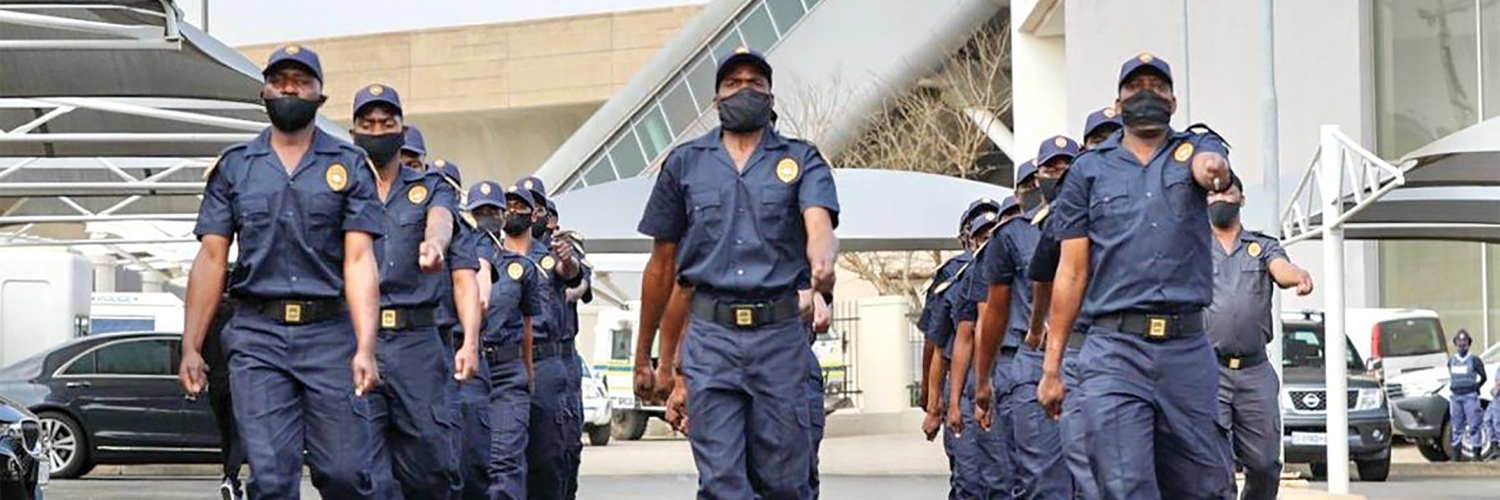
Last Friday, 334 Protection Services Officers were sworn in as peace officers under Section 334 of the Criminal Procedures Act during a passing-out parade officiated by Ekurhuleni District Commissioner, Major-General Sithole, at Esselenpark in Kempton Park.
The Peace Officer status gives them the powers to make arrests, issue written notices in terms of the Criminal Procedure Act, complete dockets, and powers to detain.
The Peace Officers received training in Law in General. Law of Evidence, Criminal Procedure, Criminal Law, the Bill of Rights, and the Child Justice Act. – Compiled by Lehlohonolo Lehana and Len Maseko