
 WeeklySA_Admin
LONGEVITY: Soweto crooner of heyday township soul music outfit All Rounders
By Gugu Sibiya
Once upon a time he was a darling of the airwaves and a star-attraction at festivals until – like so many of his time and before – he was cast aside for new talent. That’s when Babsy Mlageni’s voice started fading away from the public.
Painful as it was, he desisted from rolling into a big, self-pitying old ball and falling into a ditch. Instead, Bra Babsy, as he’s fondly known, locked himself in the studio and ensured the beat goes on –the result being the recently dropped single Kumnandi. To add a bit of pizzaz and finesse, he roped in his friend and highly respected producer-cum-singer Joe Nina to produce the single.
“At the golden age of 81, I’ve just dropped Kumnandi. I wrote it before Covid and it’s about the sheer joy you derive from chilling with the love of your life. I revisited the song in 2022. It dawned on me that it’s now great to be alive and celebrate the milestone of hitting the big 80, when most of my peers are gone and I’m still here, doing what I love best, singing,” he reminisces, smiling from ear to ear.
“Working with Joe all these years, I’ve nothing but admiration for him. Typically, he didn’t disappoint, adding magic to Kumnandi.
His grasp for showbiz, craft, wisdom and commitment to working with people living with disability, is commendable. It doesn’t stop in the studio but he always featured Steve Kekana and I wherever he performed.
“With the many Department of Arts and Culture-sponsored festivals, they still fail to insist on a quota for artists living with disability. Not to mention mature acts sidelined by promoters when they still have a following. Not only do they need to eke out a living, but be dignified,” Babsy stresses.
The award-winning singer’s artistic journey began at the Athlone School for the Blind in Cape Town. “Our teachers were musically inclined so the school was packed with instruments. We invited all newcomers to join the party. After a long day learning to master the art of carpentry, weaving carpets and making baskets, who wouldn’t jump at that opportunity?
“After school we’d rush to practise. I chose the guitar because it was easier to handle. The highlight of all the sweat and tears was the year-end concerts we hosted. We’d invite girls’ schools only. They went crazy, screaming from the first note to the last song.”
“After the show, the girls gave us royal treatment” he coos. “Years later, I thought about this, experiencing groupies. They’d follow groups from town to town – Pietermaritzburg, Durban to Umtata, at their expense.
“Among them, some were mad about the lead singers, guitarist, pianist or drummer. We were young, having fun. We grew. I’ve been married for years, with children and great-grandchildren. Things have changed, youngsters must look after themselves,” advises the man who’s always boasted about his love-of-his-life yellow-bone.
“During apartheid, job reservation (laws) extended to people living with disability at municipality offices. Still they couldn’t absorb everybody. After school in 1961, I joined BN Agency delivering publications like the iconic World news-paper and Drum magazine.
“By then, I’d penned Sala Emma in 1963 and performed at a festival in Lesotho. The crowd reaction was out of this world, totally unexpected, it gave me the courage to resign and focus on my music” he says, explaining that his career really took off in 1967.
Sala Emma turned Babsy into an overnight success. Other evergreen catchy, message-laden hits like Nankumntu Mbambeni Ngesandla Nimceden, Hamba Thukela, Bua Nnete and Asithandaze, among others became anthems. “I never thought these songs would stand the test of time. It feels good and I thank God for that.
“The musical landscape has changed a lot. Back in the day it was about LPs, cassettes, CDs and now USB sticks. From a whole album to a single available on digital platforms. Otherwise it’s a five track EP. I worry for people my age and those in the far-flung areas whether it is easy for them to download our music. We’re adapting to the new norm and the nice thing is that we’re penetrating new markets.”
Gratefully, he reveals: “Last year I performed at the We Can Arts Festival, exclusively for people living with disability in Durban. I closed the show but after those epic performances by younger acts, I had to up my game to maintain the tempo.
“Fest lovers, singing along with such gusto, told me I was killing it, leaving me with a warm, fuzzy feeling. I thank the fest organisers for remembering us forgotten artists and giving us back our dignity. Even more gratifying is the five artists who echoed Steve and Lazarus Kgagodi‘s thanking me for being their inspiration.
“My prayer is for the government to assist us to realise our dreams of earning an honest living and being independent. It’s also about the legacy built by us, Koloi Lebona, Steve and Lazarus Kgagodi. I really appreciate the support of caring people like Joe,” ends Babsy
“For as long as my voice remains melodious and my feet can still carry me, I’ll continue dropping gems and singing. Remember, a soldier dies in the battlefield with his boots on,” he states, dispelling the myth that 80-year olds belong to days of rocking chairs on the patio.
NIMBLE-FOOTED SPIKIRI NAILS BATHU AWARD
ACCOLADE: Stylish sneaker brand honours Soweto music icon and his band for sterling contribution to South Africa’s entertainment industry…
By Gugu Sibiya
SPIKIRI NAILS
BATHU AWARD
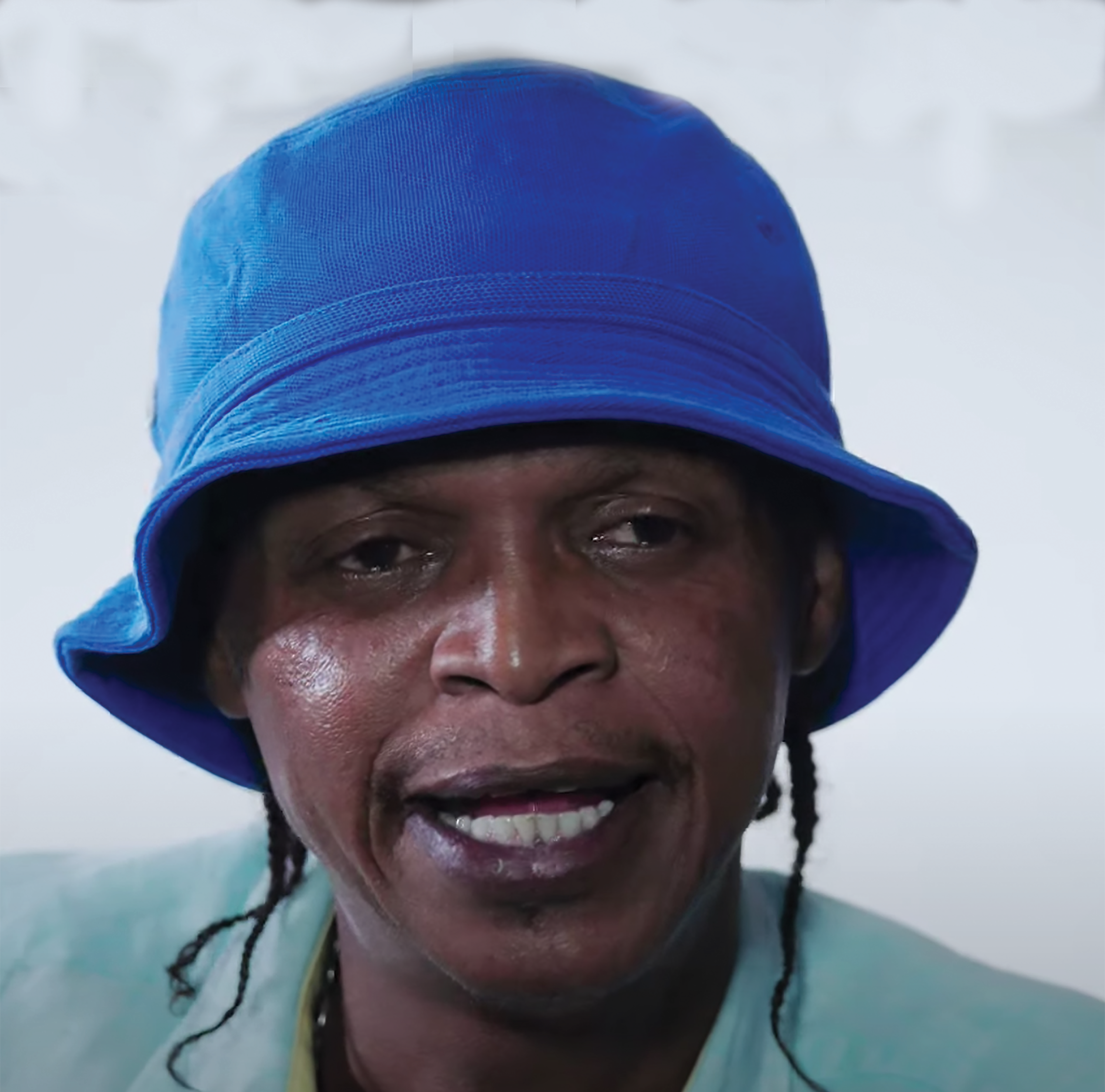
Dynamite – as the adage says – comes in small packages, and so the case with Soweto born nimble-footed Spikiri, who has been honoured together with his Trompies by township sneaker brand Bathu for their contribution in the entertainment industry.
Still wallowing in raptures of ecstasy, Spikiri, born Mandla Mofokeng, says he’s over the moon over the unexpected recognition.
“I’m delighted that, among deserving movers and shakers, Bathu also singled me out for this honour. It’s not just about the music, but my kasie roots lifestyle, staying true to that and the way I dress.
“The manner in which the group and have conducted ourselves has succeeded in contributing to the mindset that pantsula wear or takkies are not about being a tsotsi.
Many upstanding people are proud to now be seen in the kasie get-up we grew up on. Getting a pat on the back for influencing that movement is priceless” he observes.
“As an ambassador of Bathu, I’ll be endorsing their brand new range of takkies, Ndofaya. Named after our massive debut offering. It’s incidentally the nickname for our township Meadowlands. So this is big deal for us,” he boasts.
Other artists who made the Bathu honour roll include Boom Shaka, Mafikizolo, Thebe, Christos and Bongo Maffin. Coincidentally all these music heavyweights cut their teeth at the legendary Kalawa Jazzmee stable, one of the most successful, locally owned recording company that’s stood the test of time over 30 years of their being in the game.
“After years of spotting and popularising takkies, it took a Black-owned, local company to recognise our contribution to township culture. Yet it never crossed big brands’ minds who’ve been riding on our coattails, to acknowledge us. I’m so proud to be associated of Bathu.
I hope this collaboration signals the awakening of more of our people’s businesses to work together with like-minded brands for mutual benefit. We are here because people believe and support our music” he says, emphasising the late Dr Ellen Khuzwayo’s philosophy of lifting one as we go up.
Spikiri owes his music career to the day he landed a gig in Chicco Twala’s 1985 hit song I Need Some Money video shoot. “I was with a friend, fellow dancer and Trompies member, Jakarumba. While working with Chicco, I took up piano lessons in 1987, earning space in his band as a pianist”.
He adds: “(In the) Meantime my friend Mdu Masilela and I formed MD DeLux band. We did well, but three years later, we were ready for new challenges.
I went to work for Phil Hollis at Dephon Records and started recording songs with MaHoota, Jakarumba and the late Mjokes. Trompies was born. We debuted with the banger, Sigiya Ngengoma. Eugene Mthethwa joined us later and here we are over 30 years later,” he says bursting with pride.
Recipient of SAMA and Kwaito Awards’ Lifetime Achievement Awards among many other accolades over the years, Spikiri is passionate about development. “I enjoy working with undiscovered talent, both on my solo and in Trompies projects.
“God willing, I’d like to raise my children, use my talent to produce lots of music, study online and work hard on my businesses. What Bathu did for us, artists, who’ve been in the trenches for a while, is incredible and highly appreciated” he says with feeling.