
 WeeklySA_Admin
CAPABILITY: Initiative part of efforts to empower youth as means to reduce their vulnerability to the scourge…
By WSAM Correspondent
The University of Illinois is leading a partnership of two other American tertiary institutions to launch an international drive to enable youth and young adults to achieve financial security and stability at home to avert their susceptibility to labour trafficking.
The partnership involves the University of Georgia’s Centre on Human Trafficking Research and Outreach (CenHTRO), as well as researchers at the University of Illinois School of Social Work’s Financial Capability and Asset Building in Africa initiative (FCAB Africa), University of North Carolina School of Social Work, and Centre for Social Development (CSD) in the Brown School at Washington University in St Louis.
The multi-institutional effort is funded through a $5.2 million (R97 million) grant from the United States Department of State, with the University of Georgia as the lead institution. After developing and fielding the intervention in Malawi and Zambia, the FCAB Africa team hopes to scale it for other areas on the continent.
Established in 2021, CenHTRO focuses its resources towards combating human trafficking in Sub-Saharan Africa. Based at the University of Georgia, it conducts research, develops programming, and influences policies aimed at drastically and measurably reduce human trafficking and other forms of exploitation.
The heart of the new project is an intervention to support youth, young adults, and labour trafficking survivors in creating opportunities that will ensure financial security at home. That means cultivating opportunity by increasing livelihoods, financial competencies, and access to beneficial digital financial services.
In southern Africa, as elsewhere, high vulnerability to poverty and false promises of employment lure many youth from their homes and into the hands of traffickers who exploit them through forced labour.
The International Labour Organisation (ILO) estimates that there are nearly 660 000 forced labourers in sub-Saharan Africa. One fifth of all forced labourers in Africa are victims of trafficking, but this excluded Africans who are trafficked for work outside the continent.
In sub-Saharan Africa, 80 percent of forced labour is imposed by private agents for economic exploitation while the state-imposed scourge accounts for 11 percent and forced commercial sexual exploitation for eight percent.
The ILO reports that total annual profits generated by trafficked forced labour in Africa amounted to US$ 159 million (R2,9 billion).
CenHTRO director David Okech, who is also principal investigator and professor of social work at University of Georgia, said: “Unemployment and poverty push people to migrate for better opportunities. This makes them vulnerable to human trafficking situations”.
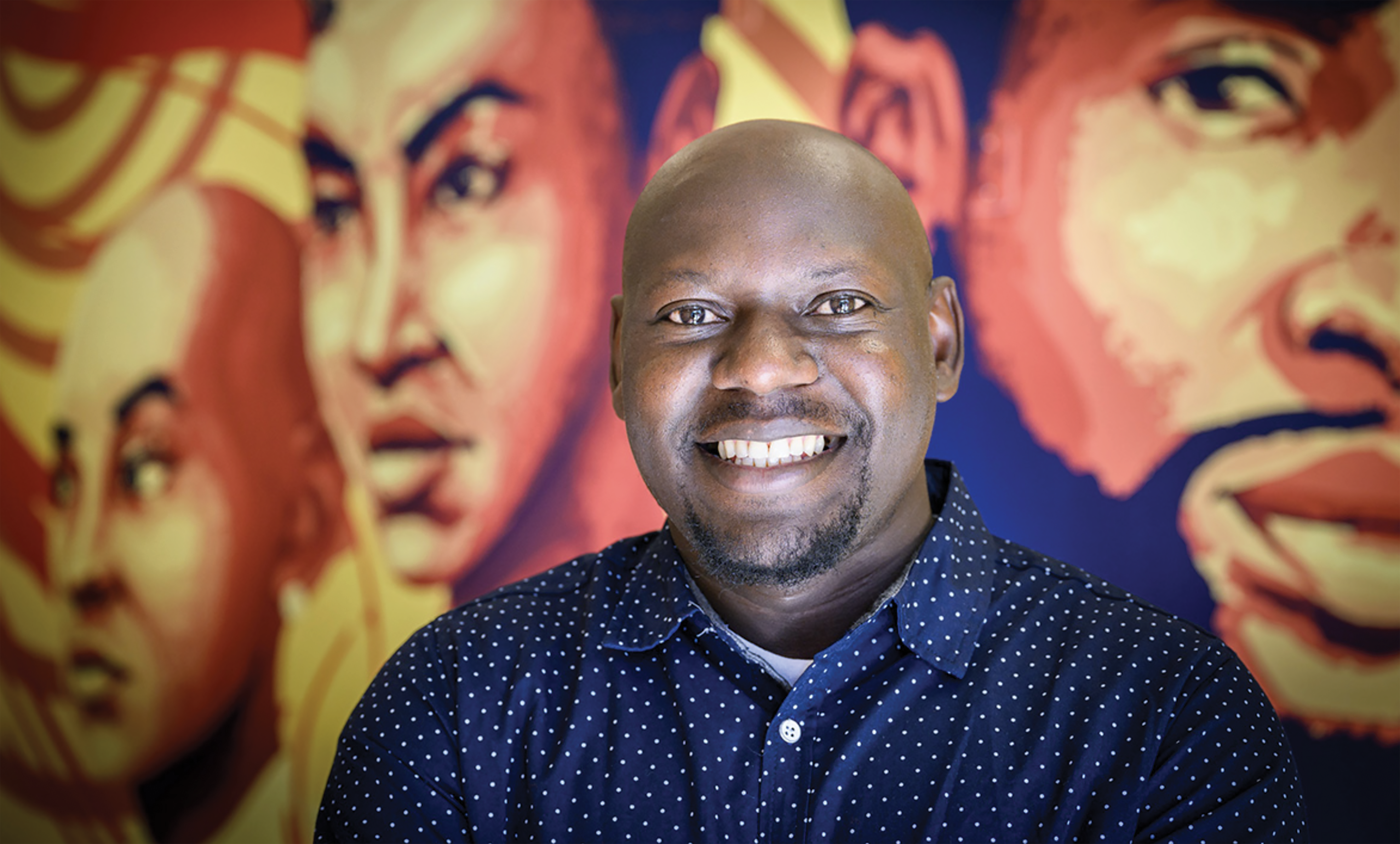
David Ansong, associate professor at the UNC-Chapel Hill School of Social Work, said he was pleased that the FCAB Africa team was leveraging insights from their initiatives across the continent to lead the design, implementation and testing of the FCAB component of the project.
“We are helping build evidence on financially focused innovations that can mitigate susceptibility to labour trafficking,” Ansong said.
“Applying a gender-transformative approach and a human-centred design, we will lead a process to co-design with community stakeholders, and test a bundle of financial capability and asset building innovations, with the aim of improving the financial resilience of at-risk youth and survivors,” added Moses Okumu, assistant professor in the University of Illinois School of Social Work.
“We intend to localize evidence-based entrepreneurship programs that equip vulnerable youth with skills and resources to support their economic development and reduce their vulnerability to labor trafficking,” said Jamal Appiah-Kubi, a post-doctoral research fellow at UNC.
“Financial technology will be a critical component in this effort,” said Lissa Johnson, associate director of CSD. “By engaging fintech partners and other institutional structures, we will be able to test the potential for technology to expand inclusion and for scalability in the region and in other countries.”
“As part of this work, we will also consider issues around consumer protection, given the increasing susceptibility to financial fraud and disastrous borrowing through financial technology platforms,” said Joshua Muzei, an informatics doctoral student at UIUC.
Through human-centred design workshops in Malawi and Zambia, the FCAB Africa team is working with agency partners to identify and co-design contextually attuned livelihoods and financially focused supports. With these supports and the other services, the team seeks to cultivate access to capital, credit, and knowledge on how to start a business or secure another livelihood.
“If people have what they need to build lives in their communities, they will be less likely to risk crossing borders and relying on traffickers for jobs,” explained Michael Sherraden, the George Warren Brown Distinguished University President and founding director of CSD. “By working together with community stakeholders in building financial inclusion and opportunity, we can form policies that support vulnerable youth and survivors.”
All partners in Zambia and Malawi will shape the final form through close collaboration. They will design and facilitate intervention delivery, and evaluate the project with methodological rigour.
“The team has a set of ideas we believe will be impactful – approaches that have been tried and tested elsewhere,” said Ansong. “But our partners in Malawi and Zambia will help us adapt those into strategies that respect community norms, build upon existing policies and practices with vulnerable youth, young adults, and survivors.”
Survivors Action Groups will provide input and guidance on intervention development and delivery. In addition, the project will recruit survivor navigators – young adults who are between the ages of 18 and 37 and at risk of being trafficked or are survivors of trafficking. The navigators will assist in the development of the intervention and participant recruiting, and will provide support to the participants.
Research partners from the Institute of Economic and Social Research at the University of Zambia and from the Centre for Social Research at the University of Malawi will gather data from participants, navigators, and the action group, enabling evaluation of whether the offered supports are effective at lessening vulnerability to trafficking. Working with these research partners assures greater project success but is another dimension of building international capacities.
“As part of the project, we will tailor and validate financial capability measures and employ econometric methods to tease out the effects of the various FCAB intervention components throughout the pilot testing and adaptation phase,” added Isaac Koomson, an economist at the University of Queensland in Australia and FCAB Africa faculty director at CSD.“This project is participatory action research at its finest,” Okumu said. “We are working to diminish the drivers of vulnerability and cultivate opportunity.”
“If the project succeeds,” he added, “youth in these countries will have a stake in the game, a way to build something for themselves and their families without surrendering to the horrors of trafficking.”
Okumu leads the co-development and testing of interventions that build on existing support systems and equip community members with the resources for migrant and mobile populations across Africa.