 WeeklySA_Admin
CHARISMATIC: Killing and controversy explored in new Don King series
By Sports Reporter
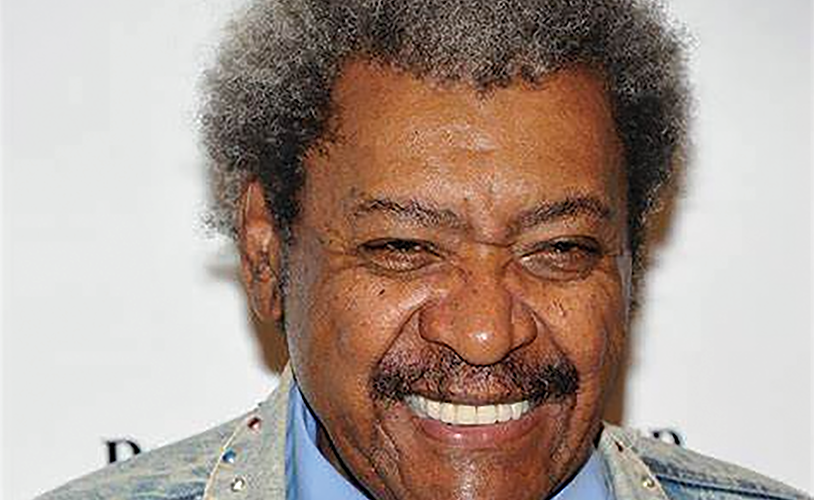
A new podcast series delves deep into the life and times of one of sport’s most charismatic and controversial figures – boxing promoter Don King.
King, 92, was the man behind some of the most famous fights in history, including the ‘Rumble in the Jungle’ between Muhammad Ali and George Foreman in 1974 and the 1975 ‘Thrilla in Manila’ between Ali and Joe Frazier.
He has promoted some of the biggest fighters in the sport, including Ali, Foreman, Frazier, Larry Holmes, Roberto Duran and Mike Tyson.
However, King is also a controversial figure. Before becoming a boxing promoter, the American made a living through illegal gambling and spent time in prison for killing a man.
A number of the boxers who King has worked with have gone on to sue him, including Tyson, who famously took out a $100m court case against his former promoter before accepting a $14m settlement in 2004.
In 1985, he was found not guilty of tax evasion and in 1998, after facing fraud charges carrying a potential forty-year sentence, King was once again acquitted. Over the course of eight revealing episodes, Steve Bunce and three-time world heavyweight champion Lennox Lewis explore King’s remarkable life, with incredible stories from fellow promoters, fighters, journalists – and even an FBI agent who investigated him.
Here are a few takeaways…
Boxing journalist Colin Hart says he nearly fell off his chair laughing when he first encountered King at a press conference, speaking about a plan to stage a fight in Zaire (now the Democratic Republic of the Congo) at 4am.
As a young man in Cleveland, King ran a numbers racket – an illegal form of gambling. In 1954, when a group attempted to rob one of his gambling houses, King shot dead one of the men, named Hillary Brown.
A court ruled that killing ‘justifiable homicide’ and he was released. However, in 1966, King stomped Sam Garrett to death over a gambling debt and he was convicted of manslaughter. He spent just under four years in prison before being released on parole in 1971. In 1983, King was pardoned.
Using charm to get out of danger
Tyson once labelled his former promoter “ruthless”, “deplorable” and “greedy” In episode two, Matchroom Sport founder Barry Hearn tells an incredible story about a time he witnessed the true strength of King’s persuasive powers. Hearn claims he was sat in one of the promoter’s offices with King’s former aide, Al Braverman, when a man who was carrying a gun entered the room looking for King. Hearn says that after about 20 minutes, King emerged from another office with his arm around the young man. By this time, the assailant was wearing a “child-like grin”, while his promoter told him what a great heavyweight he was.
Hearn says: “This kid, who I believe sincerely was going in there to shoot Don King, was completely mesmerised by his charm offensive.”
‘They shot holes in the ceiling’ – when King’s boxers rebelled Tim Witherspoon (right) was part of what’s become known as the ‘Lost Generation’ of heavyweights who failed to live up to their potential in the 1980s
In episode five, Tim Witherspoon tells a story about the time that he and other boxers at King’s gym staged a mutiny over missed payments.
The two-time world heavyweight champion claims a group of fighters broke windows in one of King’s houses and “messed up” his gym.
“They shot holes in the ceiling and when it rained water was leaking through,” says Witherspoon. Witherspoon took King to court in 1992 and was awarded £1m in damages. How ‘Ring Magazine scandal’ alerted FBI to King. The US Government failed to convict King of fraud charges in 1995
In 1976, King persuaded broadcaster ABC in America to back his new brainchild – the United States Boxing Championships. The plan was for 16 shows over a five-month period to find an American champion at eight weights.
The Ring Magazine was involved as an independent way of finding ranked fighters. However, journalists uncovered that a number of boxers in the tournament had faked records and there were charges of kickbacks being exchanged for boxing rankings.
No-one was ever convicted, but the tournament was taken off air after four months. “Don King, when questioned, simply said that he had no knowledge and he had nothing whatsoever to do with any of the allegations that were being made,” says Bunce.
Former FBI agent Joe Spinelli claims he followed King during the 1980s as part of an investigation into corruption in boxing. He also claims that when King was assaulted in 1981, he specifically requested that Spinelli investigate.
The former agent tells the story of his meeting with King in episode five. According to Spinelli, King put his arm around the agent and told him he was “not the worst guy in boxing,” before adding: “I play by the rules.
You know what the problem is, Joe? You don’t like the rules.” King ‘pretended’ to play piano to woo Klitschko brothers
King apparently tried to sign the Klitschko brothers, using some inventive methods of persuasion There are many stories within the series involving King employing different tactics to ingratiate himself with fighters that he wanted to work with.
In episode eight, former Boxing News editor Matt Christie relays one such story that he says was told to him by former heavyweight champion Vitali Klitschko in 2010.
Christie claims that on one visit to King’s house, the promoter – aware that both Vitali and brother Wladimir were fans of classical music – began playing a grand piano.
The brothers were “immediately very impressed,” says Christie. That is until they “took a few steps closer” and “realised that the sound was not coming from the piano and that King was merely pretending to play it”.
“It was at that point,” claims Christie, that the Klitschko brothers realised this was a man who they would not do business with.
RUNNING FROM OWN SHADOW
ONLINE ABUSE: Kenyan Olympic champion Kipchoge fears for his life with social media platforms linking him to death of fellow runner Kiptum
By Sports Reporter
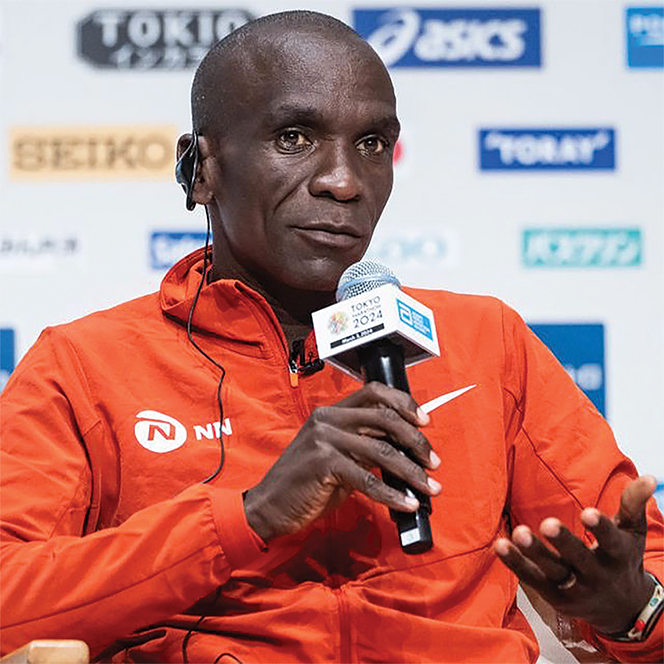
Two-time Olympic champion Eliud Kipchoge says he feared for the lives of his family during a campaign of online abuse that wrongly linked him to the death of fellow Kenyan marathon runner Kelvin Kiptum.
Kiptum, the world record holder who looked set to challenge Kipchoge’s dominance over 26.2 miles, died aged 24 in a car crash in February.
Some social media users began to speculate that Kipchoge was part of a conspiracy to kill Kiptum, who had lowered the world best to two hours, 35 seconds last October in Chicago.
“I was shocked that people [on] social media platforms are saying ‘Eliud is involved in the death of this boy’,” the 39-year-old told BBC Sport Africa.
“That was my worst news ever in my life. “I received a lot of bad things; that they will burn the (training) camp, they will burn my investments in town, they will burn my house, they will burn my family.
“It did not happen but that is how the world is.” Kipchoge’s initial reaction when he saw the abuse and false rumours was to check whether his family were safe.
“I don’t have power to go to police and tell them my life is in danger. So my concern was actually to tell my family to be extra conscious and cautious,” he said.
“I started to call a lot of people. “I got really scared of my children going to school and coming back.
“Sometimes they bike around, but we had to stop them because you never know what will happen. We started to drop them [off] and pick them [up] in the evening.
“My girl was in boarding school – that was positive that she had no access as far as social media is concerned – but it’s tough for my boys to hear ‘Your dad has killed somebody’.”
Kelvin Kiptum broke Kipchoge’s marathon world record in Chicago last October, but died in an accident just four months later Kipchoge was overtaken by emotion during a candid interview at his home in Eldoret when discussing the impact the campaign of abuse had on his mother. “My worst moment was (when) I tried to call my mum,” he said. “She told me ‘Just take care’ and ‘A lot has been going on’.
“Where I come from is a really local area. And with the age of my mum, I really realised that social media can go everywhere. “But she gave me courage. It was really a tough month.”
However, Kipchoge, who became just the third person to win successive Olympic marathons when he defended his title in Tokyo in 2021, decided not to take precautions over his own safety.
“I saw no meaning to change training venues because my life is open,” he explained. “Our sport is not training in the gym, it is going outside to run. I walk in the streets freely.” Kipchoge claims he “lost about 90%” of his friends amid the wrongful link to Kiptum’s accident and online abuse.
“It was really painful for me to learn even from my own people, my training mates, those who I have contact with, and the bad words are coming from them,” he added.
“I was really down to see that.” Kipchoge says the online abuse caused sleepless nights and hindered his performance in March’s Tokyo Marathon
Kipchoge’s team decided to take the distance runner off social media in the wake of the abuse, but he said he never considered deleting his accounts. “If I delete my accounts then it shows that there is something I am hiding,” he said.
“I will keep my accounts. I did not do anything.” However, he believes the social media abuse affected his performance in competition.
Kipchoge came 10th in the Tokyo Marathon on 3 March, his lowest finish since his debut in 2013, crossing the line over two and a half minutes behind the winner Benson Kipruto.
“When I was in Tokyo I had three days which I did not sleep,” he revealed. “It was my worst ever position.”
However, Kipchoge has welcomed an announcement from the International Olympic Committee that it plans to “respond proactively and at scale” to safeguard athletes from online abuse during Paris 2024.
The IOC intends to use artificial intelligence, external to help identify abusive posts and report them to social media companies. “I think it’s actually the right direction,” he said. “They are now stamping their authority and their function as an organisation handling the athletes to safeguard them from abuse.”
But, for Kipchoge, it is already too late to avoid the emotional scarring he has suffered. “I learned that friendship cannot be forever,” he said. “I think it’s unfortunate that it happened when I’m celebrating over 20 years in sport.
“What happened has [made] me not trust anybody. Even my own shadow, I will not trust.” Despite that setback he was named in Kenya’s marathon team for the Paris 2024 Olympics last Wednesday, and is now focused on creating more history at the Games as he aims to win a third successive gold medal,having triumphed in Rio de Janeiro in 2016 and Tokyo in 2021
“I want to go into history books, to be the first human being to win back-to-back-to-back.” Cutting down on abuse at Paris 2024
Having been on the receiving end of intimidation and threats, Kipchoge believes social media companies are “not doing much” to clamp down on abuse on their platforms.
“These faceless people are posting bad things and are really dangerous,” he said. “If you report some accounts then it takes time for them to delete those accounts.“They should act fast, get the facts, delete accounts. People [should] know that if you say something which is not good then your account will be deleted.”
However, Kipchoge has welcomed an announcement from the International Olympic Committee that it plans to “respond proactively and at scale” to safeguard athletes from online abuse during Paris 2024. The IOC intends to use artificial intelligence, external to help identify abusive posts and report them to social media companies.
“I think it’s actually the right direction,” he said. “They are now stamping their authority and their function as an organisation handling the athletes to safeguard them from abuse.” But, for Kipchoge, it is already too late to avoid the emotional scarring he has suffered. “I learned that friendship cannot be forever,” he said.
“I think it’s unfortunate that it happened when I’m celebrating over 20 years in sport. “What happened has [made] me not trust anybody. Even my own shadow, I will not trust.”