 WeeklySA_Admin
Freedom: It is a tragedy that Elijah Barayi did not live to see the dawn of freedom break over the horizon
By Monk Nkomo
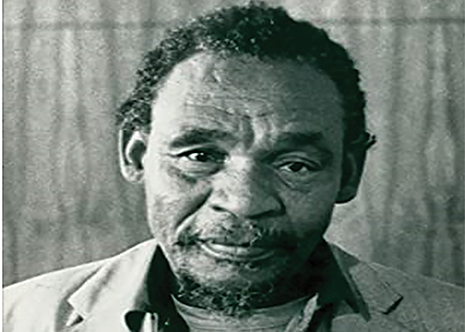
The late trade union leader, Elijah Barayi was an anti-apartheid struggle hero whose life was a testament to bravery and to standing firm on principle even in the face of seemingly insurmountable odds.
This was said by President Cyril Ramaphosa during his keynote address at the Elijah Barayi Memorial Lecture which was held at the University of Johannesburg this week.
The achievement of democracy was a cause to which Barayi dedicated his life and it was significant that the inaugural lecture was held during the 30th year of South Africa’s freedom.
‘’It is a tragedy that he never got to see the dawn of freedom break over the horizon. We lost him thirty years ago, just three months before South Africa’s first non-racial election.
Yet what a great legacy he left behind. What a powerful voice that lives on’’, said Ramaphosa who described Barayi as his comrade who joined the ANC Youth League as a teenager in the early 1950s and was active in the Defiance campaign.
A victim of daily harassment by the apartheid security police, Barayi was arrested numerous times including the time when he led a march against the pass laws. He also spent some time in jail during the State of Emergency. This led him to leave his home town in Cradock.
‘’ He was a hero of the anti-apartheid struggle. It takes a hero to go against the norm and to stand for what is right even when those around them remain silent or look away’’, the President said.
After leaving his home town, Barayi later sought refuge on the mines, first at State Mines in Brakpan, then in Carletonville on the West Rand.
He was a hero and champion of mineworkers, the most oppressed and exploited class of workers throughout colonial and apartheid rule. He recruited himself into the National Union of Mineworkers which he and Ramaphosa had formed in 1982. Barayi rose from being a shaft steward to being elected vice-president of the trade union.
Ramaphosa said despite the progress that the government had made over the last 30 years, the legacy of apartheid continued to define so much of South Africa’s society. Inequality was exacerbated by high employment, poor economic growth, service delivery failures, corruption, crime and violence.
‘’ While we have seen great advance in access to education and health, the poor and the working class remain at a great disadvantage. Resolving these challenges requires concerted action from all sectors of society. Building a future that promotes decent work and social justice necessitates that we deepen our collaboration as government, business, labour and civil society.’’
The son of a municipal worker and a domestic worker, Barayi became a hero of South Africa’s working class. At the launch of the Congress of South African Trade Unions in December 1985, he was elected as the federation’s first President.
‘’Those of us who were privileged to have witnessed history being made will remember it well. We remember the rally at Curries Fountain in Durban, where more than 10,000 people sang in unison about the birth of the trade union federation. It was at the launch of Cosatu when Barayi warned the apartheid regime :
“You have six months to abolish the pass laws.” He also demanded the release of President Nelson Mandela, that the Bantustans be abolished, that the state of emergency be lifted, and for the army to withdraw from the townships.
Barayi’s impact extended far beyond South Africa’s borders. He forged alliances with labour movements and other like-minded people around the world, garnering support for the anti-apartheid struggle and bringing global attention to the injustices being perpetrated in South Africa.
From its establishment, COSATU said that the struggle of workers on the shopfloor could not be separated from the wider struggle for liberation. ‘’As we look back on 30 years of democracy, we can see very clearly how the relationship between workers’ struggles and the fight for broader political and social change have shaped our country.
We can see how workers have contributed to defining our constitutional order’’, said Ramaphosa. Since 1994 a number of mass public employment programmes had been built to provide income support, skills and training for South Africans who are out of work.
Over the past thirty years, the ANC-led government had used Broad-Based Black Economic Empowerment, preferential procurement, the Black Industrialists Programme and worker share ownership schemes to transform patterns of ownership and control in the economy.
‘’I recently participated in a conference on the state of worker share ownership. In South Africa today, more than 500,000 workers are part-owners of the companies they work for. Mineworkers, farmworkers, workers in manufacturing and other sectors today share in the fruits of their labour through worker ownership schemes.
As a country, we have come a long way in giving effect to the rights of women workers’’. The principle of equal pay for work of equal value was enshrined in law.
These achievements formed part of the legacy of Barayi and they need to be protected and advanced. ‘’ This is the time to intensify the struggle for economic equality and shared prosperity for all,’’ said Ramaphosa.