 WeeklySA_Admin
BACKLASH: Literary icon Ngugi wa Thiong’o pens irate letter to Kenyan President William Ruto after the leader’s isit to the United States…
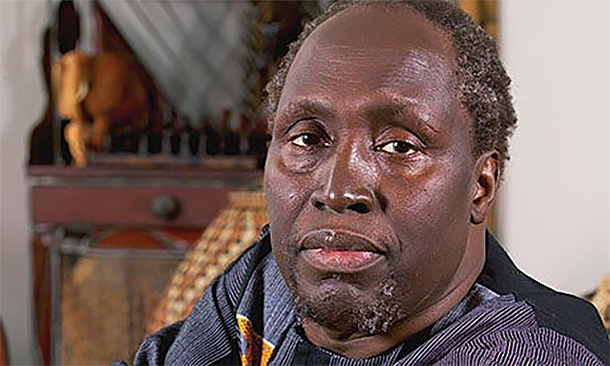
By Brian Ngugi
Literary icon Prof Ngugi wa Thiong’o has called out President William Ruto over his dalliance with the West, faulting him for siding with oppressors by “selling the country cheap.”
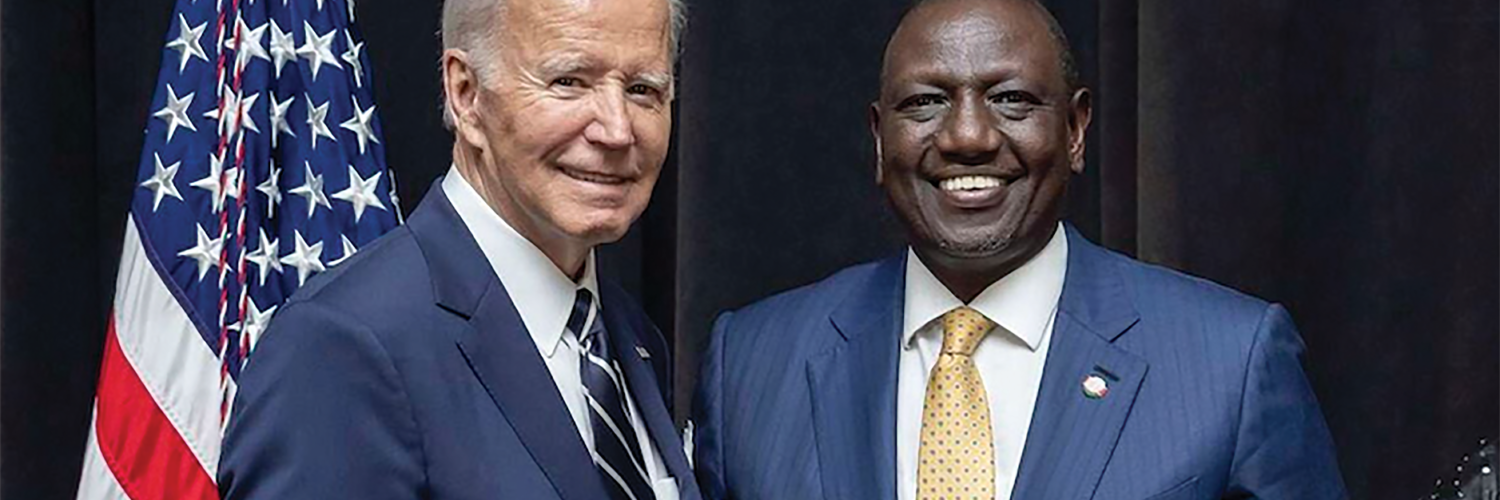
In a stinging open letter to the Head of State, Prof Thiong’o described images from Ruto’s recent state visit to the United States as “very disturbing,” saying the president had chosen to betray African pride and become the agent of the West.
“I saw you seated on a chair, grinning, while Biden stood behind you, his face beaming with satisfaction. Why not? He had just announced that you had signed off our beloved Kenya to make it a non-member ally of NATO (North Atlantic Treaty Organisation). In other words you had agreed to become Nato’s errand boy in America’s struggle with Russia and China for access to resources of the continent,” he said.
The designation of Kenya as its first major non-NATO ally in sub-Saharan Africa is a significant strategic that move signals the shifting of US security cooperation to East Africa just as American troops prepare to depart Niger, leaving a vacuum that Russian forces have begun to fill.
The designation gives non-members of the North Atlantic Treaty Organization access to military and financial advantages that NATO members enjoy, but without the mutual defence agreement that holds NATO together. A senior administration official told reporters late Wednesday that Biden would inform Congress of the designation, which takes 30 days to take effect.
Dear William Ruto,
The images of your recent State visit to the USA were very disturbing to me and to every patriotic Kenyan.
I saw you seated on a chair, grinning, while President Joe Biden stood behind you, his face beaming with satisfaction. Why not? He had just announced that you had signed off our beloved Kenya to make it a non-member ally of NATO.
In other words, you had agreed to become Nato’s errand boy in America’s struggle with Russia and China for access to resources of the continent.
Ruto, do you know that Nato, murdered Muammar Gaddafi so that Libyan oil-fields which Gaddafi had nationalised, would revert to the West? Gaddafi was once the chairman of the African Union of which Kenya was a founding member. But this other picture was no less disturbing. While you were inside the White House, Haitians were in the streets demonstrating, calling you a slave.
Do you know the history of Haiti? Please read The Black Jacobins, the book written by a once Jomo Kenyatta Pan-African ally, CLR James.
Haiti, now a Black people’s State, used to be a slave colony of France. But led by Toussaint Louverture, Haiti, the richest colony of its time, fought French slavery and in 1804 it seized its independence.
In USA slavery was then in full bloom. America did not want its African slaves to emulate Haiti, and it has never forgiven Haiti for that, and thus begun the story of America’s destabilisation of Haiti.
Ruto do you see the irony of your actions? The USA, was originally a settler colony taking over the land that belonged to Native Americans. In 1776, the White settlers declared their independence from their English King. But the colonised native Americans remained colonised. Kenya was equally a British settler colony.
The white settlers wanted to have a similar kind of independence. But the Mau Mau led by Dedan Kĩmathi stopped them. Years later, Algeria, Rhodesia and South Africa would follow the example of Kenya. Thus the country you now lead, was the first to stop the historical trend of white settlers claiming themselves independent as in America, Canada, New Zealand and Australia.
Ruto, you have chosen to betray that history of Pride. Ruto, you have chosen to become an agent of the West? Ruto, you have chosen to sell your country cheap. – The Standard (Kenya)
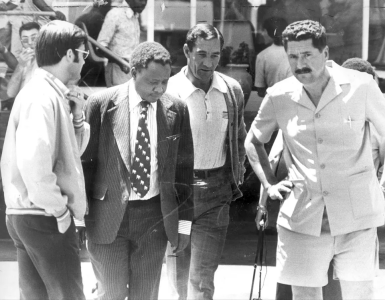
ALPHEUS MANGHEZI – THE GREAT SOUL OF FREEDOM FIGHTER
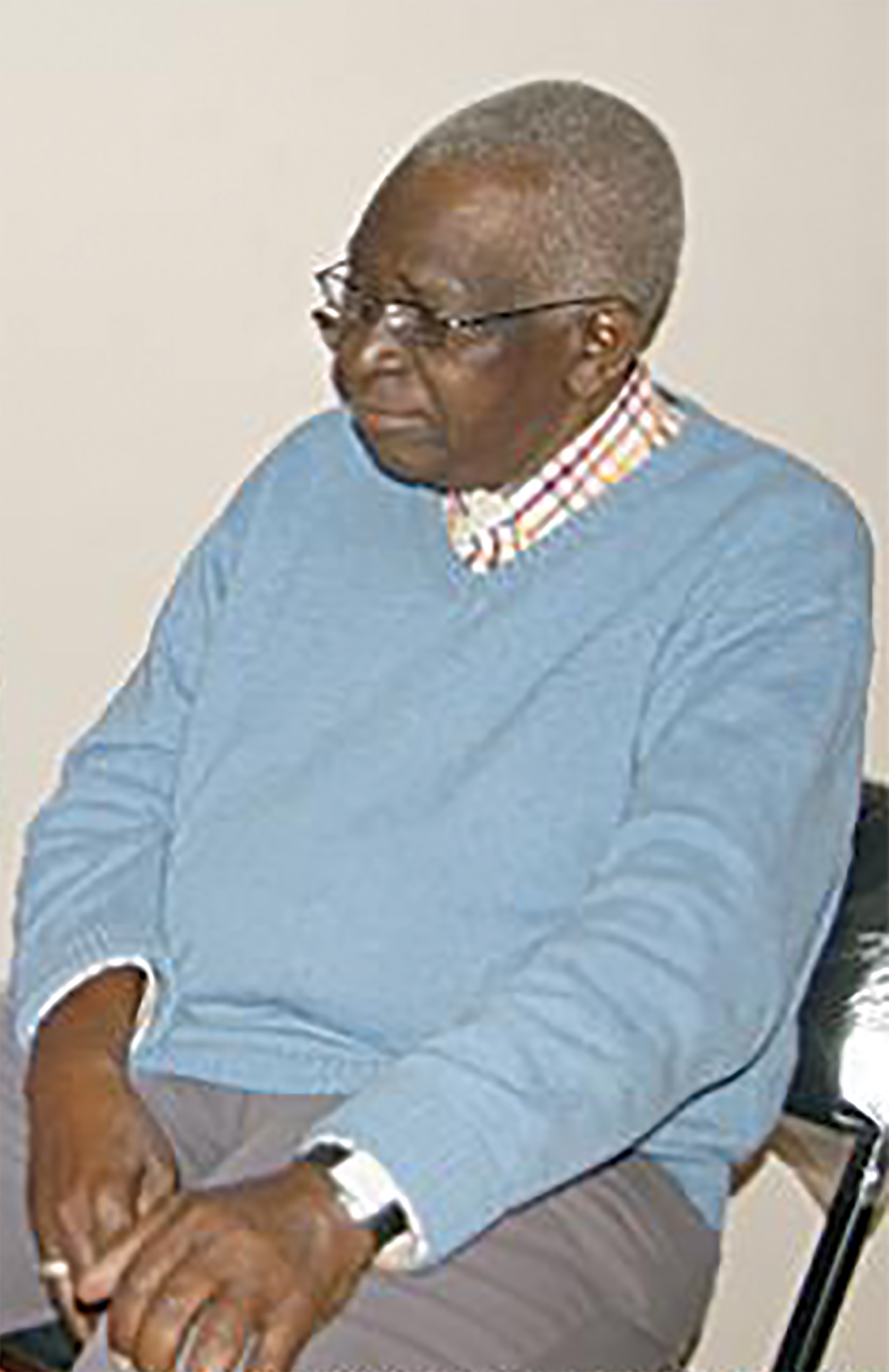
CAUSE: A celebration of life and work of Alpheus Manghezi, a fighter for the freedom…
By Own Correspondent
The Centre of African Studies at Eduardo Mondlane University (CEA-UEM) reports with great sadness the passing of Professor Alpheus Manghezi on May 16. He worked in Johannesburg, Glasgow, London, Zambia, Mozambique and Tanzania.
Alpheus Manghezi was born on June 8 1934 in the then Northern Transvaal, today the province of Limpopo in South Africa. From an early age, he dedicated himself to the social cause of the masses, studying social work in Johannesburg (1960), psychiatric social work at the London School of Economics (1963) and community development in The Hague (1969).
He subsequently earned a degree in sociology at the University of Ibadan in Nigeria (1968) and a PhD in sociology at Uppsala University, Sweden (1976). Naturally, this trajectory turned him into a citizen of the world and a fighter for the freedom and well-being of the people, which materialised in his work in Johannesburg, Glasgow, London, Zambia, Mozambique and Tanzania – among other places.
In Mozambique he stood out as a researcher at CEA-UEM between 1976 and 1987. During this period, Alpheus Manghezi participated in and led several research projects, producing most notably works on cooperatives and the cooperative movement, peasant political economy, and the impact of labour migration to the mines of South Africa.
Manghezi’s professional talent in working with oral sources made him one of the great specialists in oral history, both in Africa and globally. His love for his Shangaan mother tongue and his culture helped him to immerse himself in communities in southern Mozambique, where he collected multiple interviews and songs that constituted the main sources for his book Trabalho forçado e cultura obrigatória do algodão: o colonato de Limpopo e o reassentamento pós-independência c.1895-1981 [Forced labour and compulsory cotton cultivation: the Limpopo settlement and the post-independence resettlement, ca.1895-1981], as well as his article “Ku Thekela: estratégia de sobrevivência contra a fome no Sul de Moçambique” [Ku Thekela: survival strategy against hunger in Southern Mozambique].
Among other publications authored by him or with his participation, the following stand out: O mineiro Moçambicano: um estudo sobre a exportação de mão de obra em Inhambane [The Mozambican miner: a study on the export of labour in Inhambane], a work coordinated by Ruth First and which includes interviews and songs recorded by Alpheus Manghezi, as well as Macassane: uma cooperativa de mulheres velhas no sul de Moçambique [Macassane: a cooperative of old women in southern Mozambique], published in 2003 and also containing interviews and songs that he had collected. The funeral of Alpheus Manghezi took place on May 22 in Mariebjerg Kirkegärd, Copenhagen. CEA-UEM extends its deepest condolences to his widow, Nadja Manghezi, to his family, and to his friends.
Meanwhile, Gottfried Wellmer, who was a colleague of Alpheus’s at the Centro de Estudos Africanos in the 1980s, recalls some adventures while carrying out fieldwork in rural Mozambique with him. He says Manghezi worked extensively with Ruth First in Mozambique, and his reflections on her and his time can be read here.
Journalist Ruth First was a South African anti-apartheid activist and scholar. She was assassinated on August 17 1982, Maputo, Mozambique, where she was working in exile, by a parcel bomb built by apartheid security police.
Of Manghezi, Wellmer says: “Alpheus always impressed me… I was allowed to travel with him to a cooperative in the south of Mozambique, to listen to a song about Ngungunhane: how the Portuguese not only captured him, but also forced him to violate the eating tabus of a king.
“I had recorded the song on my tape recorder, and I played it for Alpheus. He was interested because there were some verses that he hadn’t heard before. However, unfortunately, I ran out of tape for interviews, and I over-recorded the song with another interview. Alpheus then got Ruth First’s permission to go with me to the cooperative and record the song again. In general, it seems that Alpheus preferred direct conversations with local people in Shangaan to academic theories passed around among the other researchers!
“First of all, we went to talk to the women working in the fields. While I was recording their songs about colonial ill-treatment and the forced cultivation of cotton, Alpheus killed a big python that had threatened a woman who was working alone in another area. That python was at least two metres long. However, the women were not impressed. They asked Alpheus: why didn’t you kill its mate as well? Don’t you know that they hunt in pairs? Now the widow of the python will follow you until it can kill you.
“We took a coffee break. The women retired to a shady and grassy spot to eat their lunch, while Alpheus kept up some humorous banter with them. Suddenly all the chatter stopped, and there was complete silence. I saw Alpheus move towards a woman who was standing frozen to the spot – she had lifted a cooking pot, only to discover that a small green mamba was resting underneath it. Alpheus got hold of a catana – a machete – and, in a couple of paces, reached her and killed the snake, an extremely venomous species. He turned to me and remarked ironically, “It’s a good day to die!
“Suddenly he was the hero of the day. The women marched us back to the village, singing and ululating. There we met the old man who had given me the original version of the song about Ngungunhane.” The understanding and sympathy between Alpheus and the members of the cooperative was extremely impressive, Wellmer adds.
“If the soul of a human is the capacity to communicate with other humans, then Alpheus was a great soul, and I will always admire him for that ability”.