 WeeklySA_Admin
Action: A total 150 million girls would be married before the age of 18 by 2030 if no action was taken
By Monk Nkomo
A total one billion children worldwide suffered some form of physical, mental or sexual violence every year while a child died every seven minutes from an act of violence amid a chilling warning that nearly 52 million children could die before their fifth birthday by 2030 unless world leaders accelerated their efforts to end pressing issues that included poverty and inequality.
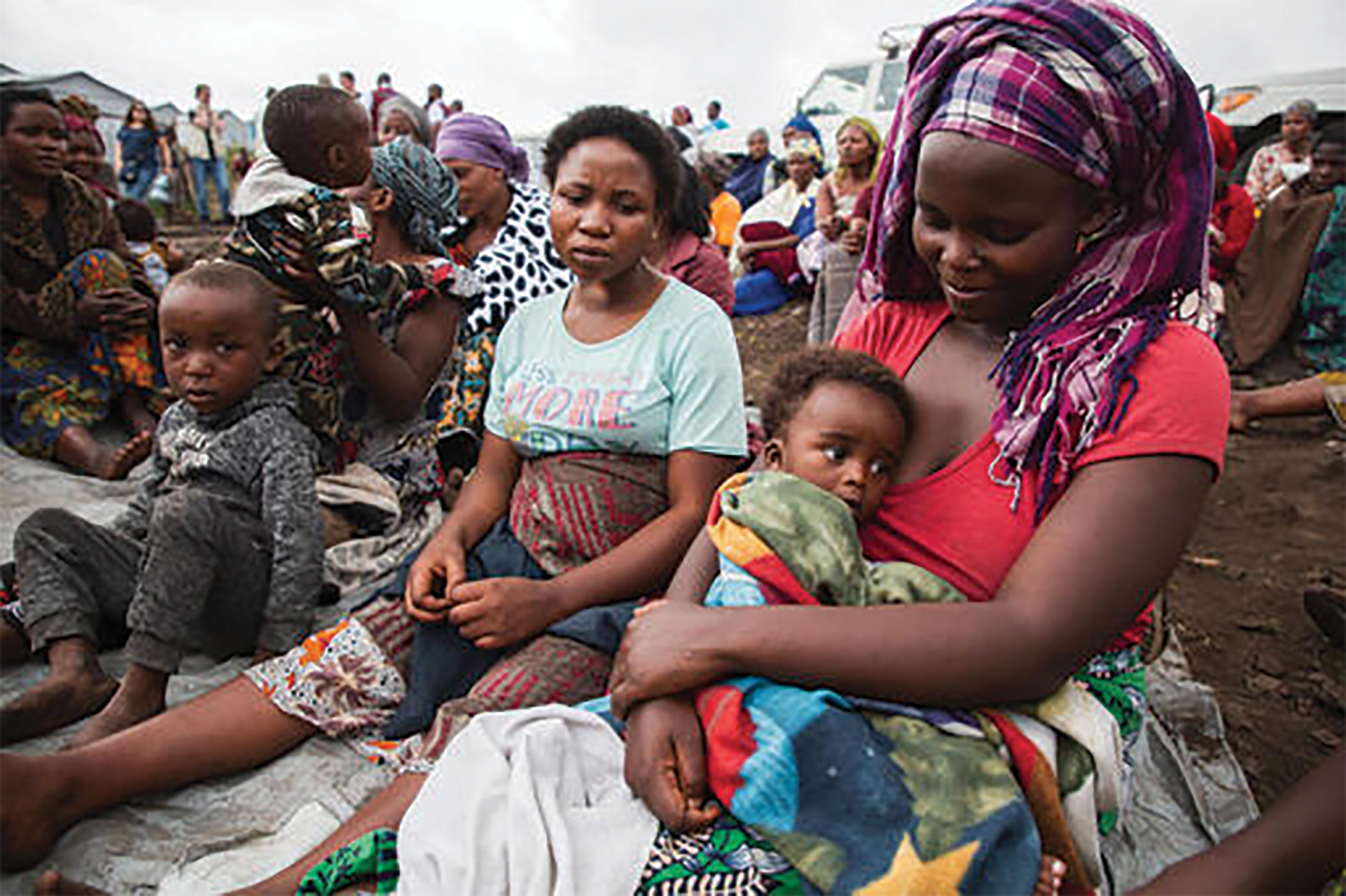
This is according to the shocking United Nations Children Fund’s State of the World’s Children Report which also cautioned that if the scourge of violence against children was not swiftly addressed, nearly 150 million girls would be married before the age of 18 by the year 2030. More than sixty million children of primary school – going age, would be out of school. These huge inequalities and dangers not only violated the individual rights of children and jeopardized their future, but they also perpetuated intergenerational cycles of disadvantage and inequality , endangering social stability and even the security of countries around the world.
World leaders in September 2015, adopted the new Sustainable Development Goals committing themselves to ending many of the world’s pressing issues including poverty and protecting children from violence by 2030.
The future of millions of the world’s children would be doomed if efforts to address these issues were not accelerated.
The report also highlighted that millions of children globally died every year from malnutrition while countless others fell victim to wars, natural disasters and extreme forms of exploitation. While every child was born with the same inalienable rights to a healthy start in life, access to an education and a safe, secure childhood, millions of children, especially girls, did not have access to quality education.
These inalienable rights, helped children to achieve productive and prosperous adulthood. ‘’But around the world, millions of children are denied these rights and everything they need to thrive and grow because of where they are born, their family of origin, their race, ethnicity or gender or because they live in poverty or have a disability’’.
The report states that children’s right to be free from violence, was enshrined in the Convention on the Rights of the Children and yet every year a staggering one billion children suffered some form of physical , mental or sexual violence and every seven minutes a child dies from an act of violence.
Violence against children knew no boundaries of culture, class or education level. Children could be exposed to violence in institutions, schools and at home. Violence against peers, the report added, was also a concern, as was the rise in cyberbullying. ‘’
Children who experience violence live in isolation, loneliness and fear, not knowing where to go for help especially when the perpetrator is close to them.’’
Meanwhile, another UNICEF report indicated that the number of children in child labour had risen to 160 million worldwide – an increase of 8,4 million children in the last four years. A total 63 million girls and 97 million boys were in child labour globally at the beginning of 2020 , accounting to almost one in ten of all children worldwide.
This report warned that global progress to end child labour had stalled for the first time in 20 years. The number of children aged five to seventeen years in hazardous work – defined as work that is likely to harm their health, safety or morals – had risen by 6.5 million to 79 million since 2016. In sub-Saharan Africa, population growth, extreme poverty and inadequate social protection measures had led to an additional 16.6 million children in child labour over the past four years.
The UNICEF’s State of the World’s Children Report states that several United Nations agencies worked together to maintain global commitment to the Convention of the Rights of the Children which embodied universal ethical principles and international legal standards of the conduct for children.Since its founding in 1945, the United Nations had been committed to protecting children and their health and well-being. UNICEF currently worked in 190 countries and territories, with a special focus on the most vulnerable and excluded children.
World War II hit Europe hard, and children in Europe became a vulnerable group after the war. In order to help children affected by the war, the United Nations Relief and Rehabilitation Administration established the International Children’s Emergency Fund. On December 11, 1946, the General Assembly passed a resolution to formally establish the United Nations Children’s Fund (UNICEF).
In 1953, the UNICEF became a permanent United Nations agency and launched a successful global campaign against yaws, a disfiguring rash that affected millions of children and was treatable with penicillin.
After more than a decade of focusing on children’s health, UNICEF expanded its focus to include all children’s needs. As a result, UNICEF began to focus on education, supporting teacher training and providing teaching equipment in newly independent countries. For more than 75 years , UNICEF had worked to advance the rights of every child , while adapting its mission to meet the changing needs of children around the world.
The State of the World’s Children is an annual report that looked at key issues affecting children. This comprehensive report contained a wealth of relevant data and statistics.
‘’Millions of children die every year from malnutrition and disease. Countless more fall victim to war, natural disasters, HIV/AIDS and extreme forms of violence, exploitation and abuse. Millions of children, especially girls, do not have access to a quality education’’.
In 1959, the General Assembly adopted the Declaration of the Rights of the Child , which affirmed the rights of children to protection, education, health care, housing and good nutrition.
‘’The Declaration is a foundational document for the development of international law related to children’s rights. It has influenced national legislation and policies around the world, guiding the protection and promotion of children’s rights in various contexts, and is considered the predecessor of the Convention on the Rights of the Child’’.
In 1989, world leaders made a historic commitment to the world’s children by adopting the United Nations Convention on the Rights of the Child . The Convention explained who children are, what rights they had and the responsibilities of governments. All rights were interconnected and equally important and children’s rights could not be taken away.
The Convention was the most rapidly and widely ratified international human rights treaty in history. It had changed the way children were viewed and treated, as individuals with a set of clear rights, rather than passive objects of care and charity. The unprecedented acceptance of the Convention was a clear demonstration of the broad global commitment to promoting children’s rights. Much had been achieved since the adoption of the Convention, from reduced infant mortality to increased school attendance, but much remained to be done.
In 2000, the General Assembly adopted two Optional Protocols to the Convention: one prohibiting the recruitment of children under 18 into armed forces or in hostilities ; the other strengthening the prohibition and penalties for the sale of children, child prostitution and child pornography . The third Optional Protocol, adopted by the General Assembly in 2011, entered into force in 2014. It provided for a communications procedure, allowing individual children to file complaints regarding violations of their rights under the Convention and its first two Protocols .
Urgent action was needed to improve the plight of children displaced by armed conflict, and the Secretary-General encouraged Member States to respect the rights of displaced and refugee children and provide them with the necessary support services.