 WeeklySA_Admin
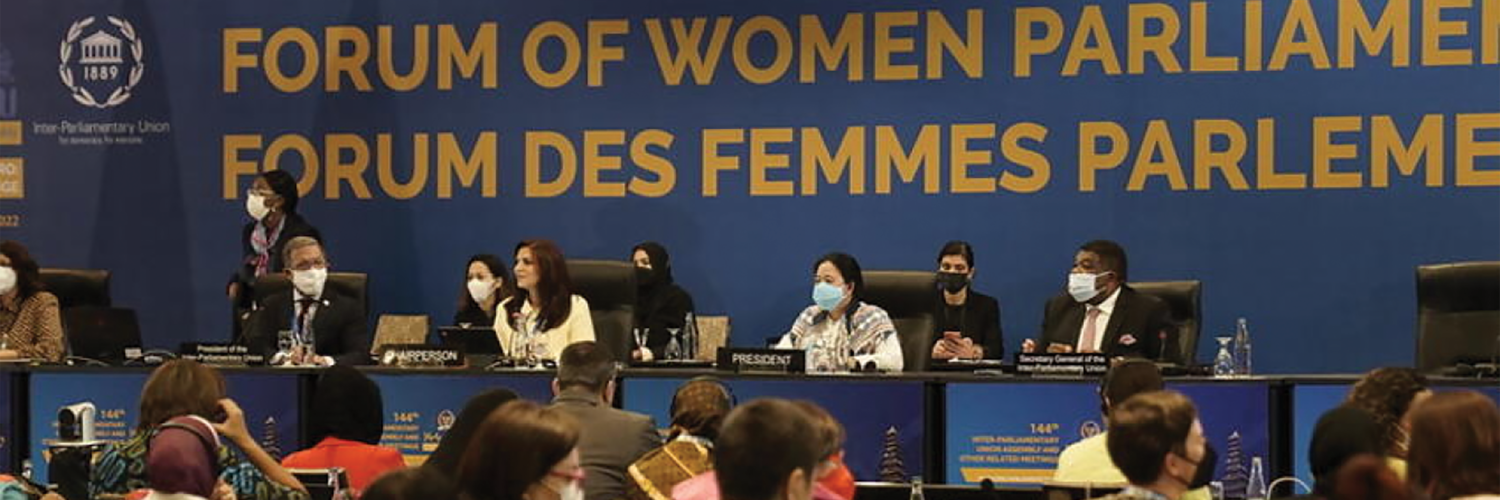
EQUAL: The latest report by the Inter-Parliamentary Union (IPU) show how different regions in the world have improved women representation. Sub-Saharan Africa recorded the highest improvement among all regions on women’s parliamentary representation in 2023
By UN News
Progress on women’s representation in national legislatures globally was “slow and mixed” in 2023, registering a growth of 0.4 per cent over the preceding year, the Inter Parliamentary Union (IPU) reported on Tuesday.
The global proportion of women in the world’s voting chambers inched up to 26.9 per cent on the back of elections and appointments through the year, the international organization said in its latest report on Women in Parliament.
The growth was similar to the increase in 2022, but slower than the two years prior, IPU said. In both 2021 and 2020, the increase was 0.6 per cent.
Rwanda once again led the world ranking with women accounting for 61.3 per cent of seats in the Chamber of Deputies, followed by Cuba and Nicaragua with 55.7 per cent and 53.9 per cent, respectively. Regionally, the Americas maintained its long-held position with the highest representation of women, at 35.1 per cent.
The report noted that several high-profile women leaders had left the political arena in 2023, many of whom cited burnout and increasing online harassment as the main reasons for leaving. At the beginning of the year, Jacinda Ardern stepped down as Prime Minister of New Zealand and decided not to stand again for her parliamentary seat.
A few months later, Sanna Marin, the former Prime Minister of Finland who was voted out of power in the April election, also resigned as an MP and decided to quit politics. Several prominent Dutch women MPs also stepped down.
At the same time, the report also noted that some parliaments undertook measures to increase safety measures, such as the Althingi (national parliament) of Iceland which adopted a strategy and action plan against bullying and sexual and gender-based harassment.
Sub-Saharan Africa recorded the highest improvement among all regions on women’s parliamentary representation in 2023.
Eswatini recorded the highest progress in women’s representation among countries that held elections in 2023, with a 20-percentage-point increase in its upper chamber. It was followed by Benin and Sierra Leone, with increases of 18.5 and 15.9 percentage points, respectively.
At the beginning of 2024, the share of women in parliaments across sub-Saharan Africa was 27.3%, a 0.8-percentage-point increase relative to 12 months previously and the third highest among all regions in the world.
In sub-Saharan Africa, elections were held in 2023 for 18 chambers in 13 countries. On average, 19.1% of those elected across the region were women – an increase of 3.9 percentage points when compared with women’s representation following the previous renewals for these same chambers. This was the biggest increase recorded across all regions in the world in 2023.
Overall, women’s representation increased in 11 chambers, with some of the biggest gains recorded in Eswatini (upper chamber), Benin and Sierra Leone. In four chambers, women’s representation remained the same (or changed by 1 percentage point or less), while the share of women MPs fell in three chambers: Guinea-Bissau, Liberia (lower chamber) and Nigeria (upper chamber).
Across the 13 countries that held renewals in 2023, the highest shares of women elected to parliament were recorded in the upper chambers of Zimbabwe (45%) and Eswatini (43.3%). By contrast, Nigeria elected the least gender-representative parliament in the region, with women making up only 2.8% of MPs in the upper chamber and 3.9% of MPs in the lower chamber following the 2023 polls. A notable development was the appointment of Manuela Roka Botey as the first female prime minister of Equatorial Guinea. She became the first woman to hold this position in the entire West African region.
Sierra Leone in January 2023 enacted the Gender Equality and Women’s Empowerment Act, which introduced a mandatory 30% quota for women among election candidates. A few months later – in July 2023 – the country held its first election with the new quota in place.
A total of 41 women were returned to parliament across the 135 seats that were up for election, representing 30.4% of directly elected MPs following the renewal.
In Benin, 28 women were elected to parliament, a historic high for the country. Together, they accounted for over one quarter (25.7%) of all MPs, a jump of 18.5 percentage points versus the situation following the previous polls.
This significant increase was the product of a constitutional amendment and the subsequent introduction of a new electoral code in 2019, which added 24 reserved seats for women in parliament. At the beginning of 2023, Benin ranked 169th in the world in terms of women’s parliamentary representation. By the end of the year, it had moved up to 87th position.
In Nigeria, women’s representation in the Senate (the upper chamber), which was already extremely low, shrank further by 3.7 percentage points in 2023. Only three women were elected in 2023, together representing just 2.8% of the total membership of the chamber. Women also remained vastly underrepresented in the House of Representatives (the lower chamber): in 2023, just 14 women were elected to the 358-seat chamber, accounting for 3.9% of all MPs – marginally higher than the 3.4% share recorded following the previous election.
Nigeria ranked among the bottom five countries globally for women’s representation in parliament. Institutional and sociocultural factors that prevent women in Nigeria from being able to participate in politics on an equal footing. These include gatekeeping by political parties, high candidate registration fees, the inconvenient scheduling of political meetings, the high cost of electoral campaigns, political violence and sexual harassment, clientelism (and, therefore, dependence on narrow networks of men), a ban on independent candidacies, and patriarchal social norms.
In Mauritania, the share of women MPs increased by 3 percentage points following the 2023 election. A total of 41 women were elected, making up 23.3% of MPs – the highest share of female parliamentarians in the country since a record 25.2% women were elected in 2013.
Violence against women in politics
Violence against women in politics remains alarmingly common across the world. Women parliamentarians and electoral candidates face hostility and violence both within parliament and in other political spaces. In an address at the annual meeting of the United Nations Human Rights Council in June 2023, the UN High Commissioner for Human Rights noted that such acts 23 are meant “to perpetuate subordination and to crush the political activism and aspirations of women and girls.”
This violence can take many forms, from misogynistic comments to sexual assault and abuse, and even attacks on women’s lives. While political violence is not new, the digital world has emerged as an additional sphere to attack women in politics.
HIGHLIGHTS
• Sub-Saharan Africa recorded the highest improvement among all regions on women’s parliamentary representation in 2023.
• Eswatini recorded the highest progress in women’s representation among countries that held elections in 2023, with a 20-percentage-point increase in its upper chamber. It was followed by Benin and Sierra Leone, with increases of 18.5 and 15.9 percentage points, respectively.
Comment
MURDERED BOY’S FAMILY SEEK JUSTICE
Children are the greatest gift from The Lord, a reward from Him to be recognized by all mankind as the nation’s greatest resource that can lead any country’s journey to tremendous development, peace and progress in the future.
World leaders are repeatedly urged to strengthen their security efforts to tackle the root causes of child murders in their respective countries and eradicate the scourge of violence against innocent children. The latest report that six-year-old boy, Junior Mabandla of Pienaar in Mpumalanga, who went missing on June 3 this year, has been found murdered and his remains buried in shallow grave at the local cemetery, has sent shockwaves not only in the local community but has also shocked parents and all those who treasure the lives of children countrywide.
Junior disappeared after leaving his home to buy sweets at a local tuck shop that afternoon. Despite intensified searches by both the local police and community members, he could not be found until the grim discovery this week. According to the police, some members of the community apprehended a suspect who confessed to Junior’s murder and allegedly pointed the spot where he was buried. The suspect was rescued from the angry mob and taken to the local hospital under police guard.
Although the police are still to investigate and charge the suspect, residents believe that the 18-year-old suspect could be a serial child killer. Police should now do the right thing and move swiftly to establish the motive for the murder which have rocked the local residents.
South Africa, which celebrates 30 years of democracy this year, cannot continue experiencing these shocking levels of violence against our future leaders – children – whose lives were being destroyed daily by thugs who care very little about these precious gifts from God. A total 285 children were murdered and 2707 survived attempted murder, assault or grievous bodily harm between October and December 2023.
On average, thirty-three children were violently attacked each day and at least three of them do not survive, according to a report by the Committee on the Rights of the Child, a body of independent experts that monitors the implementation of the Convention on the Rights of the Child. The United Nations Children’s Fund (UNICEF) has welcomed their call to strengthen efforts to tackle the root causes and to eliminate violence against children.
The community of Pienaar in Mpumalanga must be commended for working together and helping the police in apprehending the suspect. The authorities are now urged to conduct and complete their investigations as quickly as possible and bring the culprit to court and, if convicted, an appropriate sentence imposed. What Junior’s family and the community of Pienaar wants now, is nothing but justice. They also want to know the motive for the killing of their child. We hope the authorities will not fail them. This child was a priceless gift who will never be forgotten especially after being removed from these shores in such a violent manner.