
 WeeklySA_Admin
PREVALENCE: The condition’s adverse impact in developing nations militates for strict lifestyle changes…
By WSAM Reporter
Pulmonary Hypertension (PH) affects around one percent of the global population, translating into around 78 million people known to suffer from it.
Around 80 percent of patients live in developing countries like South Africa. In fact, Dr Gerald Maarman, of the Centre for Cardio-Metabolic Research in Africa at Stellenbosch University, told News24, that research indicated a prevalence of pulmonary hypertension in Africa, which mostly affects low- and middle-income countries, to range from 10 to 68 percent.
A study on the condition in such countries, with a focus on sub-Saharan Africa, found that, in South Africa, pulmonary hypertension accounted for 31 percent of total cardiovascular deaths. Developing countries are at greater risk, as a consequences of added contributing factors like HIV, tuberculosis and rheumatic and congenital heart disease incidences that are conducive to the development of PH. The disease is more than simply high blood pressure that sees arterial pressure impacting the respiratory system (the lungs) and frequently the right-hand side of the heart. In one form of pulmonary hypertension, called pulmonary arterial hypertension (PAH), blood vessels in the lungs become narrowed or block, or even destroyed.
Says Portia Mmenu of Janssen South Africa Medical Affairs: “This means that the pressure in the lungs is increased because blood flow is slowed. This extra effort eventually causes the heart muscle to weaken and, eventually fail. The disease process of PH is like a domino effect that begins at a microscopic level but has macroscopic consequences”.
And it is often misdiagnosed and confused with other conditions like asthma.
“Symptoms such as shortness of breath, dizziness, and fatigue can lead healthcare professionals toward a preliminary asthma diagnosis,” she notes. “However, when typical asthma treatments fail to relieve these symptoms, further investigation often reveals PH”. Other symptoms, which may or may not manifest at different times, including shortness of breath, at first while exercising and later even when sedentary. A blue or grey tinge, dependent on skin colour, becomes visible along with dizziness or fainting spells, pressure on the chest, swelling in the belly, leg, and ankle area along with chronic fatigue.
“However,” says Mmenu, “consulting with a healthcare professional when encountering any of these symptoms is critical. They are like detectives, interrogating the body and investigating symptoms to develop a diagnosis, and early diagnosis is the key to better care.”
PH is mostly diagnosed between ages 30 and 60 and, as people grow older, lifestyle choices also impact risk factors. Contributing risk factors include obesity, smoking, living at high altitude and exposure to asbestos, according to Mmenu.
In all cases, causes of PH can be varied and could include the use of certain medications such as some weight loss remedies and illegal drugs like cocaine methamphetamine, she adds.
“It could be hereditary or be associated with heart problems at birth,” Mmenu added, “while other health conditions like lupus, chronic liver disease or scleroderma (inflammation and thickening of the skin) could also play a role”.
Left hand side heart failure could also cause rocketing blood pressure and, concomitant to the additional strain on the right and side of the heart, weakness, and eventual failure.
“Education and awareness are the most powerful tools we have against diseases like PH,” says Mmenu. “As people age, it becomes increasingly important to test for PH during annual health check-ups. Early intervention leads to better management outcomes. A multidisciplinary approach ensures comprehensive care, from initial symptom management to advanced therapies aimed at treating the underlying causes of PH. This not only saves lives but adds quality of life into the equation”. Adopting healthy lifestyle behaviours may help lower blood pressure in the lungs and ease your symptoms. For example, one could try adjusting one’s diet, exercising more, and avoiding stimulants.
The Pulmonary Hypertension Association recommends the following strategies when starting a new physical activity program:
• Consult with your healthcare team before starting any new exercise routine.
• Never hold your breath when exercising.
• Start slowly with moderate, easily achievable goals.
• Take some extra time to warm up.
• Try to exercise when you have the most energy.
• Work out with at least one other person in case a medical problem develops.
• Lower salt (sodium) intake
Sodium is an electrolyte that your body needs to function properly. Consuming too much can make you retain large amounts of fluid, which can increase your blood pressure. By reducing the sodium in your diet, you can help prevent your pulmonary hypertension from getting worse. – Additional information from Healthline
OZEMPIC, WEGOVY LINK TO EYE CONDITION?
PRELIMINARY: A new study finds an association between weight-loss-drug semaglutide (marketed under the two brands and various other labels) and a rare eye condition which can cause blindness…
By WSAM Reporter
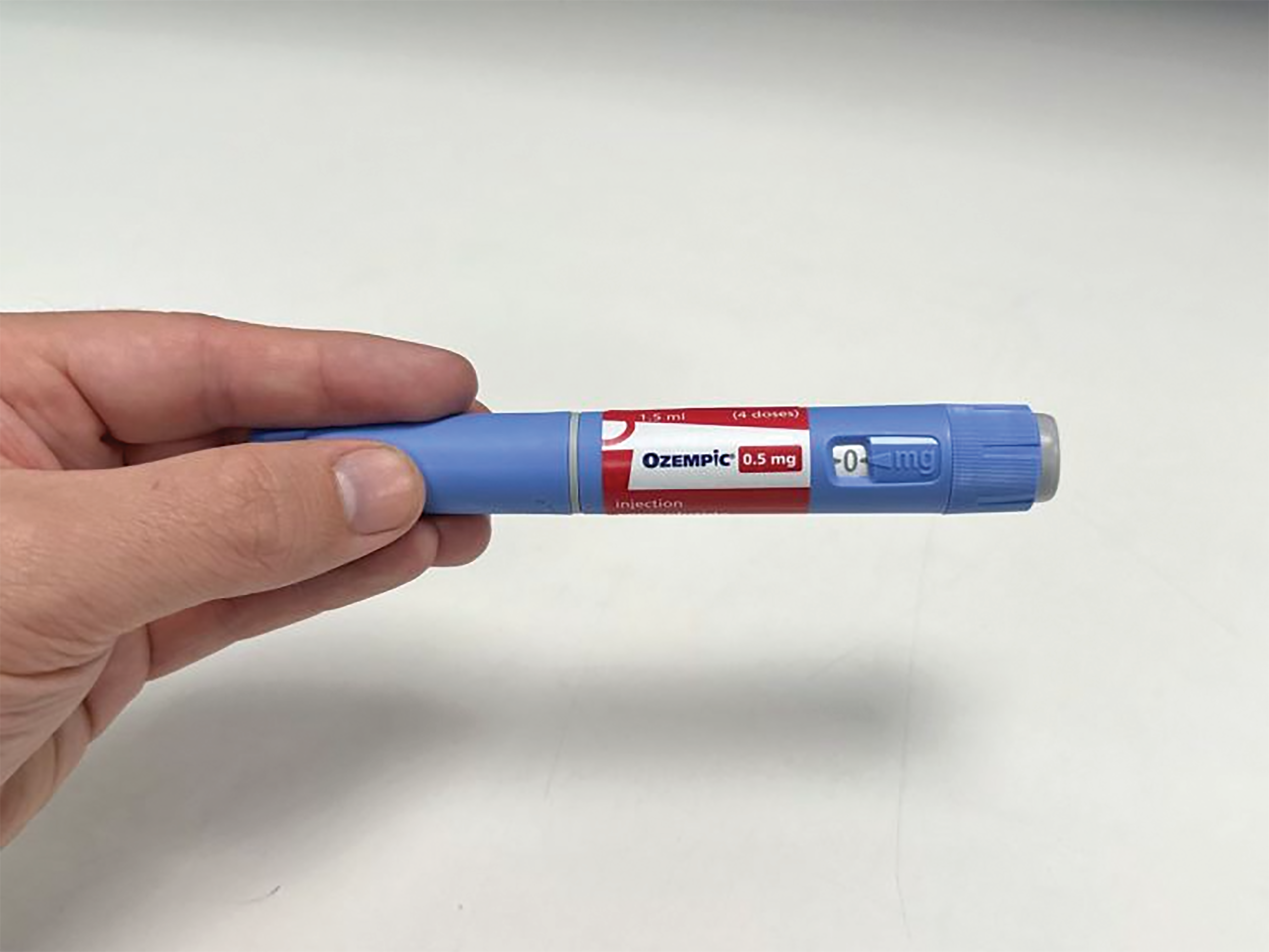
A new study, which appeared in JAMA Ophthalmology earlier this week, identified a potential link between the diabetes and weight loss drug, semaglutide, and a rare eye disease that causes blindness, reports New Medical Today (NMT) in its latest edition.
NMT reports that the condition, called nonarteritic anterior ischemic optic neuropathy (NAION), affects around 2.3 people per 100 000 people in the United States.
The new study finds that people with diabetes who were prescribed semaglutide — which is marketed as Ozempic and Wegovy, among other names — were more than four times more likely to develop NAION compared with people with diabetes on other medications, according to the NMT report. However, the researchers note that this finding is preliminary, and more studies are needed.
Similarly, those who were prescribed the drug to treat overweight or obesity were over seven times more likely to receive a NAION diagnosis than people taking other weight loss drugs.
What is NAION?
Despite being relatively rare, NAION is a significant cause of blindness in the United States. It causes a painless, permanent loss of vision, which often occurs when waking from sleep, according to the NMT. Medical News Today spoke with Joel Kopelman, MD an oculofacial plastic surgeon and board-certified ophthalmologist.
He explained that: “This vision loss can range from mild to severe. The condition can progress quickly, with most of the vision loss occurring within days to weeks of the onset of symptoms.”
Kopleman, who was not involved in the recent study, also told us that NAION has “an estimated incidence of 2-10 per 100 000 people annually in the United States. The prevalence is similar globally,” he explained, “although exact figures can vary based on regional health demographics and reporting practices.”
Most commonly, it affects middle-aged or older white people. Generally, it only affects one eye at a time. However, for around 43% of people, their other eye becomes affected within the following 3 years.
MNT contacted Dr Arun Gulani, an eye surgeon at the Gulani Vision Institute, who explained that “there is no established treatment protocol for NAION, which is considered irreversible.”
However, Gulani, who was also not involved in the study, told NMT that “Experimental treatments are being evaluated nationally and worldwide.”
What is the link between semaglutide and NAION?
The lead researcher of the recent study was Joseph Rizzo,director of the Neuro-Ophthalmology Service at Mass Eye and Ear in Boston, MA. He first decided to investigate the link between semaglutide and NAION based on an observation.
Rizzo and colleagues noted that three patients in their practice were diagnosed with NAION in just one week, according to the NMT report. This was unusual for such a rare condition. Rizzo and colleagues also noted that all three patients were taking semaglutide.
To investigate, they analysed retrospective data from 16 827 Mass Eye and Ear patients. They divided the individuals into two groups based on the reason for taking the medication — type 2 diabetes or obesity.
In these two groups, some received semaglutide, while others took unrelated drugs to treat their condition. This division was important because people with diabetes were at an increased risk of NAION, so by analysing them separately, they could account for this.
In the diabetes group, 8.9% of those taking semaglutide received a NAION diagnosis, compared with 1.8% of those taking other medications for diabetes, reports NMT.
Similarly, in the group with obesity, 6.7% of those taking semaglutide developed NAION, compared with only 0.8% of those taking other medications.
This meant that people with diabetes taking semaglutide were more than four times more likely to receive a NAION diagnosis. Those who taking semaglutide to treat obesity were more than seven times more likely to receive a diagnosis.
Why is there a link between semaglutide and vision loss?
“While the exact mechanism linking semaglutide to NAION is not fully understood,” Kopelman told MNT, “there are a few theories.”
He explained that semaglutide “may influence vascular health and blood flow, potentially contributing to ischemic events in predisposed individuals.” An ischemic event was when an organ or tissue did not receive adequate blood, and therefore oxygen. NAION was caused by ischemia specifically in the optic nerve.
“Patients with diabetes are already at higher risk for vascular complications,” he told NMT, “and any additional factors that could affect blood flow to the optic nerve might increase the risk of NAION.”
Scientists would need to carry out much more work to explore the connections between semaglutide and NAION. Then, if confirmed, more work would be necessary to unravel the mechanisms involved. – NMT