 WeeklySA_Admin
SOVEREIGNTY: In this final instalment of a two-part interview published in the previous edition, Spanish journalist and author Pascual Serrano speaks to France-based journalist and author Alex Anfruns Millán on the “Pan-African revolution” in Mali, Burkina Faso, and Niger”…
By Pascual Serrano
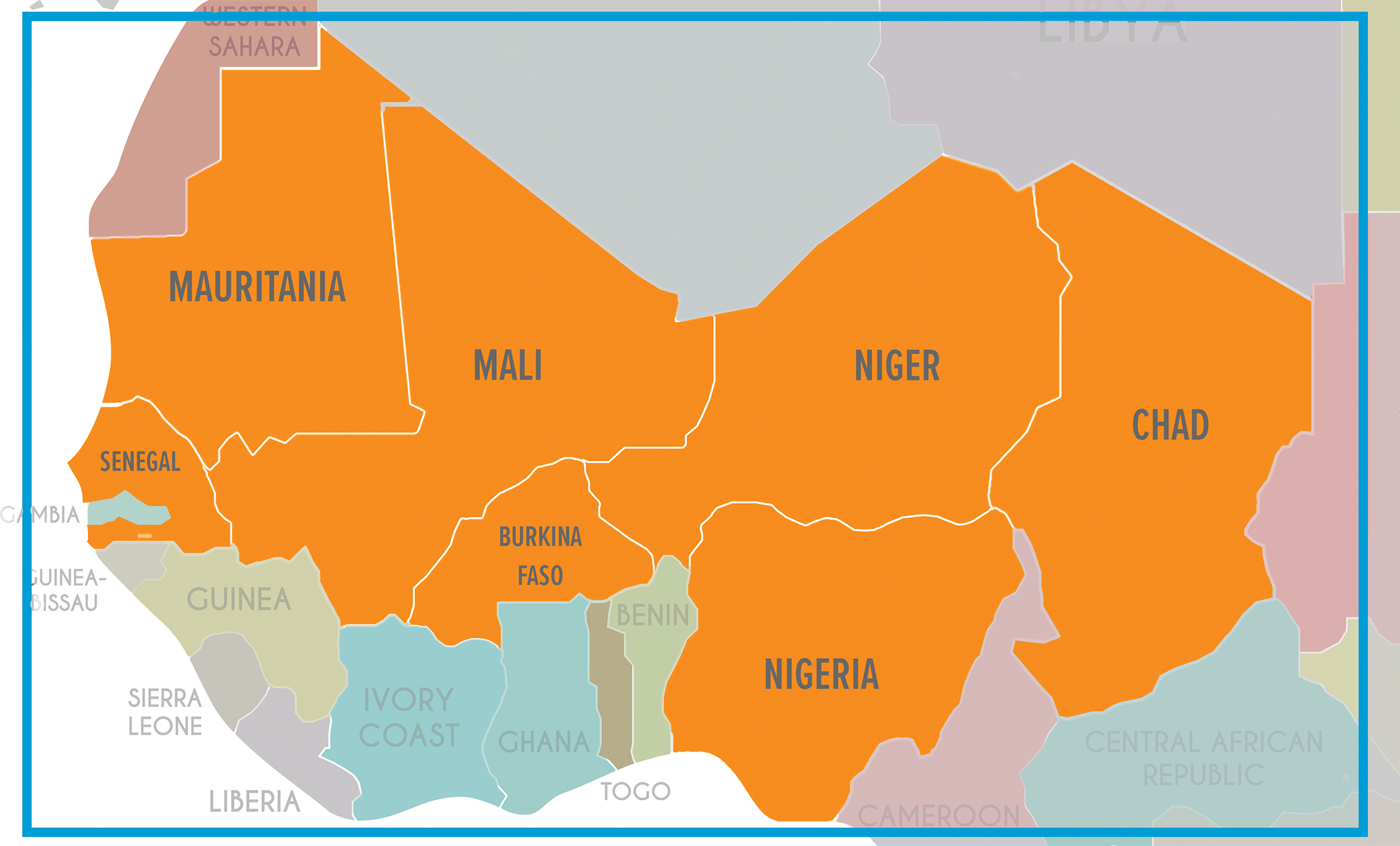
In recent years, three West African countries, Mali, Burkina Faso, and Niger, have experienced coups d’état with a common denominator: a national and sovereign uprising against France, its former metropolis, still dominant in the economy, defence and international relations. Military leaders have overthrown puppet rulers of France and established provisional governments, at the same time provoking indignation, sanctions and threats of military intervention from Western powers.
It is not easy to obtain rigorous information in the West that is free from the interests of the European powers in these events. Hence the value of Alex Anfruns Millán in writing the book “Niger: another coup d’état… or the pan-African revolution?” He is currently a professor in Casablanca in Morocco and researches the right to development from a pan-African historical perspective.
Below is an excerpt from an interview conducted by author Pascual Serrano with Alex Anfruns about his book and the events in the region during his time in Barcelona:
PS: Isn’t there the possibility that these new governments and movements (Burkina Faso, Mali and Niger), moving away from France, could approach the United States and end up falling under another imperialism?
AA: That is one of the hypotheses. In fact, the United States, when the Niger coup d’état took place, had a pragmatic position and accepted it. It is not as clumsy an imperialism as that of France and it tries a bit to, let’s say, not oppose it too much. They clearly defend the overthrown regime, but they do so with a low profile.
I point out in my book on Niger the possibility that the United States will try to recover this dynamic, but events are showing that in Niger there is a clear vision of defending sovereignty. And the key is popular support and mobilization.
So I think the facts are showing that in Niger there is a very clear vision of considering foreign military troops as an occupation, as neocolonialism. And the demand that the US military bases that exist in the capital, and also in the north, with a multi-million dollar investment, with a drone base, leave and abandon Nigerien territory as quickly as possible. It is showing that the people are not going to stop at a single measure, there is a truly entire plan of sovereignty and popular sovereignty. Not only at the level of the defense of each nation, but there is what I consider a bit the hypothesis of the book, that is, that we are moving towards a Pan-African revolution from the moment in which this is no longer a question of defending simply their own nation, but to create cooperation and put resources in favour of the rights of the peoples of the region.
PS: What is the role of Russia, China or the BRICS in the Sahel region?
AA: I believe that we are at a crossroads and that, whether we like it or not, we are in a situation of a new cold war.
That is why it is important to focus on the facts. For example, observing that France has first a colonial and then a neo-colonial policy in the region, with a series of mechanisms such as the CFA franc currency, the legal tender of Western and Central African countries. It means African Financial Community Franc, although at the time of its creation it meant “French African Community”, this is undoubtedly a limitation of the economic sovereignty of those countries because the currency was first linked to the French franc and now to the euro.
We all know that States have interests, it is not a question of friendship, but there are relations between States that are respectful and that look to mutual benefit. And, in that sense, relations with Russia are very good, but not only with Russia, but also with China, Iran and Turkey.
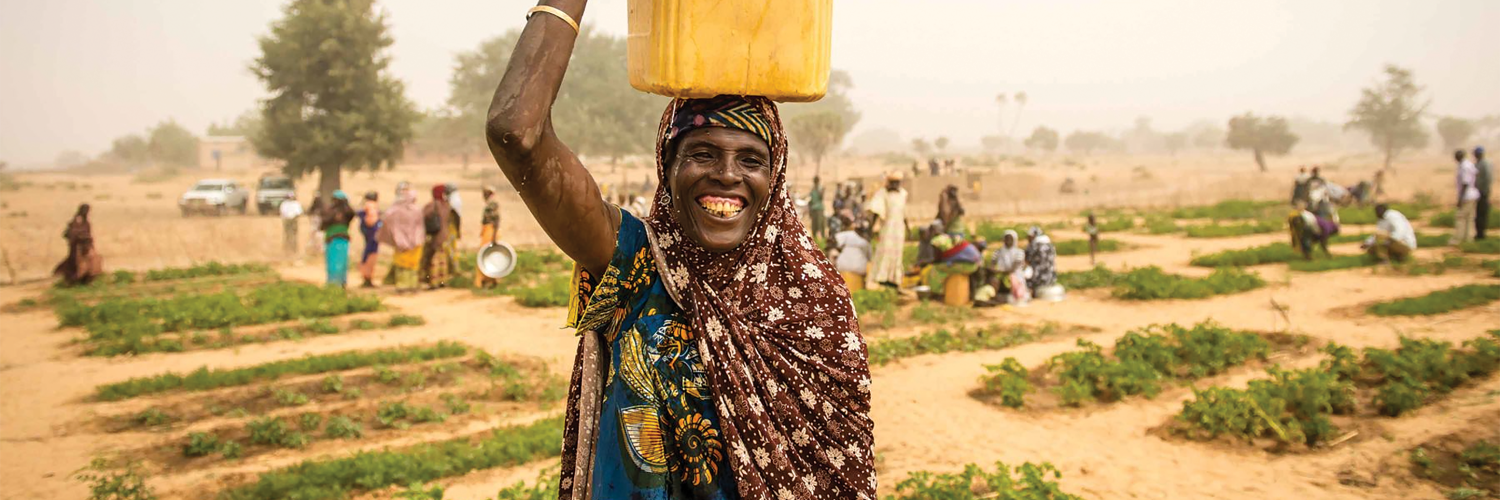
These are relationships in which these countries are allowed perspectives other than economic subjugation and, above all, development is not prevented. When we talk about development we have to know what the living conditions of the Nigerien people are. Niger is among the world’s leading uranium producers and, on the other hand, has the lowest human development figures. At the time of the coup d’état, extreme poverty was 42%, with a huge lack of access to electricity and with a large part of the population living in subsistence agriculture, depending on rain.
In Niger the military is considering and in fact is advancing a series of projects that will allow more income for the State, and I believe that they will achieve greater development and social benefit.
PS: What would be the development and sovereignty measures of Niger and in general of the Sahel countries that are developing in response to Western sanctions?
AA: First of all, when the sanctions occur, we have the sending of humanitarian convoys from Burkina Faso to Niger, with which we see that, although all the borders of the ECOWAS countries are blocked, the fact that these three countries are united, it allows them, even if they do not have access to the sea, a certain solidarity and inter-African cooperation.
In the case of Niger, after these months of resistance, what it has achieved is good. They have completed the construction of a photovoltaic plant and are now working on oil production, which is going to increase greatly. This has made it possible to sell fuel to neighbouring countries. With the development capacity of the oil industry, they will be able to reduce their dependence on energy.
Also regarding its gold extraction industry, it is planned to create gold refineries. Not only that, but there are actually a series of industrialisation initiatives, and food sovereignty is being proposed, which is something that can be achieved, it is not a utopia.
Mali, Burkina Faso and Niger are countries where there is still food insecurity. There are enormous resources and now, by expelling the neo-colonial actors, very positive perspectives for change are opening up.
PS: Comparing these three countries experiencing these changes, they do not necessarily have a similar ideology, beyond a common position of recovering their sovereignty and nationalism in the face of French colonialism. Do you see ideological differences between them, or do you think that is irrelevant?
AA: It is an issue that is now being debated, since these governments are considered military transitional governments and at some point or another should give way to civilian governments.
However, the current situation is that in Mali the activity of political parties is prohibited, because it is proposed that it is first necessary to truly and totally recover national sovereignty.
In that sense, I believe that the priority is placed on addressing the problem of terrorism in these three countries, but, at the same time, laying the foundations to defend their strategic resources, decide on them and not depend so much on imports.
Ibrahim Traoré, in the month of October, had a meeting with the employers of Burkina Faso, with the country’s capitalists. He told them, until now the products, the food that the Burkinabe people are consuming, are largely imported, national production is not being supported. And he added, from now on, you are going to dedicate 10% of your capital to national production. What Traoré was doing, who, in a certain way, is the heir to the ideas of Thomas Sankara.
I would like to see how many presidents there are who sit down with the capitalists and give them orders, because normally it is the opposite, it is the economic powers that command the political power.
Here we have a concrete manifestation that it is these leaders who are giving orders, they are forcing there to be a transformation of the economic structure. But this is going to take time and I believe that it is the next few years that will allow us to see if it will be transformed. For example, let the masses of the people enter the scene, who are people who mostly live off agriculture, and who have historically been excluded from society, from the destiny of the nation.
So all of this is still developing, but I think for now, the Pan-African revolution is good news.
* Pascual Serrano is a journalist and writer. His last book is “Forbidden to doubt. The ten weeks in which Ukraine changed the world”. The article was sourced from People’s Despatch