WeeklySA_Admin
RESTORATION: Government failing in its duty to ensure indigenous languages are an integral of the communication strategy…
By Mabutho “Kid” Sithole
The beauty about the advent of spring season is that it coincides with the most anticipated period for the majority of indigenous languages speakers – the Professional Soccer League (PSL) opening of their account of the 2024/25 calendar.
Of course, it’s back to exciting moments and fierce jostling for TV couch spaces between dads and their offspring at various homes. Similarly, it’s back to fiery debates between young and old about which team will eventually rise above all other clubs to triumph during the 2024/25 football year.
Welcome, the new PSL season!
For its part, the Indigenous languages Initiative For Advancement (ILIFA) duly joins in heralding the first 2024/25 games, albeit for different reasons altogether, that is to motivate, encourage all soccer players to continue marketing the use of mother tongue during fixtures at all stadia countrywide. Again, one would venture to ask, how do soccer players do it?
During each League game under the auspices of the revered PSL plus several other sponsored competitions, there is always “Man of the Match Award” which has a trophy for the feat plus a cash incentive handed to victorious player after match,
The victor, being the notable player on the day, is normally interviewed about his achievement, and many players speak in one of their mother tongues to journalists and we say, bravo!
ILIFA’S advocacy work includes complimenting and motivating those who utilise and elevating individual languages where it matter most, commercial field, as inheritance is used, remember, it’s at the workplace, stadiums are workplaces (shopfloor) for players just like the stage is workplace for cultural workers, languages practitioners like ILIFA members find this type of narrative very up lifting, it clearly resonates with the great African scholar Ngugi wa Thiongo’s book title Decolonising the mind. We call on other players to do the same!
While we urge them, including even the national team Bafana Bafana, we quickly wish to remind them of the importance of all Bafana Bafana players taking part in the singing of the national anthem. But when they are part of the national squad, all of them represent South Africa, their country, and therefore duty bound to respect the country’s national symbols like the flag.
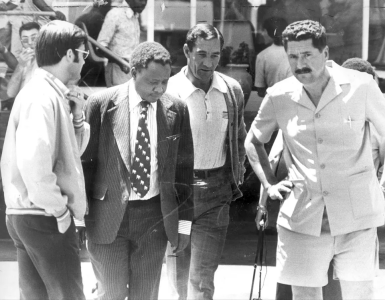
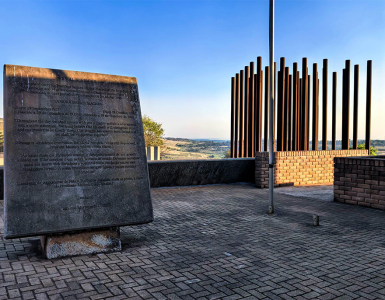
Apartheid kicked SA out of international sports, and the same apartheid was defeated by “Patriots of SA@1992”, FIFA reopened doors to our country. Leepile Taunyane, Abdul Bhamjee, Solomon Morewa, Roger Jardine, Leslie Sehume, George Thabe, Roger Sishi, Stan Tshabalala, just to name few and the droves, whose sacrifices are bound to be recalled. These are some of the heroes to be remembered when the national anthem words like “Oseboloke sechaba sa heso” (God save our nation) are sung.
If our children, who regard soccer players as their role models, hear their idols regularly use indigenous languages they would develop a deep sense of love for their mother tongue since it represents their cultural heritage. Thus, one dare not ignore the significance of mother tongue, as doing so, one would erase their cultural identity as embedded in their totems (Leboko, Isiduko, Tshirenzo, Izithakazelo).
Yet, the duty to promote, protect and preserve indigenous languages is unfortunately compromised by the carelessness and indifference shown by the State when it fails to ensure their strict inclusion at official functions.
A case in point was the swearing-in ceremony of the Members of Parliament in Cape Town, when the Minister Penny Majodina beamed confidently ready to proudly take the oath in her mother tongue, IsiXhosa, but was not to be in the end, sadly!
The Chief Justice officiating there told her that, no preparation had been done for the usage of isiXhosa, and that day isiXhosa was demoted:
* Is isiXhosa not official in SA?
* Is Parly staff not trained to deal with diverse languages;
* Has the language parity clause been deleted from the SA Constitution;
* The thorn in the entire saga was when Parliament, including the President, turned a yoke into a joke? Ironically, all were in stitches when one of the official languages was slighted;
* It is still surprising to this day that no formal public apology has been conveyed by Parliament leaders, even when a languages entity in government has been silent on this injustice;
* It is also astonishing why isiXhosa speakers specifically and the Nguni generally are still silent about this painful denigration;
* It is shocking that custodians of languages should be indifferent to the patent disrespect of their mandate, which is to hold the state accountable to ensuring the promotion and preservation of indigenous languages in government communication; and
* With this type of lackadaisical stewardship, it will be difficult to promote the development of indigenous languages in South Africa.
Finally, we applaud our soccer players as they are doing their part during PSL fixtures to shore up African languages.
A responsibility that must be shared by all of us – to identify our own role to rescue, reposition and restore vernacular by elevating it to greater heights. You and I, together, let’s save the mother tongue!