 WeeklySA_Admin
Serve : Mamoepa was a revolutionary intellectual who served the nation with dignity and commitment
By Monk Nkomo
Africans needed to rally together and work as a collective to help rid themselves of the shackles that have perpetually bound them to servitude particularly under racial oppression and capitalism.
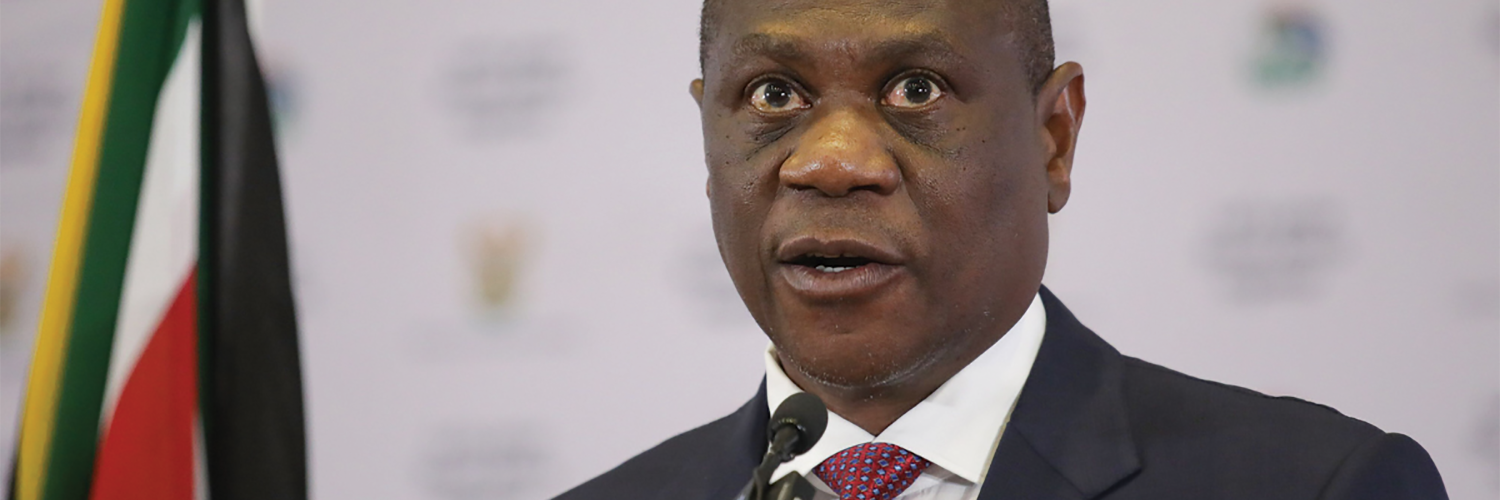
This was said by Deputy President Paul Mashatile – quoting the late Black Consciousness leader Steve Biko – at the Ronnie Mamoepa Foundation’s inauguration memorial lecture in Pretoria on Friday.
He described Mamoepa as a gallant freedom fighter who dedicated his life to the public service and a revolutionary intellectual who served the nation with integrity and commitment to make a difference in the lives of others.
‘’In the spirit of Ronnie Mamoepa, let us recommit ourselves to the values of compassion, justice and unity. Together, let us construct a future that affords everyone the chance to prosper, ensures no one falls behind and upholds the principles of equality and dignity for all’’.
It was unsurprising that this lecture took place in September – a month when the nation also remembered Steve Bantubonke Biko, leader of the Black Consciousness Movement, who taught us that Africans needed to rally together and work as a collective and rid themselves of the shackles that had perpetually bound them to servitude, particularly under racial oppression and capitalism.
Mamoepa lived his life according to the Biko philosophy ideals. This ideology advocated for the political solidarity and cultural pride of black people while vehemently condemning the inaction of white liberals.
Mashatile said he brought Biko into the conversation because of his importance to South Africa’s history and development. During the decline of the African National Congress, he inspired the movement and many others in their generation to fight against colonialism and apartheid.
‘’Steve Biko convinced us that apartheid would eventually end, but he warned that it would be dependent on Africans’ conscience and commitment. Therefore, he claimed that the the most powerful weapon in the hand of the oppressor, is the mind of the oppressed.’’
After his arrest – at the age of 19 – and release from Robben Island, Mamoepa returned to his residence in Atteridgeville, Pretoria, and resumed his political activities. During this period, he served as an executive member of the Atteridgeville-Saulsville Detainees Support Committee and the Pretoria Youth Congress.
Mashatile said together with Mamoepa, they fought against the oppressor and they equally stood against any form of discrimination. Their resolve to resist colonialism and apartheid stemmed from their belief in the vision of a South Africa in which the people governed, the country’s wealth was restored to the people, and the land was shared among those who worked it.
‘’Our vision was to establish a society free from human exploitation. As a result, we fought to secure the people’s right to work and, more importantly, to ensure that the people’s government is responsible for ensuring that the doors of learning and culture are open to all, especially the working class’’.
The country, Mashatile added, had just emerged from highly contested elections on May 29 this year. In contextualising the outcome of these elections, they had concluded that this was a strategic setback for the National Democratic Revolution. Mamoepa would have described it in the same way. He would have been critical of how the ANC had performed and, consequently, on both the strides and setbacks made towards a National Democratic Revolution, and an equal, just and prosperous South Africa.
In the same vein, he would have concurred with the notion that, under the current circumstances, the ANC had to set up either a Coalition Government or a Government of National Unity (GNU), given that they had received forty percent of the votes.
It was critical for political parties to set up the GNU as an anchor to the ANC’s approach to addressing current challenges rather than hurling concepts and slogans at them. Informed by the objective conditions, the ANC invited all political parties represented in parliament to form a Government of National Unity guided by the statement of intent and minimum programme of action.
Through a Statement of Intent, the parties that agreed to this concept had made a firm commitment to respect the Constitution and the rule of law, as well as to promote accountability, transparency, integrity and good governance.
‘’The GNU has resolved to dedicate the next five years to actions that will advance three strategic priorities: to drive inclusive growth and job creation, to reduce poverty and tackle the high cost of living and to build a capable, ethical and developmental state.
We will translate these priorities into a detailed plan and interventions, a Medium-Term Development Plan, that government will implement over the next five years’’.
The GNU was working together for a greater purpose: to build a better South Africa for everyone. This means that political parties must work together to address all the challenges the country faced.
‘’We find ourselves in a modern, dynamic and ever-changing world. The world we live in is characterised by megatrends, which are high levels of poverty and unemployment, climate change, epidemics, and technological changes characterised by ICT and digital technology’’.
Mirror Briefs
‘FIX YOUR BUSINESS’
, Gauteng MEC for Economic Development and Finance, Lebogang Maile, has launched the “Qondis’ Ishishini Lakho – Fix Your Business” campaign in Tembisa, Ekurhuleni. This is part of government’s efforts to ensure business compliance in townships, informal settlements, hostels and CBDs.
Tembisa was chosen partly because between February and September 2024, a total 203 cases of foodborne illnesses were reported in Gauteng – Ekurhuleni accounted for 116 of those – including 10 deaths.
Four recent deaths were reported in Ekurhuleni and the victims were children between the ages of 03 and 13.
A joint effort between the department, the Gauteng Provincial Treasury, the City of Ekurhuleni, SA Police Service, the Gauteng Liquor Board, the Gauteng Office of Consumer Affairs, Gauteng Gambling Board and relevant government agencies, “Qondis’ Ishishini Lakho – Fix Your Business,” is primarily meant to assist business to comply with regulations that govern businesses in Gauteng, while simultaneously enforcing compliance with the same laws.
During Maile’s monitoring and compliance blitz in Ivory Park, Winnie Mandela and Olifantsfontein townships, most of the businesses were closed in the neighbourhood’s high street apparently to evade monitoring inspections. – SANews
14 EXTORTIONISTS KILLED
The National Commissioner of the SAPS, General Fannie Masemola has revealed that 14 extortionists have been gunned down in shoot-outs with police across the country in the past two weeks.
During a media briefing in Johannesburg, Masemola said that extortion-related incidents were on the rise in Gauteng, Kwa-Zulu Natal, as well as in the Eastern Cape and Western Cape.
Efforts to stop extortion were continuing and if South African Police Service (SAPS) members were found to be linked to the crimes, they would be prosecuted and treated as criminals.
“The DPCI [Directorate for Priority Crime Investigation] and other combat teams in Kwa-Zulu Natal have arrested some of our police members in that province. Eleven members and one civilian were arrested.
As long as they do extortion or they do crime, we will treat them like criminals.” Masemola added that the crime of extortion required a specialised investigative capacity and that was why they had deployed specialist teams led by the DPCI, crime intelligence and organised crime units to lead these investigations.
Nationally, 319 extortion cases had been opened with police between April 2023 and August 2024.
Western Cape registered the highest cases with 119, followed by Eastern Cape with 82 and Kwazulu-Natal with 63 and Gauteng with 31 cases. The number of arrests linked to these cases was 151. – Lehlohonolo Lehana.
SADTU WARNS MINISTER
The South African Democratic Teachers Union (Sadtu) is calling on Basic Education Minister Siviwe Gwarube to resign after opposing the signing of the contentious Basic Education Laws Amendment (BELA) Bill into law, by President Cyril Ramaphosa.
The President officially signed the BELA Bill into law on Friday saying however that the implementation of the Bill would be delayed for three months for further conversations around ‘problematic’ clauses. Sadtu said it was unacceptable that Gwarube did not attend the signing ceremony of the Bill.
The union’s secretary general, Mugwena Maluleke, said Gwarube’s opposition indicated that the DA would now run its own separate Cabinet within the Government of National Unity.
“This is the beginning of where the minister will then be instructed by Helen Zille (DA’s federal chairperson) not to be part of this particular signing, because Zille is another pseudo president of our country,” he said in an interview with eNCA. Maluleke labelled Gwarube’s actions as unacceptable and demanded Ramaphosa to take action against her.
When asked how the union was going to approach the implementation of the Bill, while Gwarube was at the helm of the education ministry Maluleke said the ball was in the minister’s court to decide and make the work of the President very easy by resigning. “She will not be able to operate in an environment where she has two bosses, one being Zille and another one being Ramaphosa.’’
Ramaphosa said all people should have equal opportunity to access education, regardless of their race, ethnicity, gender, sexual orientation, religion or physical or mental impairment. – SA News
EMFULENI’S R8-bn BLUES
Power utility Eskom has confirmed that the Sheriff of the Court had successfully attached the Emfuleni municipality’s four bank accounts for Eskom to recover about R8-billion in arrear debt, ensuring that the money collected for electricity was paid directly to the utility.
This followed the municipality’s failure to comply with the requirements of the National Treasury debt relief programme. As of August 31, Emfuleni owed R8.05-billion for bulk electricity. Emfuleni was among the top three municipalities in debt to Eskom. The utility emphasised that municipal debt remained one of its biggest challenges. As at March 31, municipal arrears stood at about R74.4-billion, of which R15.9-billion was incurred in the last financial year.
The attachment of the bank accounts would allow Eskom to receive payment for the electricity it supplied, ensuring continued service to the municipality’s customers. Eskom stressed that it had exhausted all legal and mediation avenues to secure payment for services rendered to the municipality since 2018.
Collecting municipal debt was a key focus for Eskom. The company would employ various strategies to recover owed funds, enabling investment in maintaining and strengthening electricity supply, fostering socio-economic growth and reducing the need for interventions such as load-shedding.
‘’Eskom cannot financially sustain the electricity debt of the municipality without severely impacting on its own operations and the citizens of the country. – Fullview.