 WeeklySA_Admin
CHARTER: Mbeki’s revisionist lecture on Das Kapital dissuaded comrades stuck in socialist thinking
By Jacob Mawela
Only former President Thabo Mbeki had the gumption to steer away his ANC comrades from the idealism of socialism as the post-apartheid South Africa approached and stumbled into the new democratic South Africa.
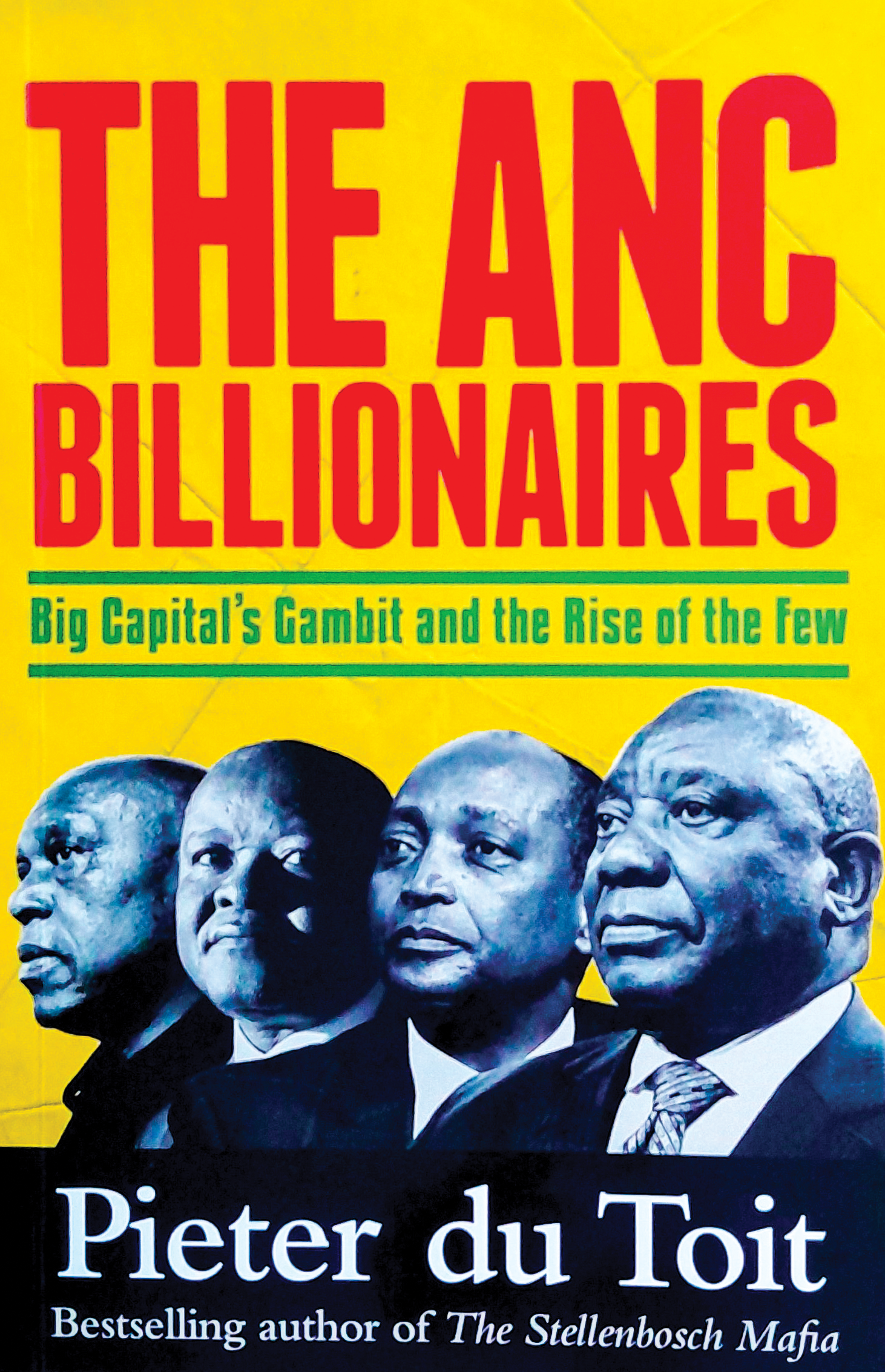

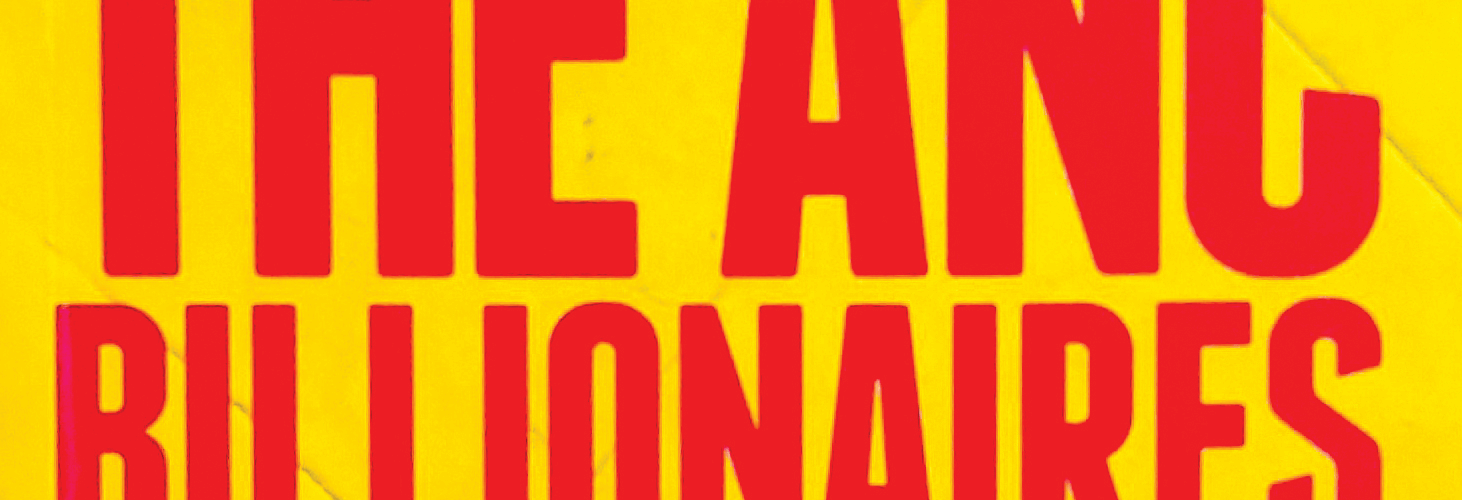
Author of the book, The ANC Billionaires, Pieter du Toit, paints a picture of real, or might we say, a palpable fear that “fossilised’ economic ideas stuck in the ANC’s 1950s Freedom Charter and Marxism-Leninism”, were a real threat to business and the country’s economy.
The mood, as secret talks between the ANC and big business unfolded in Zambia in the 1980, the exiled home of the ANC, the fear of an unknown and uncertain future loomed large.
Negotiations for talks to end apartheid had begun in earnest, with leaders of big business taking an initiative to talk to the exiled ANC about the country’s future – often unknown and murky.
Mbeki, an erudite economist, appeared to be a sensible, open-minded ANC leader and big business pinned their hopes on, and trusted, to save the situation. Anglo-American executive chairman Gavin Relly believed that leaders such as Mbeki, a skilled economist, would help to influence political events in the emerging new South Africa.
This, he would do, argued Relly, by ensuring that when the new democratic South Africa became a reality, and when the ANC was installed as the government of the day, the country would be sensible enough not implement a socialist economic order, but would follow other prosperous paths that would lead to economic growth
The Zambian visit by big business to meet exiled ANC – which the then president P W Botha had attempted to prevent – set in motion a coordinated and well-resourced plan by big business, particularly the Anglo-American and its leadership to align with the post-apartheid political elites
There was a sentiment that the formerly excluded black business sector would be assimilated into the big capitalism paradigm through black economic empowerment.
But frustration continued to swirl in Relly’s mind with what he saw and heard, returning from Zambia, where he and his team had met the ANC leadership – noises of a socialist state in the envisaged future South Africa was overwhelming.
Relly was venting that “there’s no modern economic thinking in the ANC” and was unimpressed by the liberation movement’s “fossilised” economic ideas. Also, he wondered why the hardliners within the ANC did not recognise the folly of the socialist order which they seemed to embrace with relish in the face of the rapid globalising new world of the 1980s.
Relly and his colleagues, among others, Bobby Godsell, who in the past used to face-off against the Ramaphosa’s National Union of Mineworkers (NUM) at the Chamber of Mines bargaining platform in the 1980s, were not the only businessmen exasperated with what was regarded as the ANC’s economic backwardness. Black businessmen Richard Maponya and Sam Motsuenyane’s pro-capitalist overtures were rebuffed by the then incarcerated Nelson Mandela.
But in the end, with political victory achieved in 1994, the lure for big money increased.
First, there was, according to the author, Du Toit, Dr Nthato Motlana pulling President Cyril Ramaphosa over to his side by scruff of the neck, whispering into his ears: “You will have enough money to be incorruptible.”
Sweet words from the then New Africa Investment Limited (Nail), executive chairman, the late Nthato Motlana, to Cyril Ramaphosa, then a young 43-year-old former trade union leader.
By then, in 1995, a year after the ANC had taken control of the country, Ramaphosa was hoisted to a position of secretary- general – a powerful and influential position within the ANC – the oldest liberation movement in Africa.
The words from Motlana, the ANC heavyweight stalwart in his own right, that “you, Ramaphosa, will have enough money in business”, and not in politics, had their own allure.
The possibility of being a billionaire was attractive – from a poorly paid trade unionist and ANC secretary-general to the firmament of being one of the richest South Africans – not a millionaire, but a billionaire.
Motlana, the father of black economic empowerment, had anointed his man, the 43-year-old Ramaphosa to join the ranks of the wealthiest South African business elites that had overtly chosen a capitalist path, darkened by swathes of millions of poverty-stricken African people, most of whom unemployed, with no possibility of gaining employment, given the dismal low economic growth experienced by the country.
Motlana was committed to have Nail led “by trusted and credible African leaders” such as Ramaphosa.
Ramaphosa had, according to the author, reportedly expressed his willingness to join the entity, and to assume the position of deputy chairman in the Nail stable. President Nelson Mandela, with Ramaphosa and Motlana in tow, at a media briefing, told the media conference, held in Cape Town, in 1996, that “it has been decided that comrade Cyril Ramaphosa would be taking up a senior position in the private sector”. Unnerved by the moment, Ramaphosa responded in kind: “We need more black people at a senior level to begin to transform the economy, and I want to play a role.”
Motlana argued that even if Ramaphosa did have political ambitions – he would still return to politics as a wealthy man. It is now seven years since Ramaphosa ventured back to politics as president of the country after former president Jacob Zuma was forced out of power because of alleged corruption and other improprieties.
But there have been several failures in business under Ramaphosa and his principals.
Ramaphosa’s biographer, Anthony Butler said Johnnic’s demise “came to represent the disappointed hopes of the first era of black empowerment as it was expected the company would become the premier black company of its era”.
Prior to the Johnnic loss, Nail, with Motlana and Ramaphosa seeking involvement in mining, had also lost out on a further 35% stake
Following these setbacks, AngloGold’s then chief executive, Godsell enquired: “How often do you think Cyril Ramaphosa has put his hand in his pocket to invest in businesses that he owns?”
Godsell’s assertion would be corroborated when Ramaphosa conceded that, “frankly speaking, I didn’t have skin in the game” – in reference to not having invested any of his own money in Johnnic – in the aftermath of the Johnnic takeover.
After an acrimonious end to his Nail tenure in 1999, Ramaphosa proceeded to establish Millennium Consolidated Investments, which became Shanduka in 2004. This entity had acquired stakes from companies such as Alexander Forbes, Liberty, and later owned the South African McDonald’s franchise.
Shanduka would also acquire 1.2% of Standard Bank and 1.8% of Saki Macozoma’s Safika in a deal worth R5.5 billion – with China Investment Corporation in turn acquiring a 25% stake in it for a partnership a Namibian power broker Jürgen Kögl contended was purely for political and strategic reasons since Ramaphosa was in the future likely to become the country’s president
Investing in him was deemed a good decision at the time. While Ramaphosa was exiled from politics for 16 years between 1996 and 2012, he was able to amass a fortune arguably unmatched by anyone making the transition from politics to commerce, wrote Du Toit.
When Ramaphosa returned to politics in 2012 as the ANC’s deputy president, and of the country in 2014, he profited an estimated $200 million from Shanduka’s acquisition by Phuthuma Nhleko’s investment firm, Phembani.
By 2015, Ramaphosa was regarded as the 42nd richest person in Africa with a fortune estimated at $450 million – a status, wrote Du Toit, not owing to him and others being shrewd businessmen, but rather to being favoured because of their links to the governing ANC. Du Toit includes Patrice Motsepe among beneficiaries of empowerment.
The book contends that Ramaphosa and ANC associates, who included Saki Macozoma, the Safika billionaire who ascribed his success to BEE.
Tokyo Sexwale, former Gauteng premier, is the founder of Mvelaphanda Holdings, regarded the third richest man in the country with a net worth of $200 million.
In the end, argues the author, the riches acquired by the ANC heavyweights, including Ramaphosa, was derived from the assumption that the organisation harboured a sense of entitlement expressed through the rationale that political power entitled members of its organisation to huge economic benefit.
One has to wonder what would have happened to all the ANC billionaires had the movement stubbornly stuck to the idea of creating a socialist state.
Should accolades be accorded to former president Mbeki?
• A trade paperback, The ANC Billionaires is published by Jonathan Ball Publishers. Available at leading bookstores countrywide. It retails for R330