
 WeeklySA_Admin
FUTURE: ‘Sunset clauses must not shield corrupt or apartheid-era interests, as they did in 1994’
By Ido Lekota
The call by President Cyril Ramaphosa for a national dialogue offers South Africa another opportunity to reshape the country’s future accommodative of the needs of all South Africans.
Yet history cautions us that without rigorously opening the process to as heavily an inclusive cross-section representation as possible, the project runs the risk of turning into a damp squib, vulnerable to being rubbished by the many as an elite-dominated project – and whatever value it might have, will be lost in endless, puerile, and unhelpful debate and mudslinging.
This dialogue must transcend political theatre built upon a genuinely inclusive structure, whose outcomes lend themselves to be enforced – with safeguards to ensure tangible progress.
While the new Ramaphosa process has a lot to learn from the Convention for Democratic South Africa-like process that laid the foundation for the new democratic society, caution should be exercised the organisers of the dialogue do not exclude in their talks marginalised communities, and still expect them, in the long end, to endorse, or rubber-stamp, a process they had no part in its formation.
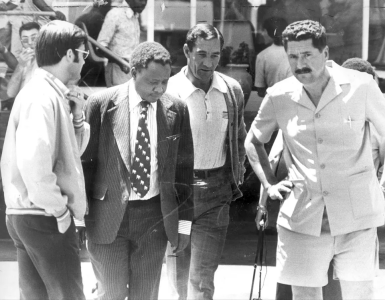
The Codesa process of the 1990s excluded ordinary folks from determining its destiny, and today the country pays a heavy price for its lack of foresight. Now democracy is perceived by some, rightly or wrongly, as an elitist dispensation dominated by the high-ranking of society to the exclusion of the lowly placed members of society.
The “sunset clause” to secure peace and preserve apartheid-era privileges is a mistake the proposed dialogue should avoid – allowing political and business elites to steer the discussions.
Paying lip service to public participation will collapse under the weight of its own irrelevance. A dialogue without accountability is not useful; it is an aberration.
There is also Rwanda’s post-genocide dialogues to learn from – whereby stability was achieved through “enforced unity”.
Grassroots Gacaca, or community-based court system in Rwanda, was used to address the genocide in 1994, but political dissent was systematically suppressed – economic progress came at the cost of freedoms. South Africa cannot – and must not – mirror this authoritarian approach, which was an experience of the Rwandans.
On the other hand, South Africa can still learn from Rwanda’s structured and outcome-driven model. The challenge lies in balancing inclusivity with accountability, ensuring agreements translate into action without silencing legitimate opposition.
To this end, independent oversight is non-negotiable. The process must be facilitated by neutral bodies. Transparency, through live-streamed sessions and public records, is essential to prevent elite manipulation.
Second, grassroots participation must be prioritised. For example, provincial and local dialogues could feed into national discussions, avoiding Codesa’s top-down approach. Digital platforms, from SMS polls to online forums, can amplify ordinary citizens voices, ensuring the agenda reflects public needs, not political interests.
Most importantly, agreements must be binding, not symbolic. Accords should carry legal weight, with clear deadlines — such as land reform within five years — and independent monitoring council to track progress and hold leaders accountable.
On the other hand, conflict mitigation mechanisms are critical. A multi-party peace committee could prevent violence from sabotaging talks, while judicial oversight by the Constitutional Court would arbitrate disputes fairly. Finally, the powerful cannot wield veto power. Sunset clauses must not shield corrupt or apartheid-era interests, as they did in 1994. Economic justice cannot be bargained away to appease political or business elites.
South Africa cannot endure another theoretical exercise. This dialogue must bind leaders to their promises, bring to the fore marginalised voices, and deliver measurable change. Without these safeguards, Ramaphosa’s initiative risks becoming another performative gesture as the foundation crumbles. The time for empty talks has passed.
What South Africa needs now are structured, enforceable, people-driven solutions. A dialogue built on accountability, not just aspiration, is the only initiation worth having.
The question remains: Will this be the moment South Africa turns rhetoric into reality, or will history remember it as another missed opportunity?
• Ido Lekota is a political analyst