 WeeklySA_Admin
IMPUNITY: South Africa’s roads are no longer for commuting — they are battlefields, policed by men in reflective vests, armed with sjamboks and guns. A blistering look at how unchecked taxi power has turned commuting into coercion — and law into theatre…
By Themba Khumalo
I may be exaggerating, but South Africa is the only country where going to work feels like stepping into a combat zone with poorly trained referees and men armed with whistles, guns, sjamboks, and the kind of entitlement that could flatten a village.
You do not commute here. You negotiate, bargain, pray, occasionally scream into the void, and sometimes weep quietly in the car — all while hoping your car survives without becoming a sacrificial offering to the taxi gods.
And just when you thought the taxi industry had exhausted every permutation of audacity — transport operator, informal tax collector, street magistrate, part-time warlord — it unveiled a new venture: Education Oversight.
Street law
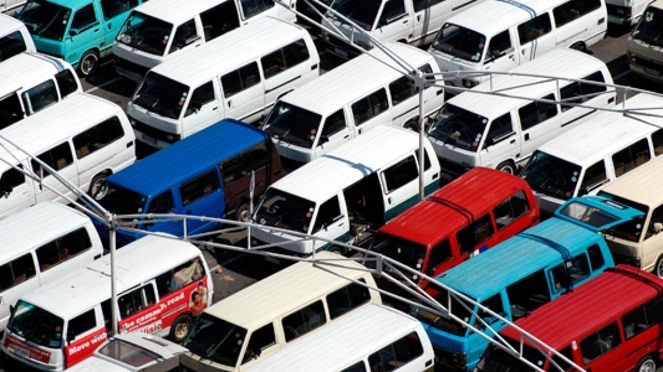
Yes. The Mhlumayo Taxi Association, in Ladysmith, KwaZulu-Natal, that globally recognised temple of logic, decrees that teachers must stop driving their colleagues to school. Not because it is illegal. Not because it is unsafe. No, because it interferes with the taxi industry’s divine right to monetise your existence down to the last R50 note.
Their reasoning is immortal: “We don’t teach, so don’t load.”
Pure genius. Absolute logic. Complete disregard for decency, law, or common sense. By this reasoning, since taxi bosses do not govern, they should stop pretending to run the country; since they are not police officers, they should stop policing citizens; since they do not own the roads, they should stop acting like feudal lords, guarding their inherited dirt with sjamboks, guns, and ‘God-given’ arrogance.
Consistency is optional. Logic is optional. Humanity is optional.
The threat that unauthorised vehicles “will not pass” is not a warning. It is poetry. Criminal poetry, written in shattered glass and twisted steel. Translation: Nice car you’ve got there. Shame if you ever reach your destination intact.
“As the Mhlumayo Taxi Association, we would like to inform you that as from 16 February 2026, we will not allow private vehicles, including those driven by teachers, to transport other people,” the notice read — a decree delivered with all the subtlety of a hammer to a side mirror.
‘Attending to it’ is not action; it is meticulous inaction masquerading as concern…
It stated, in case the message was not clear, that a motorist must travel alone in their vehicle — apparently, companionship is now a crime. However, should any poor soul be found carrying passengers, the association warned with polite menace, they would not be allowed to pass.
“We ask that there be no conflict over this matter, as this is our line of work. You won’t find us teaching. Can we please respect each other?”
Respect, it seems, is a one-way street — theirs. Mirrors, doors, and human decency be damned, the road belongs to the taxi empire, and anyone daring to flout that sacred order must take their chances.
Enter SANTACO, shuffling onstage to perform its longest-running play: We Are Attending to It.
They have been “attending to it” since Nokia and Ericsson phones were in fashion, back when ringtones chirped, and batteries lasted a week.
“Attending to it” is not action. It is theatre. It is meticulous inaction masquerading as concern. Every smashed mirror, every damaged car, every bullied commuter, every intimidated teacher, every life quietly erased, is catalogued in their invisible attendance register under the sacred heading: We Are Attending to It.
They attend to it like a man watching a house burn while adjusting his tie, sipping lukewarm tea, and politely asking if the fire has an appointment. They attend to it like a symphony of indifference — precise, rehearsed, immune to logic, empathy, or shame.
Oversight through inaction
Meanwhile, ministers issue statements. MECs nod at stakeholder forums. And the nation watches this circus, popcorn in hand, outraged but powerless. Stakeholder engagement, South African style, is not governance. It is a polite dance around lawlessness while the streets quietly drown. Meetings are held. Consultations occur. Platitudes are exchanged. And the problem grows, gnaws at commuters, and bullies road users — entirely undisturbed.
The “business forums” are no better. Let us not insult actual businesses by using the word. These are toll booths with logos. They do not innovate; they intimidate. They do not create; they extract. Their business model is: block access, demand tribute, and call it “economic participation.” They are extortion in camouflage, legitimised by fear, bribes, and awkwardly phrased PowerPoint slides.
So here we are: a nation with a Constitution thick enough to stop a bullet, enforced with all the authority of wet cardboard. Laws exist — technically. Courts exist — theoretically. Decency is written into textbooks — for those who still read. But on certain roads, none of that applies. There, the real authority is a man in a reflective vest, armed with a whistle, a sjambok, and a gun, and an unshakable belief that the road was personally gifted to him by the ancestors.
And spare us the platitudes about “business licences.” Since when did a transport permit come with the divine right to dictate who may give a colleague a lift? What is next — teachers fined for walking too confidently? Nurses taxed for daring to ride a bicycle? Parents invoiced for carrying their own children? Perhaps soon we will need permission just to blink, or a licence to exist outside the sacred schedule of the taxi empire.
We are a country drowning in unemployment, collapsing services, and public despair — yet the greatest emergency in the eyes of the taxi bosses is that a teacher might save R50 by giving a colleague a lift. That, apparently, is the real threat to national security.
Stay safe out there.
And teachers, commuters, private car owners, anyone who dares drive on these cursed roads: consider travelling by donkey, canoe, or crawling. For now, the taxi industry has not yet claimed ownership of livestock, rivers, or human knees.
But do not be fooled.
Unchecked power in South Africa never stops taking. It moves slowly, patiently, like a vulture circling a bleeding carcass, with the smug confidence of someone who knows the law cannot touch it, ministers will not touch it, and stakeholder forums will applaud while the rest of us bleed quietly.
SANTACO “attends to it”. Commuters are bullied. Cars are dented, doors ripped off, windows shattered. Teachers are intimidated. Lives are threatened. Deaths are shrugged off like a spilt cup of tea. Mirrors explode. Side panels crumple.
And we are all expected to clap politely, keep our insurance receipts in order, and wait for accountability — sometime in this century, maybe the next, perhaps when pigs fly a Quantum.
In South Africa, law stops where entitlement puts on a reflective vest.
*Themba Khumalo is a political commentator and former editor