 WeeklySA_Admin
US-based, Malawian-born Associate Prof Paul Tiyambe Zeleza recently spent three weeks travelling through Zimbabwe and South Africa, and shares his impressions…
LANDSCAPE: A lyrical travelogue turns into a political meditation: South Africa’s contradictions, Zimbabwe’s endurance, and the global anxiety sparked by America’s democratic backsliding…
By Paul Tiyambe Zeleza
Leaving Johannesburg, I carried two truths that sit side by side without cancelling each other out. South Africa is a place of astonishing beauty, creativity, and resilience. It is also a place wrestling with inequality, broken systems, and the unfinished work of liberation.
After three and a half weeks in South Africa and Zimbabwe, returning to the United States feels like stepping out of a vivid, sun-soaked world into a colder landscape of unease—as if public life itself has forgotten how to breathe. The saturated colours, layered conversations, and unexpected encounters of the past month still cling to me. What stays longest is not only the beauty of the places, but the movement between them: the jacaranda-lined avenues of Pretoria, Cape Town’s mountains and oceans, the mist-shrouded thunder of Victoria Falls, and the sprawling, ever-becoming cityscape of Johannesburg.
Leaving Johannesburg, I carried two truths
that sit side by side without canceling each other out..
The journey began in Pretoria, where broad streets unfurl beneath purple blooms and the Union Buildings sit like sentinels above the city.
Pretoria: Learning in Future Africa
My wife and I spent five days in Pretoria as one of six facilitators in a leadership development forum for university administrators from across the continent, organized by the International Association of Universities (IAU) and UNESCO. Sessions were held at the Future Africa Campus of the University of Pretoria. I presented twice: first on “Rethinking Revenue: Diversification and Fundraising in Universities,” and then on “Steering Higher Education in the Digital Era.”
The discussions were textured with urgency and imagination. It was a pleasure working alongside fellow facilitators—current and former vice chancellors (presidents) from Egypt, Ghana, Britain, South Africa, and Australia, and a provost from the United States—together with participants from universities across the continent. I learned as much as I taught, not only in formal sessions but also in side conversations over coffee breaks and dinners.
Outside the program, Pretoria revealed itself in quieter ways. I walked through neighborhoods around campus, absorbing the rhythms of this administrative capital. Shops and cafés carried the rituals of daily life—parents shopping for the holidays, friends meeting after work, young couples speaking in low, earnest tones, older men turning pages slowly and lifting their eyes now and then as if weighing the world against the headlines. In bakeries and small shops, people queued patiently, exchanging greetings in English, Afrikaans, and Setswana. There was something grounding about watching ordinary suburban life unfold: gardeners shaping hedges, students returning from school, workers making their way home. Dignity lives in routine, and belonging is built through the steady acts of everyday gesture.
Cape Town: Where Oceans and Histories Meet
From there, the world widened in Cape Town, where we spent a week. We stayed at a boutique hotel at the Waterfront—a lively convergence of ocean, commerce, and culture. Each evening we sampled different restaurants, feasting on seafood and conversation. One night, joined by friends, we dined downtown to the sounds of a legendary South African jazz musician. The music rose like memory and lingered in the evening air.
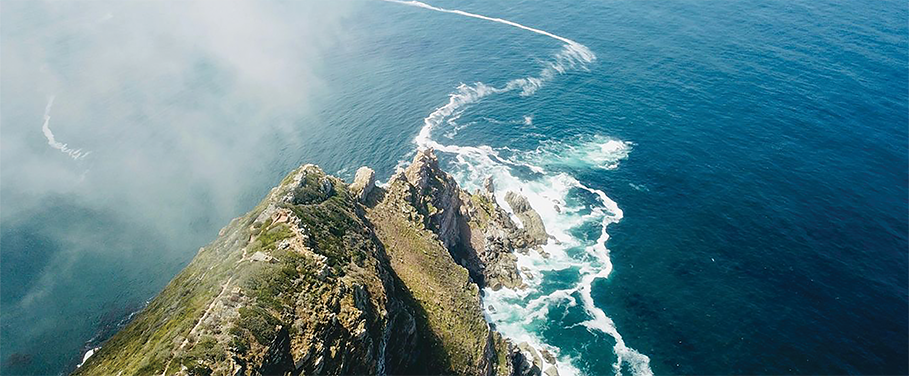
We spent a day with a friend, a senior administrator at the University of Cape Town, and his wife, driving along the coastal road toward Cape Point. The road curled along the mountainside like a ribbon laid between rock and sea. At lookouts we watched the ocean shift from slate to turquoise as sunlight climbed. Each turn revealed new vistas—vineyards tucked into valleys, pastel houses clinging to slopes, fishing boats scattered across the bay like flecks of paint.
We stopped at Boulders Beach, where penguins waddled into the surf with disarming dignity, then passed through Simon’s Town, home to South Africa’s principal naval base, before arriving at Cape Point where the land drops into wind and endless sea, a place that feels like both ending and beginning.
Another day, an old family friend—an academic born, bred, and intellectually formed by Cape Town—guided us through neighbourhoods layered with history, loss, and extraordinary beauty. With her, the city became a living text, written in memory and resilience, alive not only in its scenery but also in its silences. Cape Town’s contradictions are unmistakable: immense wealth and deep inequality; cosmopolitanism and provincialism; effortless glamour and enduring dispossession.
City of Wonder
Between outings, we walked the long promenade to Sea Point and paused at neighbourhood eateries for refreshments. One morning I visited the Zeitz Museum of Contemporary African Art, reportedly the largest museum dedicated to contemporary African and diasporic art. The building itself felt like a monument to creative possibility.
Cape Town lingers in the mind. Table Mountain rises like an ancient presence. The harbour shimmers with promise. The promenade at sunset can leave you wordless. It is no wonder the city, with mountains meeting two oceans and a vibrant urban energy, draws global visitors and new residents in numbers that increasingly price many locals out. The result is a social geography being reshaped in real time—a city of wonder and tension, where beauty and strain coexist.
Victoria Falls: At the Mouth of Awe
Victoria Falls arrived like revelation. Nature there overwhelms language: thunderous sheets of water collapsing into a gorge of mist and rainbows, the earth breathing in geologic time. We stayed five days at an old, elegant hotel built in 1904 that somehow manages to feel intimate. The service is superb without being obsequious, anchored in a graciousness inherited from another era.
Our room was spacious and full of old-world charm—polished wood, high ceilings, and windows opening to birdsong. The grounds, dotted with mango trees, overlooked shimmering greenery and the far-off plume of mist rising from the falls like smoke from a sacred fire.
Settler colonial past
The national park is astonishing in scale. The cataract runs for more than a mile, forming an immense curtain of water that seems to split the world open. Along the stone walking trail, visitors from Zimbabwe, neighbouring countries, and all corners of the globe moved in steady streams. Standing near the roar, spray thick in the air, we were drenched within seconds. Awe has a way of stripping one down to humility.
One evening we took a sunset boat cruise along the Zambezi, the fourth-longest river in Africa, beginning in north-western Zambia and eventually reaching the Indian Ocean through Mozambique. Light caught in reeds. Hippos surfaced, showing huge teeth. Crocodiles basked along the banks. The passengers formed a temporary community—voices, accents, races, and stories braided together by shared wonder.
We also ventured beyond the hotel. We visited the mall, ate in town, and browsed craft shops filled with carvings, fabrics, ornaments, and paintings. As is my habit, I bargained—not only for the transaction but for the conversation. I spoke with Uber drivers about politics and the economy, about daily pressures and future hopes. Their candor revealed a country navigating hardship with creativity and endurance. The settler colonial past has not disappeared; it continues to negotiate itself with the harried postcolonial present.
Johannesburg: The Glitter and the Grind
From Victoria Falls, we travelled to Johannesburg, where we spent ten days. It felt like the final movement of a symphony—restless, bruised, inventive, and defiant. Johannesburg never sits still. It thinks aloud. It improvises. It hopes in public.
We stayed in Sandton, the financial heart of the city, often described as the wealthiest enclave on the continent.
It is a glittering collage of corporate towers, polished malls, fine restaurants, and luxury hotels. Nelson Mandela Square, a short walk from our hotel, served as a daily anchor, with locals and visitors gathering beneath Madiba’s statue.
Our time was shaped by visits to places where history remains close to the skin. We toured Soweto and spent an afternoon at the Nelson Mandela House Museum, impressively upgraded since our last visit in 2008. A driver guided us through landmarks and took us up to Northcliff Hill for a sweeping view of Johannesburg’s sprawl: suburbs, townships, shopping nodes, and distant towers shimmering in the summer heat.
Another day, an old family friend—one of South Africa’s leading writers, her name woven into the history of the ANC and the anti-apartheid struggle—took us to the Sterkfontein Caves, part of the UNESCO-designated Cradle of Humankind. Few places humble you like those caves, where the timelines of human history stretch into millions of years and remind you how recent our politics truly are.
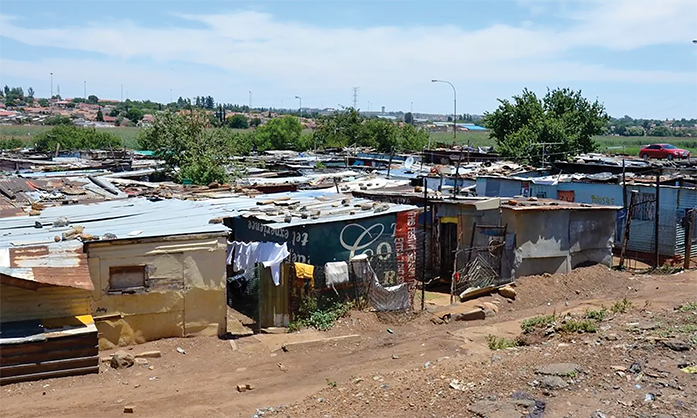
On our own, we moved across the city in Ubers, seeing Johannesburg in layers: old townships where the nation reckons with itself, and new developments like Waterfall where the future is rehearsed behind gates and glass.
But what made Johannesburg most memorable was reconnection. On several days we spent time with one of my nieces, whom I had last seen in 2012 when she was thirteen, and her mother. One highlight was Christmas lunch at a hotel restaurant—warm, bright, expansive, overlooking a yard where midday light filtered through high windows. Two musicians performed festive music by African American and South African artists, threading soul, jazz, and township rhythms into the holiday air. The restaurant was filled with people from across the city and beyond—languages layering into a living portrait of the rainbow nation.
The day after Christmas we visited old friends: first a former vice chancellor of the University of Pretoria, then later a former vice chancellor of the University of Johannesburg, who welcomed us into his home in Houghton. Over a generous meal the conversation widened—South African universities, global politics, personal memory, national memory, and the unfinished work of liberation. It was the kind of exchange in which hours pass like minutes.
Economic dynamism
Johannesburg is also a city where transformation is visible, especially in the expanding Black middle class. Post-apartheid South Africa has seen the growth of Black professionals and households with stable incomes—now larger than the white middle class and an engine of economic dynamism. Yet the gains remain uneven. White households still hold most national wealth, and inequality persists both across and within Black communities, widening gaps between mobility and stagnation.
We also met African Americans—at hotels, restaurants, tourist sites—some visiting, others planning to relocate, and some already settled.
Many spoke of South Africa as a place where they could breathe more freely, where racial hostility felt less crushing, and where their standard of living could stretch further than in the United States. Their reflections carried both relief and reinvention.
At the same time, we met African migrants from other parts of the continent, especially Zimbabwe, my country of birth, drawn by professional opportunity, education, or simple hope. Their journeys held resilience but also vulnerability, shadowed by the unpredictable flare-ups of xenophobia in a highly competitive society.
Johannesburg left its mark. It is a city of contradictions where triumph and sorrow share the same street. Yet it is also a city of irrepressible creativity—art, film, theatre, music, and the ongoing pulse of Amapiano. In its best moments it feels like standing backstage before the curtain rises, the orchestra tuning, history not yet performed but already rumbling.
Questions We Could Not Escape
Wherever we went in South Africa and Zimbabwe, conversations eventually circled back to the United States. Almost everyone asked about it: Uber drivers, hotel staff, vendors, friends, strangers who heard my wife’s accent. They wanted to understand how someone as crude, cruel, and chaotic as Donald Trump could be re-elected president. They wondered what had happened to a country once imagined as a global model of democratic aspiration. They asked why American institutions—Congress, corporations, universities—appeared hesitant, uncertain, even craven, in the face of democratic backsliding.
Some raised the rapid spread of misinformation in certain right-wing ecosystems, including claims about so-called genocide against Afrikaners in South Africa, often amplified by prominent online voices. They wanted to know how such narratives travel, and why so many Americans appear willing to treat them as truth.
A few expressed support for Trump’s “America First” agenda. But it was clear this was often less an endorsement of what his administration was doing, and more a projection: a wish that African leaders might also put their own countries first, govern with urgency, and act with clarity of purpose.
In response, we shared our view that the United States has always been a flawed democracy rather than a full one. Structural distortions remain: the Electoral College, gerrymandering, politicized courts, uneven voting rights. These are anchored in the country’s original sin of white supremacy, a contradiction never resolved. Demographic change—the fear of becoming a majority-minority nation—has accelerated the crisis, producing a volatile mix of racial anxiety, nativism, and ethnonationalism.
We also noted that the U.S. crisis does not exist in isolation. It mirrors a global current. Across parts of Europe, identitarian movements have returned, alongside populist parties restricting immigration from the Global South. Asylum seekers are treated as threats rather than people.
Fragile democracies
Anti-immigrant rhetoric becomes normal parliamentary language. In this climate, some American factions sympathetic to such politics look at South Africa’s apartheid past not only as warning, but as blueprint—an imagined model for preserving cultural dominance and minority rule. The result is a feedback loop: American racial panic and European anti-immigrant populism reinforcing each other, trading vocabulary and strategy.
The questions were not asked with malice. They were asked with concern, confusion, sometimes sorrow. If democracy can falter in the United States, many wondered, what hope remains for younger or more fragile democracies? America’s crisis, we were reminded, is never only America’s affair. Its failures are watched, its struggles studied, its consequences global.
These encounters stayed with us as we boarded our flight from Johannesburg to Washington, DC. They formed the background to our reflections on South Africa itself—a country still in motion, still negotiating the meaning of freedom. We were struck by how well informed so many South Africans and Zimbabweans are about global affairs, especially the United States, often with greater nuance than many Americans display toward Africa. Knowledge, like mobility, is distributed along the lines of power.
We were also fascinated by how predominantly Black the flights between Washington and Johannesburg have become, a stark contrast to past decades. In the late 2000s, I wrote about the “whiteness of airports” and how white bodies dominated global circuits of travel, even to and from Africa. That is no longer the case. Even with visa restrictions and frictions that govern mobility from the continent, something has shifted. The skies themselves are changing.
Conclusion: A Country Still in Motion
While our visit to South Africa was largely a vacation, save for the Pretoria forum, I cannot help putting on my analytical hat. Travel sharpens perception: the beauty of the present coexists with the shadows of the past.
Since 1994, South Africa has made undeniable gains. It has sustained democratic institutions, expanded civil liberties, unified a previously fragmented education system, and widened access to housing, water, electricity, and healthcare. Millions who once lived at the margins were brought closer to the center of national life. For a time, growth was strong, and macroeconomic management improved compared with the uncertain twilight of apartheid.
Yet structural legacies remain formidable. South Africa still bears the burden of extreme inequality. Unemployment is staggering, especially among young people. Infrastructure strains persist—water systems under pressure, service delivery gaps, and recent years marked by energy insecurity. Corruption and governance failures continue to erode trust. Education has expanded access but struggles with quality, uneven resources, and exhausted institutions. Land and housing inequality remain unresolved, shaping who belongs where and on what terms.
And yet South Africa is not a simple story of either decline or progress. It is a story of contestation—what radical political economists once called uneven development: growth without development, mobility without justice, democracy without full economic transformation.
Unfinished liberation
It is a country where the future is being negotiated in real time. It remains one of the postcolonial states where constitutionalism, civic voice, and democratic accountability retain meaningful force. Its cultural and intellectual life is vibrant. Its universities remain laboratories of critique and reinvention. Its people continue to organize, build, imagine, and refuse despair.
Leaving Johannesburg, I carried two truths that sit side by side without canceling each other out. South Africa is a place of astonishing beauty, creativity, and resilience. It is also a place wrestling with inequality, broken systems, and the unfinished work of liberation. Perhaps that is the point: freedom is not an arrival; it is a process. And in South Africa, that process continues—noisy, brilliant, wounded, determined, and alive. – The Elephant News
* Paul Tiyambe Zeleza is a Malawian historian, academic, literary critic, novelist, short-story writer and blogger. He is the Associate Provost and North Star Distinguished Professor at Case Western Reserve University