 WeeklySA_Admin
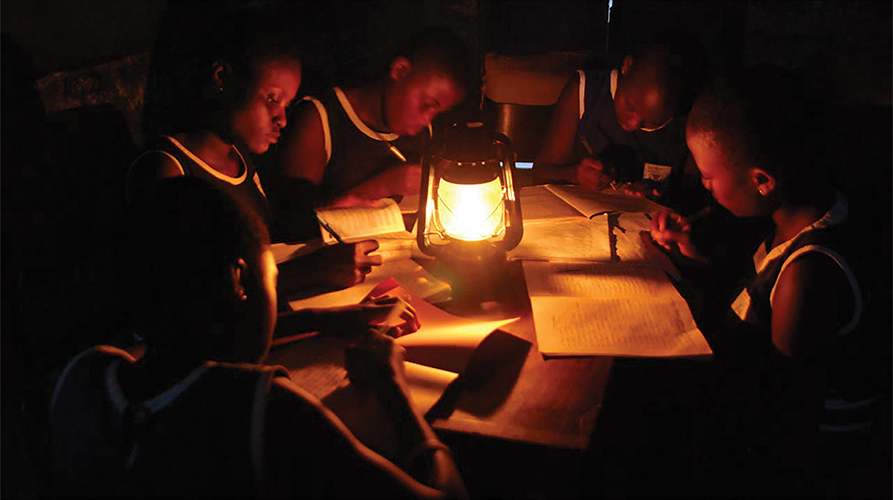
Access: 600 million community members in Africa have no access to electricity
By Monk Nkomo
South Africa’s Minister of Electricity and Energy, Kgosientsho Ramakgopa, has announced a R2,23 trillion investment plan to overhaul the country’s energy aiming to add 105, 000 MW of new capacity by 2039.
Speaking on the last day of the three-day 2026 Africa Energy Indaba that was held in Cape Town this week, he also emphasized that Africa must approach nuclear energy with “responsibility, institutional discipline and industrial intention” to ensure reliable, emission-free and sovereign power.
‘’ For too long Africa’s development has been constrained by structural energy insecurity. Grid instability erodes confidence. Import dependency exposes economies to volatility. Nuclear offers stabilising anchor within that volatility. It provides predictable, long-term operation. It reduces exposure to fuel shocks . It enables decarbonisation without sacrificing reliability.’’
Ramakgopa said if the world was serious about tripling nuclear capacity by 2050, Africa must be central to that ambition that required financing structures aligned with developmental realities. It required multilateral institutions to move decisively from policy eligibility to implementation. It also required vendor nations to integrate localisation, skills transfer and in comprehensive participation.
Focus must shift from theoretical debate to the delivery of infrastructure. “History will judge this generation not by the debates we convened but by the infrastructure we delivered”.
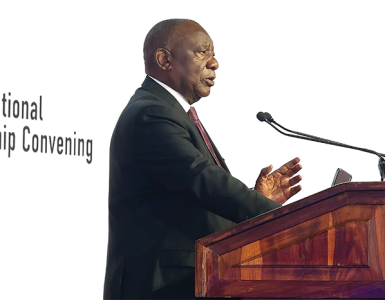
Earlier, President Cyril Ramaphosa, in his opening address to the Indaba, announced that more than 600 million Africans did not have access to electricity despite the fact that the continent had an abundance of critical minerals beneath its soil including energy that was being sought globally for technological applications.
Alongside substantial oil and gas reserves, Africa also had abundant solar resources, wind corridors and major river systems. Yet, alongside this natural wealth, Africa experienced energy poverty.
‘’The Indaba is an opportunity to harness our collective efforts towards realising an Africa that meets its needs for reliable and cost-effective energy , while becoming a competitive exporter of energy in a rapidly changing global market.’’
There has never been a better time for Africa to advance its energy security, resilience and sustainability. With its abundant natural resources, the African continent held immense potential for energy generation. ‘’More than 600 million Africans do not have access to electricity, according to the International Energy Agency. Every day without reliable power translates into lost production, interrupted services, constrained investment and reduced opportunity,’’ Ramaphosa added.
This week’s event took place at a time of heightened volatility in global energy markets. Africa had what it needed to succeed. It had resources and it had people. It also had growing institutions and expanding cooperation.
‘’ The remaining task is to match this potential with sustained implementation, to translate plans into projects and to turn projects into reliable power that supports industry, jobs and dignity. The present moment calls for unity of efforts.’’
Ramaphosa said in this environment, access to reliable electricity was a competitive differentiator. Industrialisation could not take place without secure supply chains, resilient villages, towns and cities and reliable, affordable and scalable energy.
Historically, much of Africa’s energy infrastructure was built to serve extractive models. Power systems were developed around enclaves of production, rather than around broad-based development. This legacy still influenced the geography of opportunity. It explained why, even where resources existed, the systems required to translate resources into prosperity had remained uneven.
The President said the task now was to build a different kind of energy system, one that connected Africa to itself, and one that allowed economies to grow together rather than apart.
The African Union’s Agenda 2063 recognised that Africa’s development must rest on modern infrastructure, including energy systems that were integrated, reliable and capable of supporting industrial transformation.
It placed energy at the centre because it understood that without energy, the broader aspirations of integration, value addition and inclusive growth would remain constrained. The promise of Agenda 2063 was not only universal access to energy, but productive access which enabled industry, supported competitive enterprises and created jobs at scale, that allowed African economies to move beyond the export of raw materials and toward the creation of value.
‘’This is access that supports modern public services, strengthens human development outcomes and reduces the cost of doing business. These outcomes depend on transmission and regional integration that allow power to move and resources to be shared’’.
Ramaphosa said across Africa, the logic of integration was already visible in the work of regional power pools and cross border interconnectors. These allowed hydropower, solar, wind, gas and storage to support one another across borders and created a pathway to a more efficient continental system.
An integrated system allowed resources to be used more efficiently and for variable resources to be balanced across geography. An integrated system enabled a more competitive market and spread risk. In this way, integration supported both affordability and reliability, which were essential to industrial competitiveness.
The Ten-Year Africa Energy Infrastructure Investment Plan inaugurated under South Africa’s G20 Presidency, Ramaphosa added, was a deliberate effort to move from fragmented initiatives to a coordinated platform that can mobilise investment at scale. The Plan recognised that Africa’s energy needs were too large to be met by incremental projects.
There needs to be a coherent pipeline of bankable investments, supported by credible institutions, predictable regulation and partnerships. Infrastructure at this scale depended on financial systems that were aligned with long term development.