 WeeklySA_Admin
COHORT: Forty women from Africa and the Caribbean have begun an intensive leadership programme designed to equip them with practical skills in campaign financing, coalition-building, political communication and ethical governance…
By WSAM Correspondent
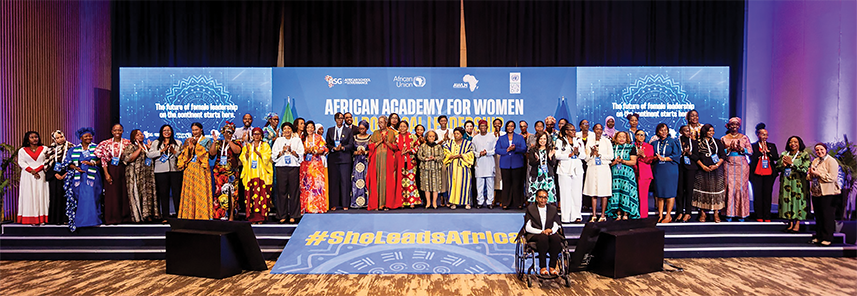
KIGALI, Rwanda – Forty women political leaders from Africa and the Caribbean have completed the opening residential phase of a new academy aimed at strengthening women’s influence in elections, legislatures, political parties and government institutions.
The inaugural African Academy for Women in Political Leadership brought together cabinet ministers, parliamentarians, mayors, governors, senators, political party leaders and aspiring young politicians in Kigali from August 3 to 7.
The academy was established by the United Nations Development Programme in partnership with the African School of Governance, the African Union Commission and the African Women Leaders Network.
Capable women are stopped not for want of talent, but for want of money, of protection, of coalition…
Its first cohort was selected from more than 1,300 applicants representing 28 African countries and the Caribbean. More than 60 percent of the participants come from countries expected to hold presidential or parliamentary elections during the next two years. This means that lessons from the programme could be applied directly in forthcoming election campaigns, political parties, legislatures and cabinets.
Francis Gatare, president of the African School of Governance, said the academy would allow participants to share their political experiences and build lasting networks of mutual support.
“Participating in this academy is an opportunity to network with each other, to learn from each other, to teach each other, to validate your already known and experienced practices, but most importantly, to create a network of support that is going to have a lifelong impact in your careers,” Gatare said.
The academy was officially launched on August 3 in the presence of representatives of the Rwandan government, former heads of state and government, ministers, parliamentarians, development partners, academics, business leaders, civil society organisations and the media.
Organisers described the initiative as an investment in Africa’s democratic future, intended to place women political leaders at the centre of efforts to strengthen institutions, deepen democratic governance and advance peace, security and sustainable development.
African Women Leaders Network co-convenor Bineta Diop said the academy represented an important move beyond simply calling for women’s inclusion.
“For years, we have advocated for women’s leadership. Today, we move decisively from advocacy to implementation,” Diop said.
During the launch, UNDP and the African School of Governance Foundation signed a five-year memorandum of understanding to build a continent-wide ecosystem supporting transformative women’s leadership.
The agreement provides for the expansion of political leadership training, the creation of learning opportunities for Africa Young Women Leaders fellows and the development of alumni networks supporting the African Union’s Agenda 2063 and the United Nations Sustainable Development Goals.
It will also encourage engagement with national women’s networks and political forums, while adapting leadership training to different national circumstances, cultures and languages.
A major focus of the academy is confronting the financial and institutional obstacles that prevent women from entering politics or exercising meaningful influence after they have been elected.
Its curriculum covers political leadership, campaign financing, legislative work, coalition-building, communication, ethical leadership and personal resilience.
Dr Jide Okeke, director of UNDP’s Regional Programme for Africa, said women should not merely be counted among those elected to office. Attention should also be paid to whether they possess real political authority and influence.
“Capable women are stopped not for want of talent, but for want of money, of protection, of coalition,” Okeke said.
He said it could cost an average of $40,000 to contest a parliamentary seat in Africa, making political financing a critical component of any serious programme seeking to increase women’s representation.
“This academy teaches campaign financing without apology, alongside legislative craft, coalition-building, communications and ethical leadership. Anyone who declines to teach women about raising money has already decided who is going to lose,” he added.
The academy also deliberately combines experienced politicians with emerging leaders to encourage mentorship and the exchange of knowledge between generations.
African Union Commissioner for Political Affairs, Peace and Security, Bankole Adeoye, said the debate should no longer centre on whether African women were capable of leading.
“History has already answered that question. The real question is whether our institutions are prepared to fully recognise, support and benefit from that leadership,” Adeoye said.
He said the African Union would support efforts to build a pipeline of capable, ethical and transformative women leaders.
During the five-day programme, participants examined the history of African women’s political authority, the relationship between money and power, political financing, public visibility, political communication, coalition-building, party structures and leadership resilience.
The programme was delivered through practitioner-led workshops, experience-sharing sessions, specialist clinics and peer exchanges.
Participants also engaged with former Ethiopian president Sahle-Work Zewde, former Central African Republic president Catherine Samba-Panza, former African Union Commission chairperson Dr Nkosazana Dlamini Zuma and former Togolese prime minister Victoire Tomégah-Dogbé.
Saint Kitts and Nevis Speaker of Parliament Lamein Blanchette also participated in the leadership discussions.
Other engagements included a high-level dialogue with Rwanda’s Chief Justice Domitilla Mukantaganzwa and a virtual session with Ahunna Eziakonwa, the United Nations Secretary-General’s Special Adviser on Africa.
The cohort visited the Kigali Genocide Memorial for a reflective session examining the consequences of failed political leadership and the importance of reconciliation and visionary leadership in rebuilding societies.
The Kigali residential programme forms the first part of a four-week course. Participants will now complete three weeks of online learning, structured mentorship and “sister circles”.
They will remain connected through an alumni network intended to provide support during election campaigns, legislative terms and service in public office.
The academy’s curriculum was developed and validated through a consultative process held in Kigali in October 2025. The first cohort represents all five regions of Africa and includes participants from Anglophone, Francophone, Lusophone and Arabophone countries.