
 WeeklySA_Admin
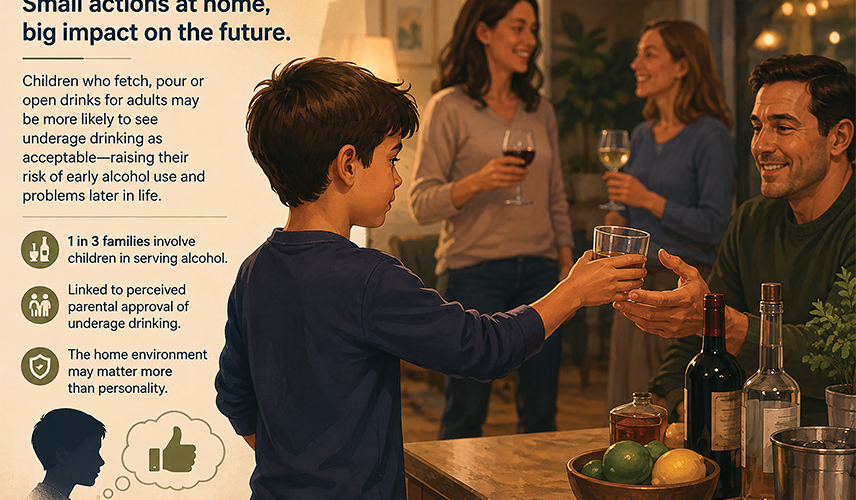
UNDER-AGE: Children who fetch, pour or open alcoholic drinks for adults may be more likely to see underage drinking as acceptable, potentially increasing their risk of harmful alcohol use later in life, according to new research…
By Own Correspondent
A seemingly harmless family habit such as asking a child to fetch, open or pour an alcoholic drink for an adult could unintentionally increase that child’s risk of drinking at an early age and developing problematic alcohol use later in life, according to new research.
The study, published in the journal Alcohol: Clinical & Experimental Research, found that children who regularly participated in family drinking rituals were more likely to believe that their parents approved of underage drinking – a perception strongly associated with earlier alcohol use during adolescence.
Researchers from the University at Buffalo in New York examined 260 parent-child pairs, with the children averaging 11 years of age. Both parents and children completed questionnaires about alcohol use in the home, children’s involvement in serving alcohol, sensation-seeking behaviour, and attitudes towards underage drinking.
The findings revealed that nearly one in three families (31%) involved children in some form of serving alcohol to adults, with fetching drinks being the most common task. Researchers found that these children were also more likely to have been allowed to sip or taste alcohol with parental permission and to believe that their parents viewed underage drinking as acceptable. Interestingly, simply allowing children to take a supervised sip of alcohol was not directly linked to perceptions that parents approved of underage drinking.
The home environment may send stronger messages about alcohol than parents realise – even routine tasks like fetching a drink
can shape children’s attitudes…
Researchers believe this may be because such occasions are often accompanied by conversations about responsible drinking and alcohol-related risks. By contrast, everyday tasks such as fetching, opening or pouring alcoholic beverages are generally treated as routine household activities, potentially sending more subtle messages that alcohol consumption is normal and socially endorsed.
The study suggests that these seemingly insignificant interactions may encourage children to view alcohol more positively and could contribute to earlier experimentation with drinking.
Previous research has consistently shown that early initiation of alcohol use is associated with a higher likelihood of alcohol misuse and dependence during adolescence and adulthood.
The researchers also investigated whether children’s personalities influenced these outcomes, focusing on sensation-seeking – a tendency to pursue exciting or novel experiences.
However, the relationship between helping adults with alcoholic drinks and later alcohol exposure was similar among children with both high and low sensation-seeking tendencies. This indicates that the family environment may play a more influential role than individual personality traits in shaping children’s future attitudes towards alcohol. The researchers caution that their findings do not prove that serving drinks directly causes future alcohol problems. Rather, the study highlights how everyday family practices can communicate powerful messages about what parents consider acceptable behaviour. They say parents may wish to think carefully about the signals they send around alcohol, even during ordinary family interactions.
The researchers also emphasise that more studies are needed to better understand how family drinking habits influence children’s long-term relationship with alcohol and to identify the most effective ways to reduce early alcohol exposure.
The findings add to growing evidence that parents play a critical role in shaping children’s attitudes towards alcohol long before they reach the legal drinking age. By being mindful of routine behaviours in the home, families may help reduce the likelihood of early alcohol use and its associated health and social risks later in life. – Newswise