 WeeklySA_Admin
TEST: Israelis vote for a new parliament on October 27, but coalition bargaining will determine who governs — with smaller parties potentially holding the balance of power…
By Angie Segal
When Israelis go to the polls on 27 October, they will choose the parliament that determines who leads their country through its next chapter. The first national election since 2022 comes after years of war and upheaval, with security, political accountability and the country’s future weighing heavily on voters. Understanding the outcome requires looking beyond which party finishes first.
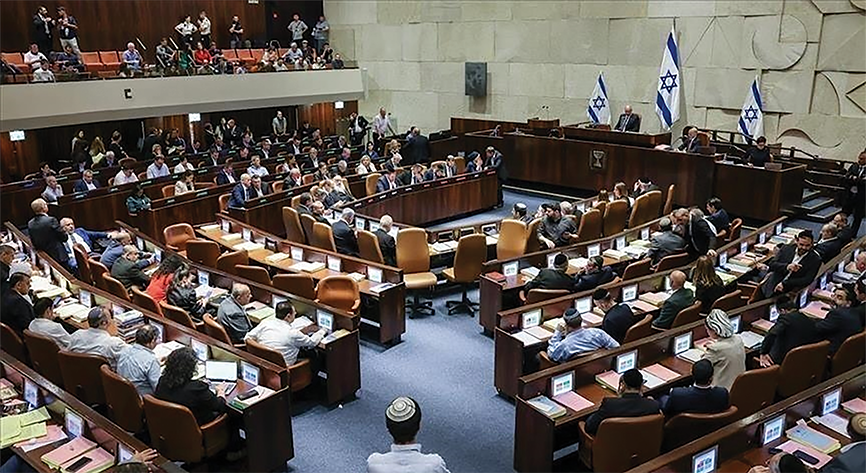
Israel has a parliamentary system in which voters elect the 120 members of the Knesset. They vote for a party list, rather than directly for a prime minister. The entire country forms one electoral constituency, with seats distributed through proportional representation. There are no separate geographical constituencies electing individual MPs.
Israeli citizens aged 18 and older are eligible to vote, bringing together Jewish, Muslim, Christian and Druze voters, religious and secular alike. Citizens generally become eligible to stand for the Knesset at 21, subject to legal restrictions.
The largest party does not automatically supply
the prime minister — the decisive test
is who can assemble enough parliamentary support to govern…
Most Israelis must be physically in the country to cast their ballots. Overseas voting is limited to specified categories, including eligible officials serving abroad and their families. Ordinary citizens living or travelling overseas generally cannot simply vote at their nearest embassy.
Before polling day, each party submits a ranked list of candidates. If it wins 20 seats, the first 20 candidates on its list enter parliament. Parties select candidates through different processes: some hold internal primaries, while others rely on party leaders or religious leadership bodies.
To enter the Knesset, a list must receive at least 3.25% of valid votes nationally. Parties falling below this threshold receive no seats, and their votes are excluded when seats are allocated among qualifying lists.
This makes smaller parties particularly consequential: narrowly missing the threshold can alter the balance of power across parliament. It also explains why parties sometimes combine into joint lists before an election.
Prime Minister Benjamin Netanyahu is seeking another term at the head of Likud, the principal party of the Israeli right. His political allies include the ultra-Orthodox parties Shas and United Torah Judaism, alongside Itamar Ben-Gvir’s Otzma Yehudit and Bezalel Smotrich’s Religious Zionism, which is contesting this election in an alliance with Zehut.
These parties have distinct constituencies and priorities. Shas and United Torah Judaism place particular emphasis on religious institutions and their communities’ interests. Otzma Yehudit and Religious Zionism champion nationalist policies, hard-line security positions and expanded Israeli control in the West Bank.
Among Netanyahu’s leading challengers is former Israel Defence Forces chief of staff Gadi Eisenkot, who heads Yashar. His party presents a centrist, security-focused alternative, emphasising leadership and national renewal.
Another major contender is Beyachad, meaning “Together”, the alliance of former prime ministers Naftali Bennett and Yair Lapid. Led by Bennett, it combines his right-wing political background with Lapid’s centrist Yesh Atid base. The partnership illustrates how opposition to Netanyahu cuts across traditional ideological boundaries.
Other significant players include Avigdor Lieberman’s secular nationalist Yisrael Beiteinu and the Democrats, led by Yair Golan and formed through the merger of Labour and Meretz. The smaller Reservists-Economic Party brings together Yoaz Hendel and economist Yaron Zelekha, adding another potential factor in coalition calculations.
Arab-led parties, including Mansour Abbas’s Ra’am and the Joint List, also matter to the parliamentary arithmetic.
Ra’am participated in the governing coalition formed in 2021. Whether Jewish-led parties will cooperate with Arab-led parties again remains a major political dividing line. Their seats count towards the parliamentary total, but cannot automatically be counted as support for a particular government.
The crucial number is 61: an outright majority in the Knesset. No party has ever won that majority alone, so governments are formed through negotiations between parties. The largest party therefore does not automatically supply the prime minister.
For example, a party winning 30 seats could be outmanoeuvred by a rival with 25 seats if that rival secures enough partners to command a majority. A party holding only a handful of seats can consequently become essential to forming a government.
After the results are confirmed, President Isaac Herzog consults parliamentary factions and assigns a Knesset member the task of forming a government. The president is the head of state, with a largely ceremonial role; the prime minister leads the government. The chosen candidate receives 28 days, with a possible extension of up to 14 days.
Coalition negotiations cover policy commitments, cabinet positions and budgets. A proposed government must win a confidence vote in parliament. Although coalitions generally aim for 61 seats, taking office requires a majority of those voting, allowing minority arrangements where other lawmakers support or abstain.
Failure by the first candidate does not immediately trigger another election. Another member may receive an opportunity, followed, if necessary, by a final parliamentary process to nominate a candidate. If all available routes fail, fresh elections follow. The outgoing government remains in office until a successor takes over.
Beyond personalities, voters face difficult choices. Security and accountability for the failures surrounding October 7 remain central. Military service is another major fault line, particularly the demands on reservists and the question of ultra-Orthodox enlistment.
Living costs, housing, the judiciary and the relationship between religion and the state also shape the debate. These disagreements will follow parties into coalition negotiations.
Election night will reveal each party’s strength, but a small shift around the electoral threshold could change the governing possibilities. Polling leads alone cannot settle which parties will cooperate.
The decisive test will be whether a leader can assemble sufficient parliamentary support and sustain the agreements needed to govern.
Angel Segal is a media representative of the SA Zionist Federation