 WeeklySA_Admin
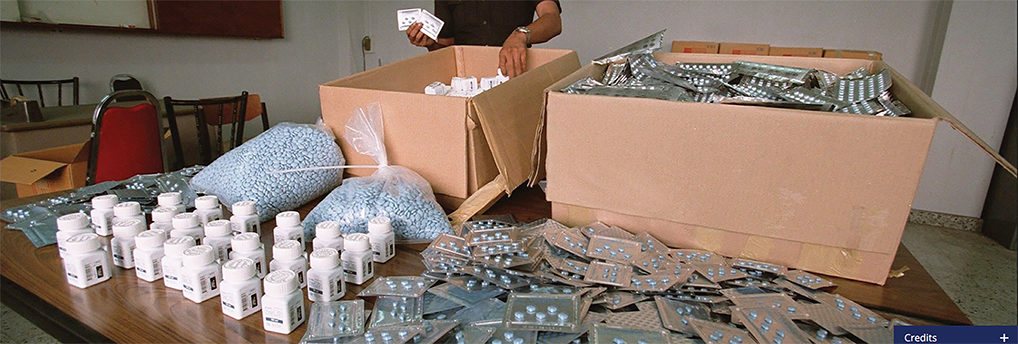
DRIVE: A new global agreement will strengthen cooperation against falsified medicines, organ trafficking and health emergencies, as research exposes the threat posed by poor-quality drugs across Africa…
By Len Maseko
International police organisation Interpol and the World Health Organisation (WHO) have signed a cooperation agreement to strengthen the international drive against falsified medicines, organ trafficking and other threats linking organised crime with public health.
Announced today, the agreement establishes a framework combining Interpol’s policing expertise with WHO’s public health leadership to help countries prevent, detect and respond to dangers that cross borders.
The partnership comes against a troubling backdrop for Africa, where studies have documented substantial numbers of medicines failing quality tests. South Africa has also introduced a national action plan to strengthen its response to substandard and falsified medical products.
From falsified medical products to the exploitation of vulnerable individuals, criminal networks are putting lives at risk
— INTERPOL Secretary General Valdecy Urquiza
Interpol secretary-general Valdecy Urquiza said criminal networks were increasingly threatening health through fraudulent medical products and the exploitation of vulnerable people.
“Crime and health are increasingly interconnected. From falsified medical products to the exploitation of vulnerable individuals, criminal networks are putting lives at risk,” he said.
“This agreement strengthens our ability to work with the World Health Organization to protect communities and ensure that those who threaten them, are brought to justice.”
The agreement covers falsified medicines, vaccines and medical devices, counterfeit protective equipment, unsafe or fraudulently labelled food and drinks, and illegally produced alcohol.
It also provides for cooperation against trafficking in people for organ removal and the illegal trade in human organs, tissues and cells.
Africa’s medicine problem
WHO estimates that at least one in 10 medicines in low and middle-income countries is substandard or counterfeit. The estimate covers those countries collectively and should not be presented as a measured prevalence rate for South Africa.
African research, nevertheless, provides evidence of a substantial problem.
A systematic review published in the Journal of Pharmaceutical Policy and Practice in 2024 examined 27 studies. It reported that 1 639 of 7 508 medicine samples failed at least one quality test — approximately 22%, or just over one in five samples.
These findings describe the samples included in the research. They do not establish that one in five medicines sold in every African country is fake, or that the same proportion applies across all pharmacies and supply channels.
There is also a crucial distinction between substandard and falsified medicines. Substandard products fail to meet quality requirements, while falsified products deliberately misrepresent their identity, composition or source.
Combining the categories under the label “fake medicines” can therefore exaggerate the evidence of deliberate fraud.
Both categories can harm patients. Medicines containing incorrect ingredients or inadequate doses may fail to treat illness, while contaminated products can cause poisoning. Poor-quality treatments can also contribute to antimicrobial resistance, making infections harder to treat.
SA strengthens response
In South Africa, official warnings confirm the presence of falsified products, although the sources reviewed for this report do not establish a nationally representative percentage of medicines that are fake.
The South African Health Products Regulatory Authority, working with the Department of Health and WHO, launched a National Action Plan on September 30 last year. It focuses on preventing the entry of suspect products, detecting them in supply chains and coordinating enforcement when threats emerge. WHO’s account of the launch identified risks involving treatments for HIV, tuberculosis and chronic conditions.
One documented example concerns falsified Ozempic products. In December 2023, SAHPRA warned that fraudulent products were being sold in the market and online, amid shortages of the genuine diabetes medicine and demand for its use in weight management.
In May this year, the South African Health Products Regulatory Authority (SAHPRA) and the South African Pharmacy Council (SAPC) conducted a joint investigation inspection at iDexis (Pty) Ltd trading as Sentra Pharmacy in Silverton, Pretoria.
The inspection focused on weight-loss Semaglutide, Tirzepatide and combination formulations and discovered critical regulatory non-compliance. All GIP/GLP-1 injectable products found onsite were seized.
The regulator warned that products bought outside lawful supply channels could contain incorrect ingredients, dangerous doses or microbial contamination. That alert demonstrates a specific threat; it does not quantify the wider national market.
WHO identifies limited access to affordable treatment, complex supply chains, weak oversight and unauthorised online sales among the factors enabling poor-quality and falsified medicines to reach patients.
Beyond medicine fraud
The new WHO–INTERPOL framework extends to exceptional emergencies requiring coordinated health and security action, including suspected misuse of chemical or radioactive materials and unusual biological events, whether natural, accidental or deliberate.
The organisations will also coordinate around major international events and mass gatherings to support countries’ preparedness for potential health threats. Cooperation will additionally support implementation of the WHO Framework Convention on Tobacco Control.
“Health security is global security,” WHO Director-General Dr Tedros Adhanom Ghebreyesus said.
“By deepening our collaboration with INTERPOL, we are reinforcing our collective ability to prevent harm, respond to emergencies, and protect people from threats that undermine both health systems and public trust.”