 WeeklySA_Admin
DYSFUNCTIONAL: Nearly R700 million spent on “overtime”, billions owed to Eskom and Rand Water, and yet residents live amid sewage, darkness, and decay — a portrait of a municipality where collapse is no longer accidental, but systemic…
By Themba Khumalo
There is something uniquely offensive about a municipality that burns through money with the enthusiasm of a drunken aristocrat, yet cannot muster the basic dignity of collecting refuse or fixing a sewer.
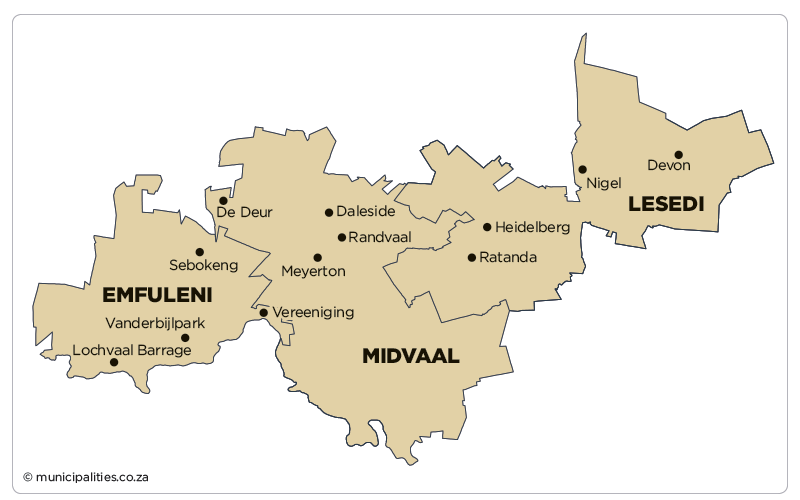
Emfuleni Local Municipality has elevated dysfunction into an art form—an ugly, festering mural painted in sewage, debt, and contempt for the very people it is meant to serve.
R694 million. Read that again, slowly. Nearly three-quarters of a billion rand—incinerated in the name of “overtime”. Not infrastructure. Not service delivery. Not even the pretence of progress. Overtime. A word that, in Emfuleni, has been stripped of meaning and repurposed into a euphemism for systemic rot.
And when, precisely, did this orgy of overtime reach its most obscene crescendo? During lockdown. Yes—when the country was frozen, when movement was restricted, when streets were empty and economic life was throttled to near death. In that eerie stillness, Emfuleni’s payroll was apparently alive with furious, tireless activity.
One can only marvel. Were these workers repairing phantom pipes in deserted streets? Collecting imaginary refuse under curfew? Fixing electrical faults that existed only in the creative accounting ledgers of a broken administration?
Because in the real world—the one inhabited by residents, real human beings—nothing works. Sewage spills into streets and stays there. Water disappears through broken pipes while families go without. Refuse accumulates uncollected for days, sometimes weeks. These are not metaphors — this is what daily life in Emfuleni looks like.
This is not mismanagement. This is moral rot — a deliberate choice to loot while residents live with sewage, darkness and decay…
Electricity fails without warning. Roads have been left to crumble. Public spaces have been abandoned. The lived reality of the people of Emfuleni is not one of overtime—it is one of calculated, unapologetic abandonment, a shameless theatre of dysfunction where R694 million in overtime is squandered while the town collapses under its citizens’ feet.
This is not mismanagement. This is moral rot. It is a deliberate choice to loot while residents suffer.
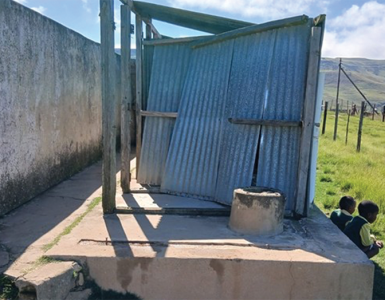
Take Sebokeng. A manhole bursts, and for more than a decade, the municipality treats it not as an emergency but as a feature—an unofficial landmark of decay. The stench is not merely physical; it is moral. It is the smell of a government that has long since stopped pretending to care.
And yet, in the midst of this collapse, the municipality insists—without irony—that overtime was necessary because of “high vacancy rates” and a “shortage of tools”. This is not an explanation. It is an indictment. If you lack staff, you hire. If you lack tools, you procure.
What you do not do—unless incompetence is your governing philosophy—is haemorrhage hundreds of millions on overtime while simultaneously outsourcing the very services your employees are supposedly working overtime to provide.
It is a double payment for a single failure.
Then comes the debt—vast, suffocating, and entirely self-inflicted. More than R8 billion owed to Eskom. Over R1 billion to Rand Water. These are not just numbers; they are shackles. They explain the legal battles, the attached bank accounts, and the municipality’s perpetual state of financial asphyxiation. Emfuleni is not merely mismanaged—it is functionally insolvent, staggering from crisis to crisis like a wounded animal that refuses to lie down.
And within this chaos, a darker question lingers, one that refuses to be silenced: how much of this overtime was real?
When employees themselves whisper that they worked through lockdown without seeing a cent of overtime pay, while others appear to have been richly compensated for work that no one can quite identify, the stench deepens. This is no longer just incompetence. It begins to resemble something far more deliberate—an elaborate system of extraction, where public funds are siphoned off under the comforting fiction of labour.
The figures tell their own damning story. Year after year, the numbers remain shamefully consistent—hovering around the R100 million mark as if guided by some unspoken quota of excess. This is not a spike. It is a pattern. A culture. A habit.
And just when one thinks the abyss cannot deepen, along comes the farce of a R16 million “ghost vehicle” tender. Vehicles that allegedly never materialised. Contracts that seem to exist in a parallel universe where delivery is optional, and accountability is a quaint, outdated notion. It would be comical if it were not so ruinous.
What, then, does Emfuleni offer its residents in return for this staggering expenditure? Certainly not cleaner streets. Not reliable electricity. Not functioning water systems. What it offers is decline—slow, grinding, relentless decline. It offers the indignity of living in a place where government is not a service but a burden, not a solution but a parasite.
The municipality’s defence—that the R694 million was spent over several years, as though time somehow sanitises waste—is almost insulting in its brazenness. Stretching a scandal across six years does not make it insignificant. It makes it systemic. It tells us that this is not a mistake that slipped through the cracks, but a way of doing business.
Even now, we are told that overtime is being “reduced”, that vacancies are being filled, that stability is just around the corner. We have heard this song before. It is the lullaby of failing institutions—the promise of reform perpetually deferred, always imminent, never realised.
Emfuleni does not suffer from a lack of resources. It suffers from a collapse of accountability. A hollowing out of purpose. A leadership culture that treats public money as an abstract concept and public suffering as background noise.
At some point, one must abandon the polite language of governance and call this what it is: a municipality in moral and administrative freefall.
And the real tragedy? The people of Emfuleni are not asking for miracles. They are asking for the basics—to live in a place where sewage does not define the landscape, where refuse is collected, where water flows, and where electricity works. Instead, they are handed invoices for failure, dressed up as overtime.
R694 million later, the sewage still flows in the streets, the water still cuts out, electricity still fails, and the refuse still piles up. Emfuleni’s residents are still waiting. They have been waiting for years.