 WeeklySA_Admin
ANNIVERSARY: Forty-nine years after the apartheid state banned newspapers and detained journalists, South Africa honours their courage while confronting the financial pressures, intimidation and digital threats weakening journalism today…
By Len Maseko
On October 19, 1977, the apartheid government struck at newspapers that exposed its brutality and 19 black consciousness organisations that challenged its authority.
Publications were banned, journalists silenced and activists detained in a crackdown that would become etched into South Africa’s history as Black Wednesday.
Forty-nine years later, the anniversary remains both a tribute to those who resisted repression and a reminder that media freedom requires constant protection.
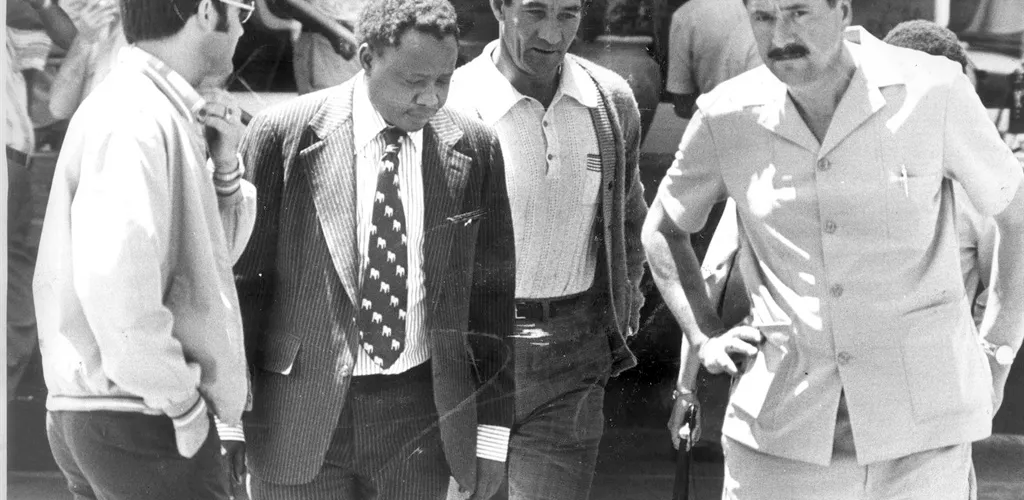
The World and Weekend World were banned. Percy Qoboza, editor of The World and Weekend World, was detained under the Internal Security Act and held for five months at Modderbee Prison. He would later become editor of City Press in 1984, continuing a career that demonstrated the courage and persistence of journalism under apartheid.
Daily Dispatch editor Donald Woods was placed under a banning order. The state also outlawed Black Consciousness organisations and detained scores of activists.
The banned organisations were:
- Association for the Educational and Cultural Advancement of the African People of South Africa (ASSECA)
- Black Community Programmes (BCP)
- Black Parents’ Association (BPA)
- Black People’s Convention (BPC)
- Black Women’s Federation (BWF)
- Border Youth Organisation (BYO)
- Christian Institute of Southern Africa (CI)
- Eastern Province Youth Organisation (EPYO)
- Medupe Writers’ Association
- Natal Youth Organisation (NATO)
- National Association of Youth Organisations (NAYO)
- South African Students’ Organisation (SASO)
- South African Students’ Movement (SASM)
- Soweto Students’ Representative Council (SSRC)
- Soweto Teachers’ Action Committee (STAC)
- Transvaal Youth Organisation (TRAYO)
- Union of Black Journalists (UBJ)
- Western Cape Youth Organisation (WCYO)
- Zimele Trust Fund
The inclusion of the Christian Institute, a multiracial Christian organisation associated with anti-apartheid cleric Beyers Naudé, reflected the breadth of the crackdown. Its targets stretched across student leadership, journalism, education, literature, community development and religious opposition to apartheid.
The assault sought to dismantle the organisations through which black communities articulated their aspirations, supported one another and challenged white minority rule.
The crackdown came just weeks after the death of Black Consciousness leader Steve Bantu Biko in police custody in September 1977. Reporting on his death helped expose the violence behind the apartheid government’s claims of law and order.
By silencing newspapers and suppressing political organisation, the authorities sought to restrict both the circulation of information and the capacity of communities to challenge their oppression.
Today, October 19 is commemorated as Black Wednesday and National Press Freedom Day. Its significance extends beyond the newsroom: it concerns every person’s right to know what is being done in their name, with their resources and to their fellow citizens.
Freedom needs the means to survive
In its statement marking the anniversary, the Press Council of South Africa honours journalists who paid for telling the truth with their freedom, livelihoods and, in some cases, their lives.
It also challenges South Africans to consider what protecting journalism means in a democracy.
Section 16 of the Constitution guarantees freedom of expression, including freedom of the press and other media. But the Council warns that the ability to exercise that freedom depends on newsrooms having sufficient people, time and money to report.
We cannot celebrate media freedom while accepting the loss of the journalism that gives it meaning
— Press Council of South Africa
Financial collapse and state repression are different threats. Nevertheless, when a newsroom closes, the community it served loses a source of scrutiny, verified information and public accountability.
Retrenchments and closures have weakened coverage, particularly at community level. Freelancers and local journalists, the Council says, too often face low or delayed payment and dangerous assignments without adequate training, insurance or support.
Fair compensation and journalist safety are therefore essential to editorial independence. Reporters expected to withstand pressure must themselves have the support to do so.
For readers, the consequences are practical. Fewer journalists can mean less scrutiny of municipal spending, failing services and decisions affecting everyday life.
Public trust cannot be sacrificed
The struggle for survival also places ethical responsibilities on media organisations.
The Council cautions against unverified claims, misleading headlines and sponsored content presented as independent journalism. Such practices damage the public confidence on which journalism depends.
Yet, credibility alone cannot pay for reporting. Sustainable funding and ethical practice must reinforce each other.
Support from advertisers, donors, government and digital platforms should sustain journalism without determining its editorial decisions. Transparency about funding, together with firm protection against interference, remains vital.
The Council also calls for clear and consistent standards governing the allocation of state advertising, alongside support for community and local media that strengthens their independence.
A changing struggle for audiences
The platforms through which people encounter news have become another major concern.
The Council argues that global digital platforms exercise considerable influence over which stories reach South Africans, while benefiting from journalism produced by news organisations.
It calls for full implementation of the Competition Commission’s Media and Digital Platforms Market Inquiry remedies and substantial, sustained monetary compensation for public-interest reporting.
Training, advertising credits and technical assistance may help, it says, but cannot replace the money required to employ journalists and maintain newsrooms. Community, local and Indigenous-language publishers must have a fair opportunity to benefit.
Artificial intelligence adds further pressures. Generative tools can summarise and repackage reporting, while synthetic images, audio and video make verification more demanding.
The Council stresses that human judgement, rigorous checking, disclosure and the protection of confidential sources must remain central. Editorial responsibility stays with those who publish.
It plans to consult members on strengthening the Press Code’s guidance on artificial intelligence, including the labelling of AI-generated content.
The public’s right to know
Intimidation remains a direct threat. The Council urges political parties and their supporters to stop harassing journalists and exposing their personal information, and to take complaints about coverage to the appropriate independent bodies.
Accountability must work in both directions: journalists need protection to investigate, while the public needs accessible ways to challenge inaccurate or unethical reporting.
Access matters, too. Data costs, paywalls and language barriers can leave reliable journalism beyond the reach of communities that need it.
Black Wednesday therefore asks more of South Africa than an annual act of remembrance. It demands a commitment to journalists’ safety, ethical reporting, independent funding and information that reaches people across the country.
The newspapers banned in 1977 demonstrated why oppressive power fears scrutiny. Honouring that legacy means ensuring that journalism retains the capacity to question power today.