 WeeklySA_Admin
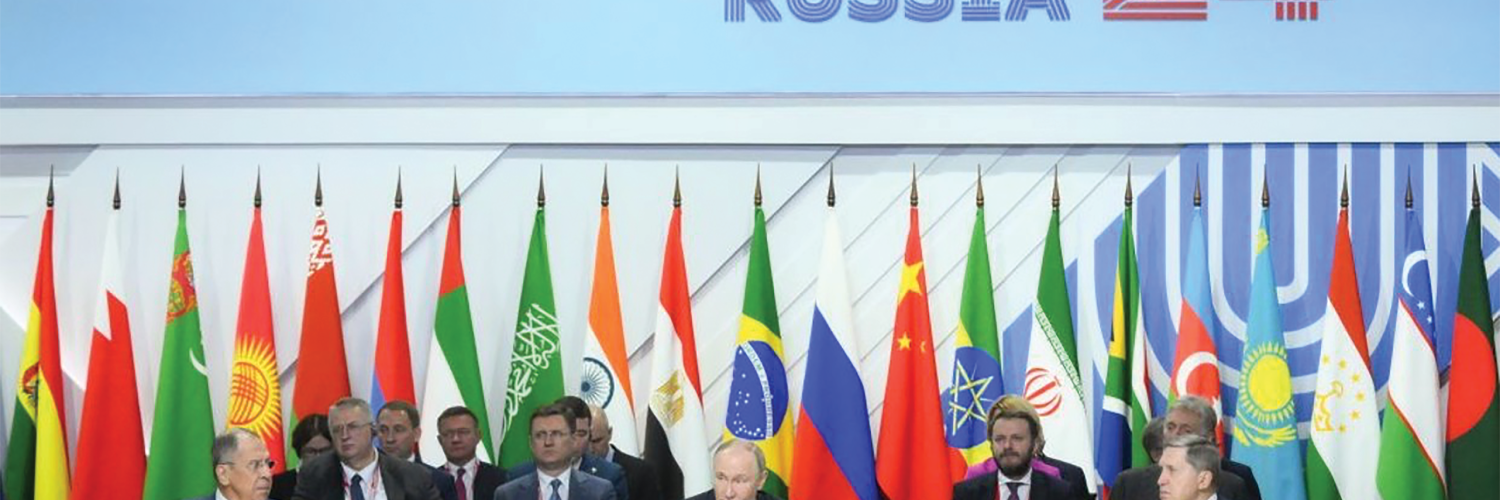
SELF-DETERMINATION: In the Summit held in the Russian city of Kazan, BRICS members condemned what it described the genocidal Israeli war on West Asia, illegal sanctions regimes by the US and its allies, and Western-dominated multilateral institutions….
By Abdul Rahman
The Kazan declaration adopted at the 16th BRICS summit in Russia on Wednesday, October 23, calls for comprehensive reforms in all international institutions to make the world order more “equitable, just, democratic and balanced.”
The declaration titled “Strengthening Multilateralism for Just Global Development and Security” noted that new power centres, both in economic and political spheres have emerged across the world which need to be given proper representation and weight.It asserted that to make the international institutions more reflective of the changing global reality and to provide adequate representation to the developing world, reforms in the United Nations, including in the Security Council, and other global institutions, particularly in the Bretton Woods institutions are a must. The Bretton Woods institutions are international financial institutions such as the IMF, World Bank, and WTO created at the end of the Second World War.
The BRICS declaration specifically demands that a more effective World Trade Organization (WTO) is needed to tackle the growing trade disputes across the world and to end what the developing countries have been calling the “unilateral, punitive and discriminatory protectionism” practiced by the West.
The authority of the WTO has been gradually undermined by countries such as the US and the EU members after they started imposing arbitrary protectionist measures targeting imports from certain countries of the Global South, particularly China in recent days.
Non-interference
The Kazan declaration also referred to one of the most burning issues raised by the countries of the Global South, the repeated interference of the West in their domestic affairs and use of illegal unilateral sanctions against them. Claiming that non-interference in the domestic matters of other countries is integral to international law, the BRICS declaration asserts that every country has the right to decide its own path of development.
Some BRICS members and several other countries such as Cuba, Venezuela, Syria, have been subjected to sanctions by the US and its Western allies which have affected the lives of people there hampering their development efforts.
The Kazan declaration underlines that, BRICS members “are deeply concerned about the disruptive effects of unlawful unilateral coercive measures, including illegal sanctions, on the world economy, international trade and the achievement of sustainable development goals” and call to devise ways to take “joint actions to oppose” all such measures.
BRICS economic partnership
BRICS has consistently denounced the West’s attempts to use its economic power as a weapon against the developing countries. It has proposed greater financial independence from the West as a way of dealing with the problem and has been exploring ways to do so.
The Kazan declaration reiterated the need for financial independence by creating deeper economic partnership among BRICS members. It decided to continue its attempts to expand the use of national currencies in bilateral and international trade.
The declaration emphasized on the continued negotiations over the BRICS Clear Settlement and Depository System for cross border settlements as an alternative to the West-led SWIFT system and the further development of New Development Bank as an alternative source of development funding. The BRICS declaration also endorsed the proposal of a Grain Exchange Platform for poorer and sanctioned countries in Africa and elsewhere. It is expected to play a crucial role in ensuring price stability for food grains and raw materials essential for maintaining food security and economic activities.
The BRICS declaration endorsed the modalities of including more countries from the Global South in the grouping and created a new category of “partner country” given the lack of consensus on the further expansion in its core membership.
Palestinian right to self determination
The Kazan declaration sharply condemns the Israeli genocide on the people of Palestine and its attacks on civilians in the region and demanded an immediate ceasefire. In a major move, BRICS nations agreed to term the Israeli cyber-attack in September involving the detonation of hundreds of communication devices across Lebanon as “premeditated terrorist attacks.” Hundreds of people were killed and injured across the country.
The declaration condemned Israel’s airstrikes in Lebanon and Syria as well, specifically mentioning the Israeli attacks on the Iranian consulate in which some Iranian officials were killed.
BRICS nations also reiterated their commitment to an independent Palestinian state and their support to its full UN membership. The Kazan declaration also termed the US military presence in Syria “illegal” and demanded its immediate withdrawal. Hundreds of US soldiers are currently deployed in Syria without the consent of the country’s government.
BRICS countries expressed their faith in the UN Charter and reiterated the need for a peaceful and political resolution of all conflicts in the world including the war in Ukraine. – People’s Despatch
Comment
GOVT MUST FLUSH OUT ILLEGAL FOREIGNERS
The brouhaha surrounding the increasing number of cases of children dying and scores being hospitalized after eating poisoned products sold by foreign -owned shops is a result of corrupt government officials who unlawfully provided foreigners with documents to enter the country and greedy local community members who were renting space for them in the townships. It is also unfortunate that Instead of constantly visiting and inspecting businesses, especially spaza shops in South Africa’s townships, incompetent health and environment only reacted to the noncompliant businesses after tragedy had struck. A total six children recently died after allegedly consuming snacks from a spaza shop owned by foreign nationals. Thereafter, the floodgates opened and many more children became victims and scores, mainly pupils, were hospitalized after eating poisoned or expired foodstuff.
Another root cause for this deadly trend is the country’s porous borders whose security guards included corrupt government officials who were paid bribes by foreign nationals to enter the country illegally. The Department of Home Affairs, which has nailed some of the culprits, has also confirmed that they recently suspended a female Border Management Authority official who was attempting to illegally smuggle six foreign nationals into the country. Another worrying factor is the renting of space inside houses by hundreds of community members who charge these foreign nationals up to R4000 a month for rent in the townships. Some residents have actually defended the eviction or closing down of foreign-owned spaza shops arguing that they survived on the money they paid them.
Black children’s lives however cannot be sacrificed for money. Most of these foreign and undocumented nationals have taken advantage of the dire situation including unemployment and poverty faced by Black people in the townships and were manufacturing and selling fake, expired and poisoned food to them. This has to be stopped NOW. It has always been too easy for foreign nationals to operate tuckshops in the townships where locals are denied the right to economically thrive from their respective communities. It is time for the government to intensify its efforts to rid the townships of these illegal foreigners so that our Black businesses can have some breathing space to operate in peace.
Minister of Sports, Arts and Culture, Gayton McKenzie has also joined the fray calling on all the foreign-owned tuckshops to be closed and undocumented foreign nationals deported immediately. This matter does not need any more debate. The country cannot watch their children dying and others being hospitalized because of shops selling dangerous products.
This country has laws that had been promulgated to monitor companies that do not comply with the required standards of the businesses they operated. Foreigners who contravened these laws have no right to operate their businesses here. They must be arrested, jailed or deported. Period.