 WeeklySA_Admin
DIALOGUE: Forum’s inclusion of new members – Egypt, Iran, Ethiopia, and the United Arab Emirates – promotes multilateralism, says SA leader…
By Own Correspondent
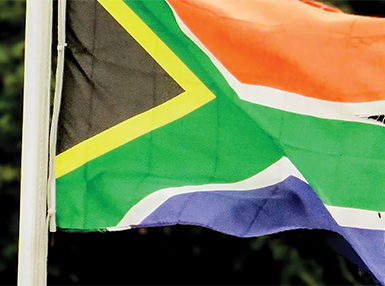
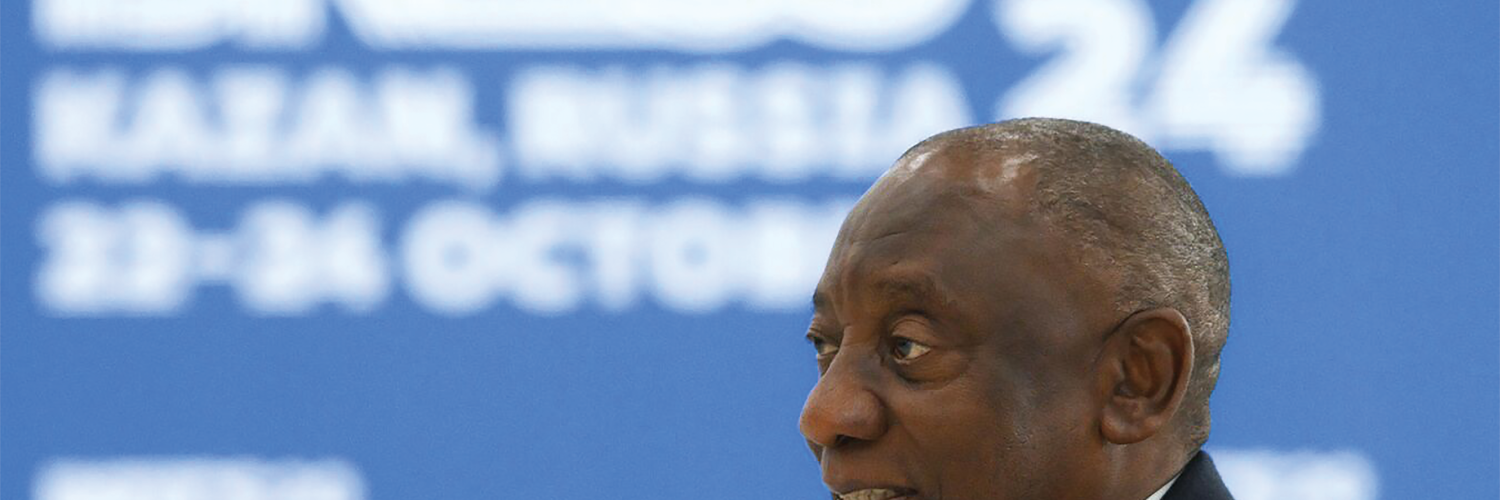
South African President Cyril Ramaphosa has lauded the BRICS Summit Russia as being the most successful, commending his counterpart Vladimir Putin for leading members of the economic bloc in adopting an “excellent” declaration.
The gathering in Kazan, Russia’s fifth-largest city, which lasted from Tuesday until yesterday, was the first to take place since the group’s recent expansion. Earlier this year, Egypt, Iran, Ethiopia, and the United Arab Emirates officially became members of BRICS, joining Brazil, Russia, India, China, and South Africa.
The BRICS nations approved a joint communique at the three-day conference that addresses multiple global challenges and calls for a fairer and more just international order.
In an interview published by the South African presidency yesterday, Ramaphosa said the participation of new member states in the Kazan event has “strengthened” the group.
“We have concluded the most successful BRICS summit… We were rather pleased to have a now-expanded BRICS that has brought together a number of other African countries,” he said.
“In fact, all of us felt that this strengthens the Global South, [which] now has a very strong platform… that promotes multilateralism, a platform that promotes development… and unity,” the South African leader stated.
In earlier statements at the summit, Ramaphosa expressed Pretoria’s desire for a multipolar world in which supply chains, trade, tourism, and financial flows operate smoothly and without external interference. He emphasized the “important” role of BRICS in addressing the Global South’s key challenges through collaboration with like-minded emerging market nations.
“We welcome the Russian initiatives that are aimed at strengthening a number of BRICS countries through the various networks aimed at improving the future of BRICS countries’ transport networks and connectivity under the theme ‘Innovation and Digitalisation of Transport’,” Cyril Ramaphosa stated.
“Work has already begun in this regard through initiatives like the International North-South Transport Corridor, which is a multimodal transportation corridor established from St. Petersburg to Mumbai,” he added.
The INSTC as it is imagined is nothing less than a geopolitical game-changer: a 7 200-km trade corridor linking St. Petersburg to Mumbai, one that wires India into the trade circuits of Central Asia and enables Russia to reach new and lucrative markets in the Global South via the Persian Gulf.
For India, the INSTC represents a home-grown alternative to China’s Belt and Road, a new avenue into European markets, a fount of cheap coal and oil from Russia, and an insurance policy should there ever be a falling out with the West.
For Russia, it offers an escape from the vice of Western sanctions and a promise of privileged position in the trade flows of tomorrow.
For Iran and Azerbaijan, the INSTC is an opportunity to extract developmental and trade concessions from the project’s primary backers. And for the BRICS, the INSTC is a chance to flex the bloc’s muscles by actualizing a project that reroutes trade flows beyond the reach of US sanctions.
Russia assumed the rotating BRICS chairmanship this year after taking over from South Africa. This year’s summit, the 16th, attracted several potential BRICS partner countries and has been widely seen as a snub to the West and a signal that Russia has not been isolated by Ukraine-related sanctions.
Apart from South Africa’s leader, Ethiopian Prime Minister Abiy Ahmed has also hailed Putin for hosting a “well-planned and extremely perfectly delivered summit”.