
 WeeklySA_Admin
REMEDY: Application lodged in high court against global mining company for compensation of victims…
By ACI Africa Staff
The Justice and Peace Commission of the Southern African Catholic Bishops’ Conference (SACBC) has partnered with South African human rights lawyers to seek justice for victims of coal mining in South Africa.
In a report that SACBC published on Wednesday, Richard Spoor filed an application in the High Court of South Africa, Gauteng Local Division, against the global mining company South32.
In the application filed on August 15, the South African human rights lawyers and the Justice and Peace Commission of SACBC were “seeking legal remedies for sick miners and the families of workers who died due to coal mine dust lung disease (CMDLD) in the form of pneumoconiosis and chronic obstructive pulmonary disease (COPD).
“This application for certification of a class action seeks recourse for current and former coal miners, as well as dependents of deceased workers who contracted the illness,” the statement attached to the SACBC August 16 report reads in part.
The report further indicates that application against South32 is a response to some of the coal miners in in South Africa’s Mpumalanga and Limpopo regions who reached out to the Church in 2014 and 2015 “seeking assistance in their quest for justice against powerful mining companies.”
“Ex-mine workers are no longer under trade unions and this renders them voiceless and incapable of demanding social justice for the sickness that they incurred while working in the mines,” Archbishop Stephen Brislin, one of the three Africans named Cardinals last month is quoted as saying in the statement attached to the SACBC August 16 report.
The South African Cardinal-designate adds, “Very often workers do not have the means to seek legal recourse from large companies which have huge resources at their disposal. The Church is always concerned about the well-being of people with whom we work and live.”
“It is thus incumbent on the Church to give assistance where it can so that the rights of the vulnerable are respected and so that they can access compensation that is legally due to them. Many companies are amenable to settling such cases, but in some instances court action is necessary,” the Local Ordinary of South Africa’s Cape Town Archdiocese further says.
In the SACBC August 16 report, the Coordinator of the SACBC Commission for Justice and Peace, Father Stanslaus Muyebe, is quoted as saying, “The support provided by the Church to the coal-sick miners is one of the ways in which the Church is defending the dignity of workers in the mining economy.”
“Coal mine dust can cause miners to develop lung diseases including pneumoconiosis and COPD,” Father. Muyebe says, and explains, “Coal miners’ pneumoconiosis is a scarring or fibrosis of the lungs.”
In 2018, when the sick former gold miners won a settlement against gold mining companies at the time, the SACBC Justice and Peace Commission and Spoor Attorneys revealed that coal miners were the next on the line for compensation claims. This was after seven gold mining companies signed a R5 billion settlement that will go towards establishing a trust to pay miners afflicted with silicosis
“The battle to secure justice for sick miners in South Africa is not over. We are working with Richard Spoor Inc. Attorneys to demand compensation from coal mines on behalf of the former mineworkers who contracted deadly lung diseases in the coal mines,” said Bishop Gabuza, the chairperson for SACBC Justice and Peace Commission in 2018.
SNOOPY DOGS READY TO SNIFF OUT COVID – IN SECONDS!
PRECISE: They detect COVID-19 infections faster and more accurately than conventional technology, according to doctors…
By WSAM Correspondent
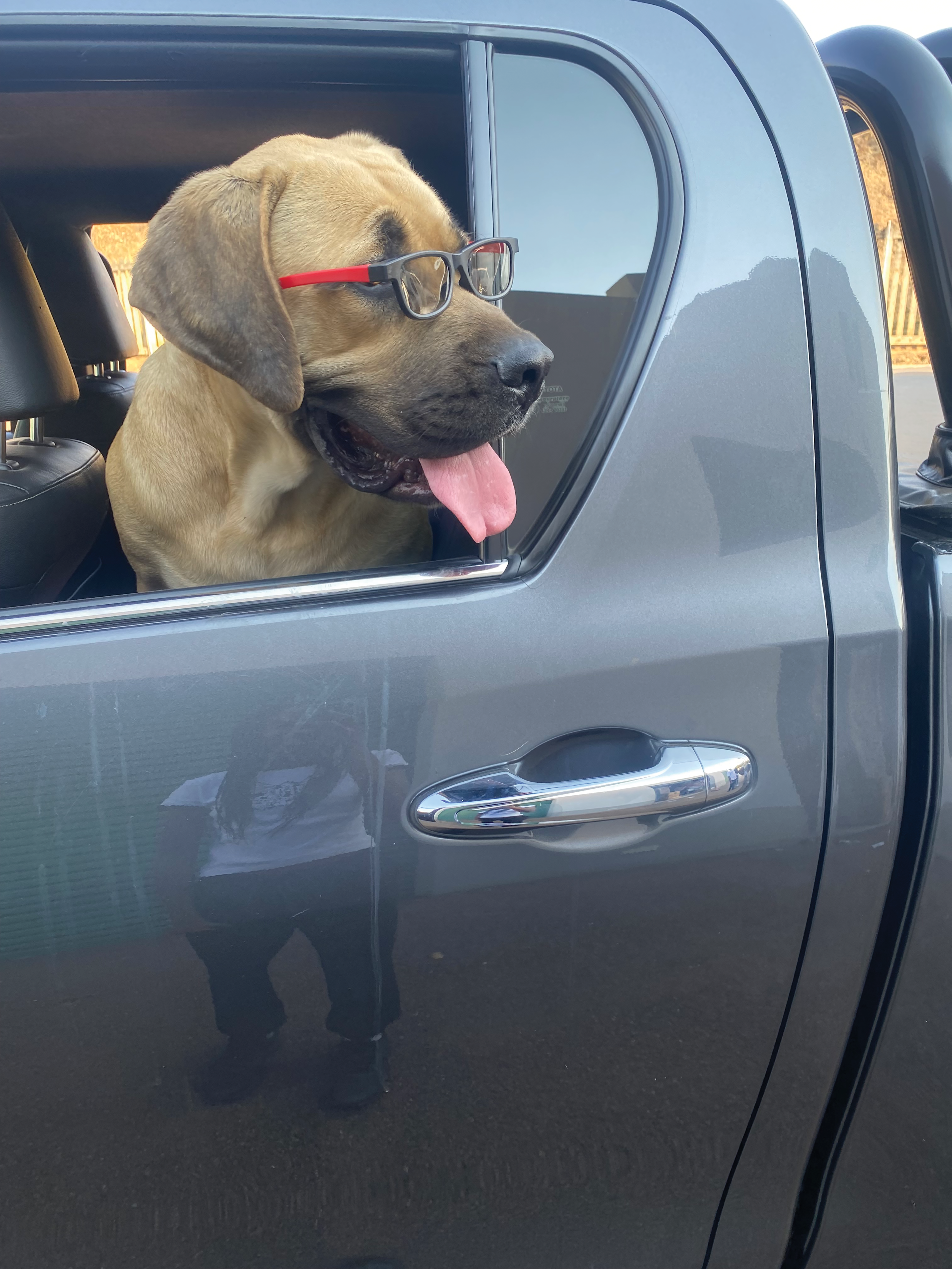
It’s an idea that has finally gained scientific consensus: dogs can be a faster, more precise, less expensive — not to mention friendlier — method of detecting COVID-19 than even the best current technology.
A growing number of studies over the last two or so years has highlighted the power of dogs in detecting the stealthy virus and its variants, even when they are obscured by other viruses, like those from common colds and flu.
“It went from four papers to 29 peer-reviewed studies — that includes more than 400 scientists from over 30 countries and 31,000 samples,” said University of California Santa Barbara’s Professor Emeritus Tommy Dickey, who, with collaborator Heather Junqueira of BioScent, Inc., gathered the recent massive number of findings into a review published in the Journal of Osteopathic Medicine.
From their rigorous survey of exclusively peer-reviewed studies published by traditional academic publishers covering both field and clinical experiments, Dickey and Junqueira assert that the collective research demonstrates that trained scent dogs are “as effective and often more effective” than the antigen tests we’re keeping handy at home, as well as the gold-standard reverse transcription polymerase chain reaction (RT-PCR) tests deployed in clinics and hospitals. Not only can dogs detect the SARS-CoV-2 virus faster, they can do so in a non-intrusive manner, without the environmental impact that comes with single-use plastics.
The magic lies in their highly evolved noses, with physical and neural optimisations for smell. Dogs have hundreds of millions of olfactory receptors, compared to roughly five to six million for humans, and a full third of their brains are devoted to interpreting smells, compared to a scant 5% in human brains. All these enhancements mean that dogs can detect very low concentrations of odours associated with COVID infections.
“They can detect the equivalent of one drop of an odorous substance in 10.5 Olympic-sized swimming pools,” Dickey said. “For perspective, this is about three orders of magnitude better than with scientific instrumentation.”
In some cases, dogs were able to detect COVID in pre-symptomatic and asymptomatic patients whose viral load was too low for conventional tests to work. And not only that, Dickey added, dogs could distinguish COVID and its variants in the presence of other potentially confounding respiratory viruses, such as those of the common cold or flu. “They’re much more effective,” Dickey said. “In fact, one of the authors that we quote in the paper commented that the RT-PCR test is not the gold standard anymore. It’s the dog.
“And they’re so quick,” he added. “They can give you the yes or no within seconds, if they’re directly smelling you.”
“In some scenarios, the dog gave the person a quick sniff, sitting down to indicate the presence of COVID. In others, the dog was given a sweat sample to smell, a process that could take a few minutes. The speed is especially important in situations like the earlier phase of the pandemic, when a gap of days between test and result could mean an exponential rise in infections if the person was positive, or scenarios that involve a high volume of people”.
Scent dogs such as beagles, basset hounds and coonhounds would be the ideal dog for the task, given their natural tendencies to rely on odours to relate to the world, but the studies showed a variety of other dogs are up to the challenge. Given a few weeks of training, puppies and older dogs, males and females, purebreds and mixed breeds all performed admirably. In one study, a “problem” pit bull terrier that had been abused found a second chance by becoming a perfectly capable COVID detector.
Despite these glowing reviews, there remain challenges to placing man’s best friend in the mainstream of medical diagnoses, although the animals have proven successful in the detection of other conditions, such as diabetes and cancer.
“There’s quite a bit of research, but it’s still considered by many as a kind of a curiosity,” said Dickey, a professor emeritus of geography whose love for Great Pyrenees dogs led him to become a certified therapy dog handler and author of therapy dog books after he retired from formal teaching at UCSB.
Places that were open to using dogs in field experiments tended to be smaller countries such as Finland and Colombia, where there was a desire to explore fast and cost-effective methods of detecting COVID without having to wait for expensive tests to be developed or for reagents to become available.
Of their study, Dickey and Junqueira added, “After conducting this comprehensive review, we believe that scent dogs deserve their place as a serious diagnostic methodology that could be particularly useful during future pandemics, potentially as part of rapid routine health screenings in public spaces.
Perhaps, most importantly, we argue that the impressive international quality and quantity of COVID scent dog research described in our paper for the first time, demonstrates that medical scent dogs are finally ready for a host of mainstream medical applications.”