 WeeklySA_Admin
EMOTIONAL: Ethiopian Eyeru Gebru among 36 athletes from 11 different countries named for Paris 2024
By Sports Reporter
When war broke out in the Tigray region of Ethiopia, Eyeru Gebru’s world turned around. The pedalling stopped. Cycling, which had become a source of relief and respite, seemed a distant memory.
“I stopped cycling for more than two years. Things weren’t okay but thinking and dreaming was my biggest strength to overcome the hard times and it was like my therapy,” she told Olympics.com.
Despite that long period off the bike, she never thought of abandoning a cycling career that had grown out of need – “making a little money to help my mum.”
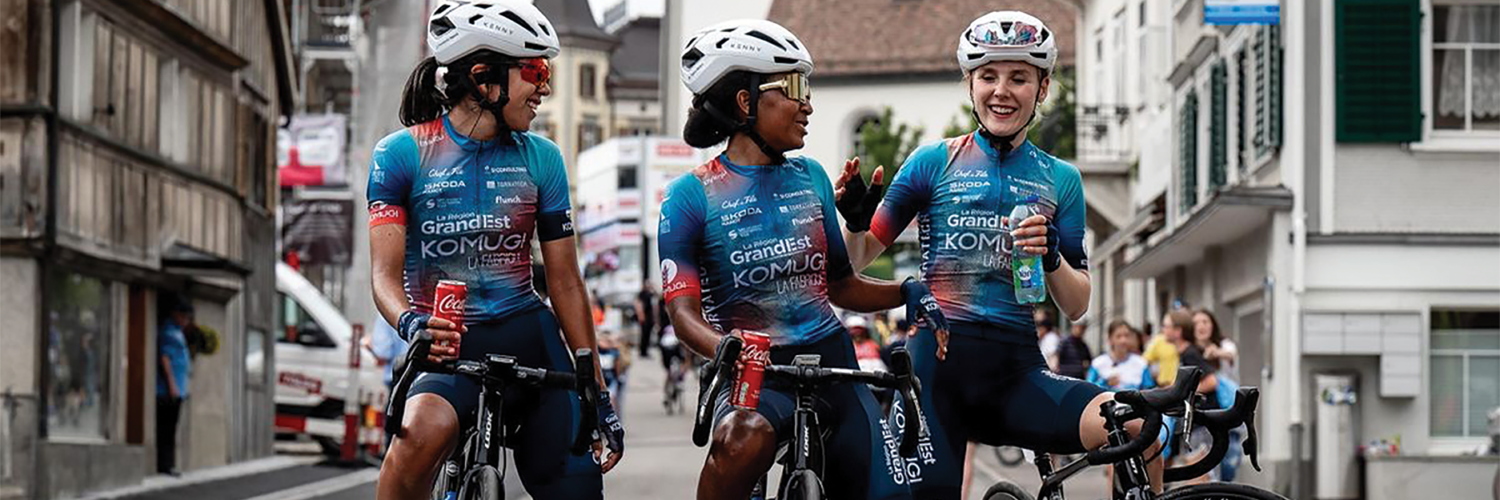
But eventually it was the sport that helped change her life, helping Gebru to leave her homeland, apply for asylum in France, and receive refugee status, before signing for a French professional women’s team.
She now regularly competes in UCI races on the elite Women’s World Tour. “Cycling for me is more than anything else”
That passion has led her to what could be the ride of her life – competing at the Olympic Games Paris 2024 as part of the IOC Refugee Olympic Team.
On Thursday, 30 May, Eyeru was one of the Torchbearers in Calvados, northwestern France. “Being selected to carry the Olympic flame is a big honour for me. I am so happy and proud of myself,” she said ahead of the Olympic Torch Relay.
Ethiopia’s high-altitude regions have been a hotbed for running talent. But Gebru shunned the typical runner’s life in the mountain ascents and thinning air around her home city in Tigray, and chose to ride instead.
“When I was six years old, I used to walk to school and see cyclists racing in my city. I’d hear their names and dream that one day I could be like them, but bikes were expensive, and we couldn’t afford one,” she recalled in an interview with Eurosport.
“In my country, we have world and Olympic champions, but athletes come from different regions – for example, the runners are from the south and cyclists are from the north – where I’m from. We’ve always had road cyclists from my region and have some riders in world teams, so I knew that it could be possible.”
She only learnt how to cycle in her prime teen years. “When I was 16 and making a little money to help my mum, I rented a bike in our neighbourhood and that’s when I learned how to cycle. I found it really hard, but it was so cool! I’d go out with my friends and I crashed so many times – I remember hiding from my mum at times so she wouldn’t worry.
“Then, when I was 17 years old, a teacher at my school helped me join a club in my city. The club gave me my first bike and I started to race properly.” That meant relocating to Mekelle, the capital of the northernmost province of Tigray, which is also the hometown of Ethiopia’s first World Tour rider, Tsgabu Grmay.
“I remember I chose cycling over schooling, and my family was angry but I was happy with my decision to follow my dreams,” she told Olympics.com. But life had another plan. “I stayed with the WCC for three years. In 2020 when I finished the season, I went home for the off-season, but the war started in my country,” Gebru said.
“It was horrible. We lost many people – I lost family members and friends.” l left everything behind. My life, my family and I came to France. In the beginning here it was also hard, but when people heard my story, they were kind and understanding and they helped me to live my normal life as a refugee and also return to my sport.”
“That hope not only helped to get back to my sport but also in my personal life. It made me even stronger and I was able to see things differently.”- Eyeru Gebru to Olympics.com
“I don’t have any good memories and thinking about it gets me very emotional. I was in a different city from my mum and my family, and couldn’t go and see them because everything was blocked – the internet, the telephones, it was really hard.”
“It [Cycling] helped distract me from the bad news back home. I kept believing and hoping things will change and I will get back to riding my bike,” she said ahead of the Olympic Torch Relay.
Getting back into cycling, and time, helped the 27-year-old pass through the dark period.
On 2 May, she was among 36 athletes from 11 different countries named by the International Olympic Committee (IOC) President Thomas Bach, as members of the IOC Refugee Olympic Team for Paris 2024.
“When I heard my name among those selected for the Olympic Games I was very emotional and very happy,” Gebru shared still overwhelmed by the selection.