 WeeklySA_Admin
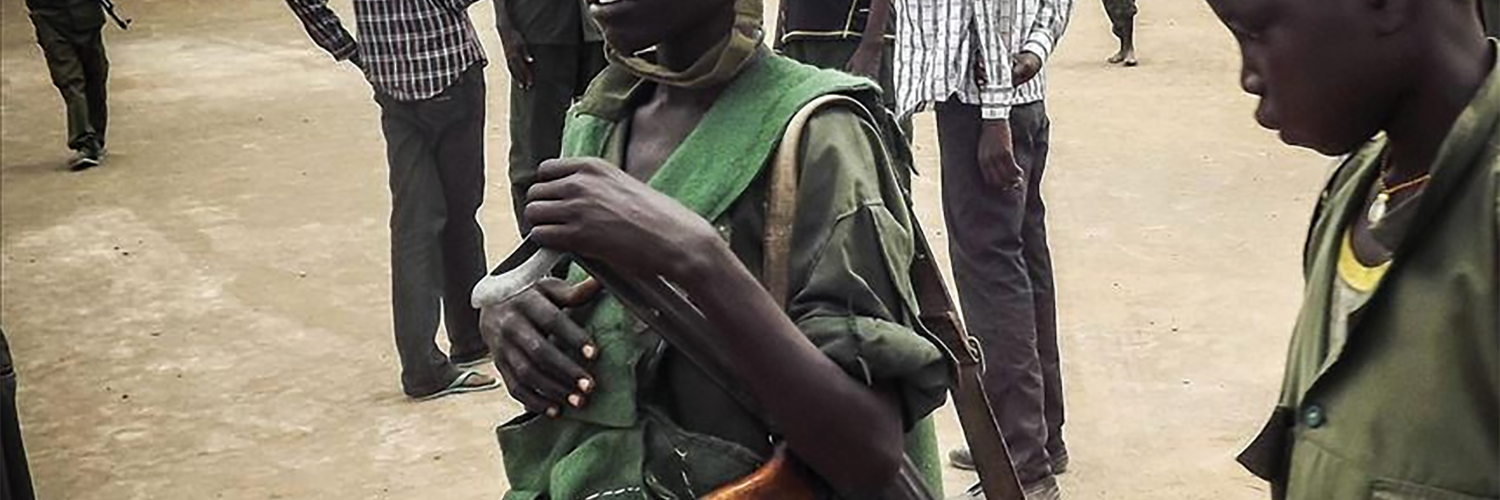
INTERVENTION: Children as young as 10 shamelessly recruited and dispatched to perilous frontlines to fight…
By Monk Nkomo
The dire humanitarian crisis in the eastern Democratic Republic of Congo has been worsened by the recruitment of children by all the involved armed actors in the violent hostilities amid reports of more than a million civilians being displaced and the perpetration of serious human rights violations including murder, torture, kidnappings and destruction of property.
Horrifying details of the deteriorating security and humanitarian situation in these areas – triggered by armed conflict over the country’s rich mineral resources including gold mines – are contained in the Final Report by the United Nations Security Council’s Group of Experts on the Democratic Republic of Congo which was released this week. Armed groups involved in the affected areas were recruiting children as young as 10 years- old as soldiers on an unprecedented scale. They were combat-trained and dispatched to the front lines to fight. Recruits were also subjected to heavy labour including the digging of underground tunnels and trenches. Civilians were being punished for allegedly collaborating with enemy armed groups, particularly amongst the Hutu population, for being suspected of being associated with the enemy. They are then subjected to executions, torture, arbitrary detentions and pillaging. Their villages are also destroyed.
Regional tensions negatively affected the conflict and fighting in the three eastern provinces. In the western Democratic Republic of the Congo, the conflict in MaiNdombe simmered on. The heightened humanitarian crisis resulted from a shift regarding the means of warfare towards the use of heavy artillery and mortar attacks near densely populated areas including the outskirts of Goma.
At the centre of these hostilities which had torn the DRC apart are armed and violent groups including the Allied Democratic Force (ADF), the M23, Wazalendo which comprises armed groups across the eastern part of the DRC, the Rwanda Defence Force (RDF), Armed Forces of the DRC (FARDC) and the Cooperative pour le developpement du Congo / Union des revolutionnaires pour la defense du peuple Congolais (CODECO – URDPC).
All these groups continued to perpetrate violations of international humanitarian law and international human rights law most often with complete impunity. Children were the most affected by the conflict including as a result of recruitment by armed groups. Incidents of sexual violence had also reached unprecedented levels with most victims being the population of internally displaced persons. These crimes were attributed to armed perpetrators including the Wazalendo and FARDC elements.
According to the report, children aged between 10 and 12 years were recruited from Rwanda to training camps at Tchanzu village in North Kivu in the DRC. About 1000 recruits had been trained there in 2023 and this year and at least 20 percent of them were believed to be minors.
Similar recruitment efforts were reported in refugee camps in Uganda notably in Kyaka in Northern Uganda and in Nakivale near the Southern Rwandan border. Various sources reported that recruits, including children, lured under false financial incentives, had been brought to the DRC since 2022 mainly through Bunagana.
In North Kivu, the sanctioned armed group, the ADF, intensified attacks against urban centres in the Democratic Republic of the Congo and continued to be active in Uganda. They committed the highest number of killings, mainly of civilians. The armed group established strong networks in prisons, particularly in Kinshasa where ADF detainees were active in recruiting and mobilizing combatants and collaborators.
The M23 frequently abducted, imprisoned, tortured and executed civilians accused of collaborating with Wazalendo armed groups or the FARDC. The M23 and RDF specifically targeted localities predominantly inhabited by Hutus in areas known to be strongholds of FDLR and Nyatura groups, such as in the localities and groupements of Bukombo, Burambo and Nyanzale in the Bwito chiefdom. The Wazalendo armed groups were also notorious and committed serious violations including kidnappings for ransom, extortion, pillaging, unlawful imprisonment, torture, rape, murder, reprisal killings and execution of civilians accused of collaborating with the enemy.
According to the report, the CODECO or URDPC, comprising various factions over which it asserted command and control, continued to perpetrate serious violations of international humanitarian law and international human rights law, including indiscriminate attacks on civilians, constituting sanctionable acts such as murder, executions, kidnapping, torture, looting and destruction of property; attacks on humanitarian staff and hospitals, obstructing access to life-saving humanitarian assistance and attacks against peacekeepers engaged in protecting civilians.
The protracted armed violence had worsened the already dire humanitarian crisis. By March this year, Petit Nord, situated between the city of Goma and the Mount Nyiragongo volcano in North Kivu, accounted for nearly 1,7 million internally displaced persons.
An additional half a million internally displaced persons spilled over into neighbouring South Kivu. Goma faced escalating criminality and civil unrest due primarily to the proliferation of Wazalendo combatants and undisciplined elements of the Armed Forces of the DRC who enjoyed great impunity for their acts.
The official use of the Wazalendo, by the Government of the DRC, to fight the M23 resulted in this group legitimizing their existence and criminal activities. The Wazalendo group thrived on a violent war economy in their areas of influence – looting, extorting, kidnapping and murdering civilians.
The rapidly escalating M23 crisis carried the risk of triggering a wider regional conflict. Heavy fighting continued between M23, alongside the Rwanda Defence Force and the Armed Forces of the Democratic Republic of the Congo together with the Wazalendo coalition of local armed groups, the sanctioned Forces démocratiques de libération du Rwanda (FDLR) and Burundi National Defence Force troops. Private military companies and troops of the Southern African Development Community, which were deployed in December 2023, provided operational and military support to FARDC.
RDF military interventions and operations in Rutshuru, Masisi and Nyiragongo territories extended beyond mere support for M23 operations to direct and decisive involvement, allowing RDF and M23 to achieve military dominance in Petit Nord and rapid territorial expansion to the shores of Lake Edward. The deployment of advanced military technology and equipment bolstered joint M23-RDF operations, altering conflict dynamics, including by grounding all FARDC military air assets. A newly created politico-military movement, the Alliance Fleuve Congo (AFC), failed to coalesce the majority of political and armed actors against the Government of the DRC.
The Group of experts said in Rubaya, mineral production under the control of the Coalition des patriotes résistants congolais-Force de frappe (PARECO-FF) and mineral trade under the control of PARECO-FF, Wazalendo and M23 continued unabated, rendering the minerals ineligible for trade. There also existed a serious risk of supply chain contamination.
In Ituri, the two main armed groups, Zaïre and CODECO/URDPC, resumed their armed confrontations and rivalry, including over lucrative gold mining sites. Zaïre’s brief pledge to engage in the peace process, according to the report, proved disingenuous, as illustrated by the group bolstering its mobilization and launching offensives. CODECO/URDPC also frequently clashed with FARDC, targeted United Nations Organization Stabilization Mission in the Democratic Republic of the Congo peacekeepers and carried out indiscriminate and deadly attacks on civilians, including kidnappings and executions.
The FARDC and Republican Guard elements were involved in gold mining activities. FARDC financial resources and soldiers were diverted from the fight against armed groups to the protection of private interests in the mining sector.
In the mining sector, the development of the Wazalendo phenomenon posed serious threats to the implementation of due diligence. Economic actors trusted armed groups for their security. Primera Gold’s exports had fallen sharply since the Group of Experts issued its midterm report. Primera Gold was weakened by differences with its partners in the United Arab Emirates.
The company became less competitive in comparison with prices offered in some other countries in the region. As a result, gold continued to be smuggled, notably to Rwanda and Uganda.
In North Kivu, the sanctioned armed group, the Allied Democratic Forces, intensified attacks against urban centres in the Democratic Republic of the Congo and continued to be active in Uganda. The ADF committed the highest number of killings, mainly of civilians. The armed group established strong networks in prisons, particularly in Kinshasa where ADF detainees were active in recruiting and mobilizing combatants and collaborators.
The humanitarian crisis in North Kivu reached unprecedented severity due to persistent fighting between M23/RDF and the FARDC-Wazalendo coalition, leading to the displacement of an additional one million civilians since October 2023.
The flow of internally displaced persons overburdened already congested displacement camps, with well over 100 official and makeshift sites recorded around Goma.
Most armed actors active in Petit Nord benefited from illegal logging and or taxation of the transport of wooden planks in the areas that they controlled. This source of income was part of bigger revenue generation opportunities stemming from the ongoing crisis in Petit Nord.
In Rubaya, mineral production under the control of the Coalition des patriotes résistants congolais-Force de frappe (PARECO-FF) and mineral trade under the control of PARECO-FF, Wazalendo and M23 continued unabated, rendering the minerals ineligible for trade. There also existed a serious risk of supply chain contamination.
In the mining sector, the development of the Wazalendo phenomenon posed serious threats to the implementation of due diligence. Economic actors trusted armed groups for their security. Primera Gold’s exports had fallen sharply since the Group of Experts issued its midterm report.
Primera Gold was weakened by differences with its partners in the United Arab Emirates. The company became less competitive in comparison with prices offered in some other countries in the region. As a result, gold continued to be smuggled, notably to Rwanda and Uganda. The report by the experts also noted Zaïre’s armed disingenuous commitment to peace In January 2024, Zaïre acknowledged its existence as a “self-defence armed group” and stated its intention to join the peace process .
Zaïre leaders pledged to facilitate free movement of civilians, prevent its combatants from carrying weapons and undertake disarmament, among other measures. Zaïre’s commitment to end hostilities was however short-lived and evidence indicated that it was disingenuous from the outset. Zaïre remained armed and active in Djugu, Mahagi and Aru territories. It continued to either attack or repel incursions by CODECO/URDPC incursions, defend mining sites or fight to gain control of new areas.
Several sources reported that as Zaïre prepared for the peace initiative in Bunia in January 2024, its leaders were collecting non-functional weapons to be surrendered to provincial authorities, ostensibly to feign genuine disarmament efforts.
In parallel lines, Zaïre intensified the purchase of arms. The Group of experts received testimonies on the continued acquisition of war material through trafficking networks in Rwanda, Uganda and South Sudan.
Several sources reported that weapons obtained via regional or local networks were stored in Mbidjo and Mabanga, Djugu territory. The Group also authenticated video recordings from March 2024 depicting heavily armed Zaïre combatants on a speedboat and in a pickup vehicle.
In their effort to help resolve the violent conflict in the DRC, the Group of experts made the following recommendations:
• The Government of the Democratic Republic of the Congo must investigate, in cooperation with international partners, the use of explosive weapons, including drone-borne explosives and refrain from their use in populate areas;
• Cease all collaboration with all armed groups, in particular the FDLR-FOCA;
• Investigate and prosecute individuals, including FARDC elements, responsible for violations of international humanitarian law and international human rights law and those involved in illegal mining activities;
• Implement national legislation by investigating and prosecuting all individuals responsible for recruiting, training and using child soldiers and take immediate action to secure their release;
• Dismantle ADF networks in prisons and investigate and prosecute any authority facilitating, directly or indirectly, illegal activities by ADF detainees.
They also recommended that the Government of the Democratic Republic of the Congo and international partners :
• Prioritize security sector reform and ensure that the Democratic Republic of Congo excluded individuals with documented violations of international humanitarian law and international human rights law through a thorough vetting process.
• States Members of the United Nations must prevent funding and or support for military activities of RDF that could facilitate RDF operations in the Democratic Republic of the Congo;
• Convene meetings with representative industry associations and international organizations to raise awareness among upstream and downstream actors along the United Arab Emirates-based confidential sources and sources close to Primera Gold.
• The Government of Rwanda must withdraw its armed forces and weaponry from the Democratic Republic of the Congo;
• Request Gasabo Gold Refinery to comply with the Group’s due diligence guidelines, including ascertaining the origin of gold ;
• Governments of Rwanda, Burundi and Uganda cease or impede collaboration with and or support to, foreign and local armed groups active in the Democratic Republic of the Congo ;
• Investigate and prosecute individuals and networks involved in smuggling gold originating from the Democratic Republic of the Congo;
• Investigate the recruitment and cross-border trafficking of minors recruited in refugee camps for the benefit of the M23 group.