 WeeklySA_Admin
DIRE: Doctors warn of a worrying increase in the number of Congolese children with severe acute malnutrition and with complications in the conflict-torn country…
By WSAM Correspondent
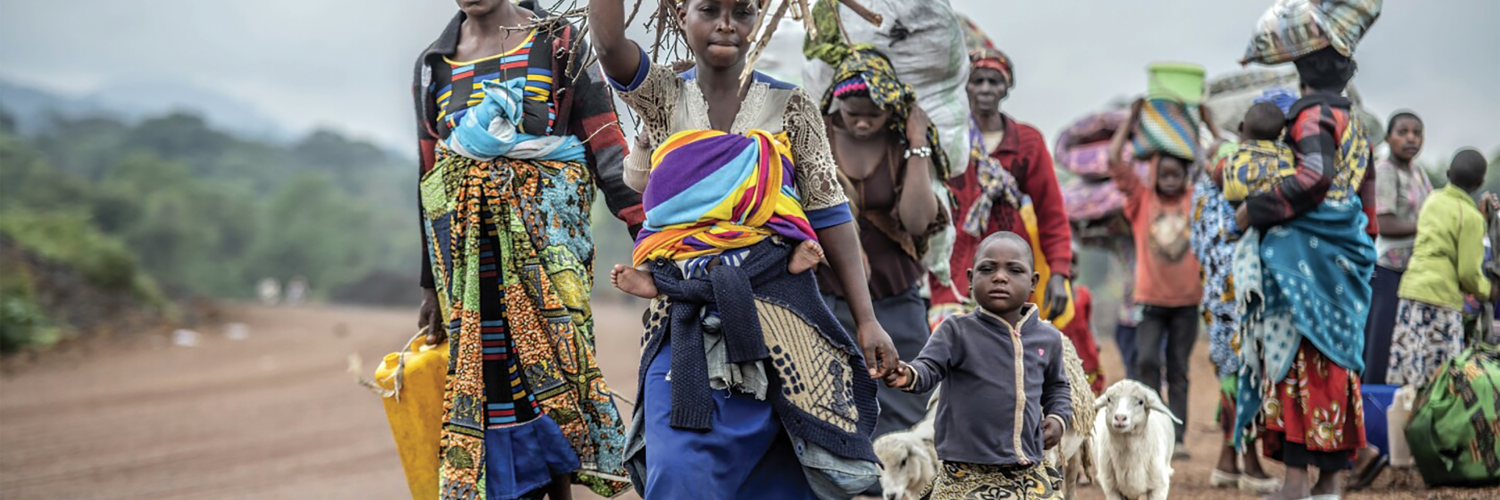
Clashes between the Congolese armed forces, the M23 movement, and various other armed groups in north eastern parts of the Democratic Republic of Congo have led to the displacement of hundreds of families and worsening a malnutrition crisis affecting more than 7 000 children.
The intensifying violence, massive displacement, and proximity of armed groups to communities are leading to an alarming increase in cases of killing, maiming, and abduction of children in DR Congo in recent weeks.
On Wednesday, Médecins Sans Frontières (MSF), translated as Doctors Without Borders, reported that, in North Kivu province, DRC, an average of 800 children suffering from severe acute malnutrition have been admitted each month for treatment to hospitals in Mweso and Masisi since the beginning of the year. This figure is almost double that of the previous year.
The scene of armed conflict for years, Masisi territory has recently seen a resumption of armed clashes between the Congolese armed forces, the M23 movement, and various other armed groups. This has led to the displacement of many people from their homes, and worsening an already critical humanitarian situation.
Even though malnutrition is not a new challenge in Masisi territory, Médecins Sans Frontières (MSF) medical teams have observed this year a worrying increase in the number of children with severe acute malnutrition with complications. Between January and September 2023, nearly 7 500 children were treated in Masisi and Mweso hospitals.
“My child fell seriously ill, but what struck me most were his eyes: they were sunken and empty,” says Micheline, a displaced woman whose son was hospitalised in Mweso. “I rushed to the health centre, and they transferred him to hospital. It’s the first time one of my children has suffered from malnutrition.”
The nutrition situation of children, including displaced families, has deteriorated abruptly this year, largely due to the upsurge in violence, which has a direct impact on the socio-economic situation of communities. Few medical facilities remain functional, and those that are open, are often short of essential medical supplies. The health authorities struggle to support local medical facilities and supply them regularly with medication and therapeutic foods used to prevent and treat malnutrition.
“My daughter started to swell gradually — first her face and then all over her body,” says Mandela, whose daughter is being treated in the MSF-supported Masisi hospital. “I took her to the health centre where they gave her some peanut-based paste, but not enough to allow her to recover. On the fourth visit, as her condition had worsened, the doctors referred her to Masisi hospital.”
When children with moderate malnutrition fail to receive proper treatment in health centres, they are more likely to become severely malnourished and suffer medical complications, which are much more difficult to cure.
“Two months ago, my daughter Annika died of malnutrition in the hospital,” Sifa continues. “She was seven years old. We arrived [at hospital] too late. I tell you, poverty is going to kill us all.”
“If simple cases of malnutrition are not treated in the health centres, the number of hospital admissions increases,” says Dr Nadine Neema Mitutso, medical activities manager at Masisi hospital. “Today, there are almost as many admissions to hospital intensive care units as there are to outpatient malnutrition programmes in health centres. Yet most of these hospital admissions could be avoided if children were treated in a preventive manner in health centres.” After leaving the hospital, families are faced with the same difficulties getting hold of both regular and therapeutic food, so the risk of relapse is high.
“To put an end to this vicious circle, a holistic response needs to be provided by all organisations in the region,” says Carole Zen Ruffinen, MSF project coordinator in Mweso. “Sustainable solutions need to be found to meet people’s growing nutrition needs.”
Over recent months, the M23 armed group has moved into Masisi territory.
Clashes have led to mass displacements of communities and hampered people’s access to fields, markets, schools, and medical facilities, exposing them to permanent food insecurity.
MSF has called on other organisations working in North Kivu to ensure a sustainable operational presence to prevent the disastrous consequences of malnutrition. “We also call on Congolese authorities and donors to strengthen the medical response capacity of health facilities, particularly in terms of malnutrition treatment,” the organisation said.
Latest data shows there has been a 41 per cent increase in the number of verified grave violations against children in the first half of 2023 compared to the same period a year ago. There were 3,377 grave violations against 2 420 children in all of 2022, according to UNICEF’s June 2023 Children and Armed Conflict – Report of the Secretary-General.
“I met children who survived the horrors of recruitment and use by armed groups and the unspeakable trauma of sexual violence – atrocities that no one should experience, let alone children,” said Sheema Sen Gupta, UNICEF’s Director of Child Protection, during a week-long mission to DRC. “These harrowing stories underscore the urgency for the government to intensify its efforts to safeguard civilians – especially the most vulnerable, the country’s children – and actions needed from partners and donors to be able to scale up our prevention and response activities.”
Recruitment and use of children in armed groups has spiked by 45 per cent in the first six months of the year. In 2022, 1,545 children – some as young as 5 years old – were verified as having been recruited and used by armed groups. Killing and maiming of children was up 32 per cent in the same period, compared to 699 cases last year.
Rape and other acts of sexual violence against children and abduction of children are also on an upward trajectory. In both 2021 and 2022, DRC had the world’s highest levels of verified cases of sexual violence against children committed by armed forces and armed groups. Moreover, in 2022, 730 children were verified as abducted, making it the highest number of abductions ever verified by the United Nations in the DRC. “This violence is unacceptable. We call on all parties to the conflict to take measures to prevent and end all grave violations against children,” added Sen Gupta.
Since violence flared in October 2022, 1.5 million people have been forced to flee for their lives in eastern DRC, taking them away from their homes, livelihoods and communities, and children away from their schools. There is a total of 6.1 million displaced people in eastern DRC.
Last month the UNHCR, the UN Refugee Agency, sounded the alarm as escalating violence and pervasive human rights abuses in the eastern provinces of the DRC trigger a fresh wave of displacement, both within and outside of the country.
Despite a recent ceasefire agreement in North Kivu province, UNHCR protection monitors have reported that over 90 000 people across the Rutshuru and Masisi territories were forced to flee their homes since the beginning of this month. Displaced families were urgently in dire need of food, clean water, and shelter, but humanitarian access to affected populations was being severely restricted due to ongoing conflicts, according to the UNHCR.