 WeeklySA_Admin
TRENDS: World health body convenes urgent meeting amid growing spread of the disease on the continent…
By WSAM Reporter
Last week, the Africa Centre for Disease Control and Prevention reported that mpox – also known as monkeypox – has now been detected in 10 African countries this year including the DRC, which has more than 96 percent of all cases and deaths.
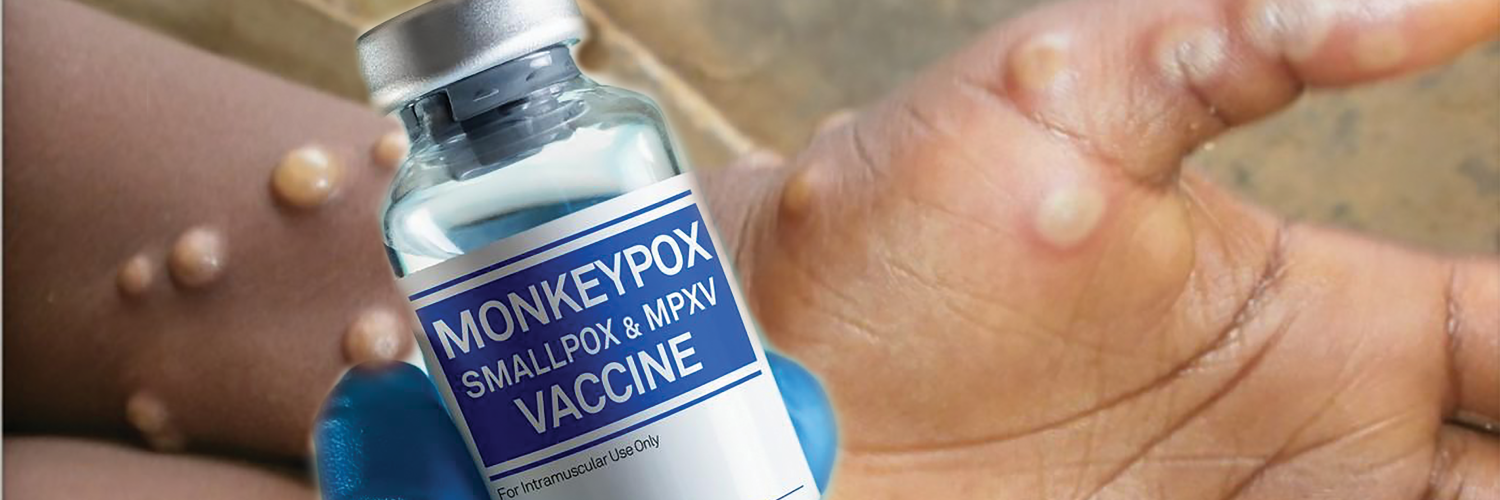
The World Health Organisation (WHO) has today launched the process to search for new mpox vaccines to stem the growing spread of the disease on the continent.
The world body has issued an invitation to manufacturers to submit expressions of interest to supply the much-needed vaccines for valuation.
The WHO is requesting manufacturers to submit data to ensure that the vaccines are safe, effective, of assured quality and tailor-made for the target populations.
The EUL procedure is an emergency use authorisation process, specifically developed to expedite the availability of unlicensed medical products like vaccines that are needed in public health emergency situations. This is a time-limited recommendation, based on a risk-benefit approach.
Today, the WHO director-general Tedros Adhanom Ghebreyesus announced that he had triggered the process for EUL of mpox vaccines, given worrying trends of serious and growing outbreak in the Democratic Republic of the Congo (DRC) that has now expanded outside the country.
A new viral strain, which first emerged in September 2023, has for the first time been detected outside DRC.
Meanwhile, the WHO boss has called for an emergency meeting on mpox following its spread outside the DRC, so that an expert group can determine if the situation warranted being a declaration of a global emergency.
At a press briefing in Geneva during the week, he said he had decided to ask independent experts to advise the WHO “as soon as possible.”
In light of the situation, and the potential for further international spread within and outside Africa, the emergency committee will advise on a public health emergency of international concern. The designation is the UN agency’s highest level of alert.
“The committee will meet as soon as possible and will be made up of independent experts from a range of relevant disciplines from around the world,” he said.
Last week, the Africa Centres for Disease Control and Prevention reported that mpox – also known as monkeypox – has now been detected in 10 African countries this year including the DRC, which has more than 96 percent of all cases and deaths.
Mpox is a viral disease endemic in central and West Africa. It can be transmitted through physical contact with an infected person, animal or contaminated materials.
Symptoms include skin rash or lesions, accompanied by fever, headache, muscle aches, back pain, low energy and swollen lymph nodes.
The disease came to global prominence two years ago after cases emerged across the world amid the COVID-19 pandemic. That outbreak was declared a public health emergency of international concern in July 2022 and ended the following May.
Tedros said the DRC has been experiencing a severe outbreak of mpox since the beginning of the year. More than 14 000 cases, and 511 deaths had been reported.
Although outbreaks have been reported in the country for decades, and the number of cases reported annually has been increasing steadily, the caseload for the first six months of this year matches the total for all of 2023.
“In the past month, about 50 confirmed and more suspected cases have been reported in four countries neighbouring the DRC that have not been reported before: Burundi, Kenya, Rwanda and Uganda,” he said, explaining that mpox outbreaks were caused by different viruses called clades.
“At the same time, cases of clade 1a have been reported this year in DRC, the Central African Republic and the Republic of Congo, while clade 2 has been reported in Cameroon, Côte d’Ivoire, Liberia, Nigeria and South Africa,” Tedros said.
SOME MPOX VICTIMS CONTRACTED VIRUS AT MEN-ONLY SEX PARTIES
Infected: Many of the cases were hospitalised and included men living with hiv or with unmanaged hiv infection
By Monk Nkomo
A total twenty cases of the Monkeypox disease cases, including three deaths, have been reported in three of South Africa’s provinces between May and July this year and most of these cases involved men who had sex with other men, according to information provided to the World Health Organization (WHO).
The WHO said they had been notified by the International Health Regulations (IHR) National Focal Point ( NFP) of the Republic of South Africa of 20 confirmed mpox (monkeypox) cases between May 8 and July 2 2024. These cases were reported in three of the nine provinces including Gauteng (10 cases; one death), Western Cape (one case), and KwaZulu-Natal (nine cases and two 2 deaths).
The cases are all male, aged between 17 and 43 years, and almost all self-identified as men who had sex with men (MSM). Most are persons living with HIV, with unmanaged or only recently diagnosed HIV infection and advanced HIV disease (AHD), and one had diabetes.
All cases were symptomatic, with extensive skin lesions and eighteen required hospitalization. None of the confirmed cases reported a history of international travel and none reported attending high-risk social gatherings. The type of exposure reported by cases was sexual contact.
For the first 16 cases overall, 44 contacts were identified in KwaZulu-Natal, 39 contacts in Western Cape and 55 in Gauteng province. While three of the four initial cases in KwaZulu-Natal were epidemiologically linked through contact tracing, at least the initial seven in Gauteng province were not found to be epidemiologically linked, suggesting community transmission was underway.
Individual contact tracing for recent cases was ongoing. In addition, limited information suggested that some affected persons had attended and been exposed to Mpox at parties or clubs where sexual activity occurred.
During the ongoing 2022-2024 multi-country outbreak, five Mpox cases had previously been confirmed in South Africa, during the peak between June and August 2022, and all had reported travel abroad. None of the cases were severe. No cases were reported in 2023.
The Mpox disease is infectious and is caused by the monkeypox virus. The Mpox virus is part of the same family as the virus that causes smallpox. It is a zoonotic disease that can spread between animals and people. It is endemic and found regularly in parts of Central and West Africa. According to the WHO, this virus has been found in small rodents, monkeys and other mammals that lived in those areas.
Some of the symptoms of Mpox included a rash which may last for two to four weeks, fever, headache, muscle aches, back pain, low energy and swollen glands. The painful rash looks like blisters or sores and can affect the face, palms of the hands, soles of the feet, groin, genital and or anal regions.
The virus spreads from contact with infected persons through touch, kissing or sex. Pregnant persons may also spread it on to their unborn babies.
The Department of Health appealed to members of the public who had been in close contact with known or suspected patient(s) of Mpox disease to cooperate with health officials and present themselves at the nearest health facility or healthcare provider without delays for clinical evaluation to ensure early diagnosis and effective treatment if they tested positive. Mpox virus is transmitted from one person to another by close contact with lesions, sexual contact, body fluids, respiratory droplets and contaminated materials such as bedding. The incubation period of mpox is usually from 6 to 13 days but can range from 5 to 21 days. The health officials relied on