 WeeklySA_Admin
RACKETEERING: Swazi Secrets, a cross-border investigation spearheaded by the International Consortium of Investigative Journalists (ICIJ), reveals Eswatini’s role as a possible conduit in southern Africa’s gold smuggling economy — and how the absolute monarchy’s weak anti-money laundering controls enable figures close to the royal family to benefit from proximity to the king
By ICIJ

An unprecedented leak from inside the Eswatini Financial Intelligence Unit has revealed how King Mswati III’s broken promises and his inner circle have enabled suspicious money to flow through the land-locked country and beyond.
While most of the population of 1.2 million faces grinding poverty, King Mswati III and members of his expansive family flaunt their wealth, from flashy bespoke watches to fleets of luxury cars.
Now, the Swazi Secrets, a project is based on a leak of more than 890,000 internal records from the Eswatini Financial Intelligence Unit (EFIU), has revealed how the absolute monarchy’s weak anti-money laundering controls enable figures close to the royal family to benefit from proximity to the king. These documents were obtained by Distributed Denial of Secrets, a non-profit devoted to publishing and archiving leaks, which shared them with the International Consortium of Investigative Journalists. ICIJ coordinated a team of 38 journalists across 11 countries to explore the documents.
The leak is the largest of its kind from a financial intelligence unit in an African country. The documents include bank records, police investigation reports, court affidavits, and confidential exchanges between government agencies within southern Africa.
The records also include details about banks in African countries and beyond that have facilitated financial transactions for people and companies suspected of criminal activity.
Swazi Secrets also shows a potential connection between Eswatini to the larger gold smuggling economy in southern Africa and beyond. The documents show millions of dollars passed from a notorious “cash-in-transit” company in South Africa through a gold refining company in eSwatini, then on to Dubai.
This eSwatini company was set up by two business partners, including a Keenan Schofield, the son-in-law of Eswatini’s king.
Authorities at the EFIU and Eswatini’s central bank were concerned that this gold refining company — and another later set up by one of the partners, Alistair Mathias — were exploiting loopholes to evade taxes, illegally move money abroad and move illicit funds through the kingdom.
The investigation also exposes how a “special economic zone” — touted as a way to repair the country’s tattered economy — became a ghost town home to two phantom gold refineries channelling millions of dollars to Dubai.
“When we talk of the Swazi economy we can say the king himself is the economy, because Swaziland is emblematic of a country where the entire economy is actually captured by royal interests,” said one human rights activist, who asked not be named for fear of retribution.
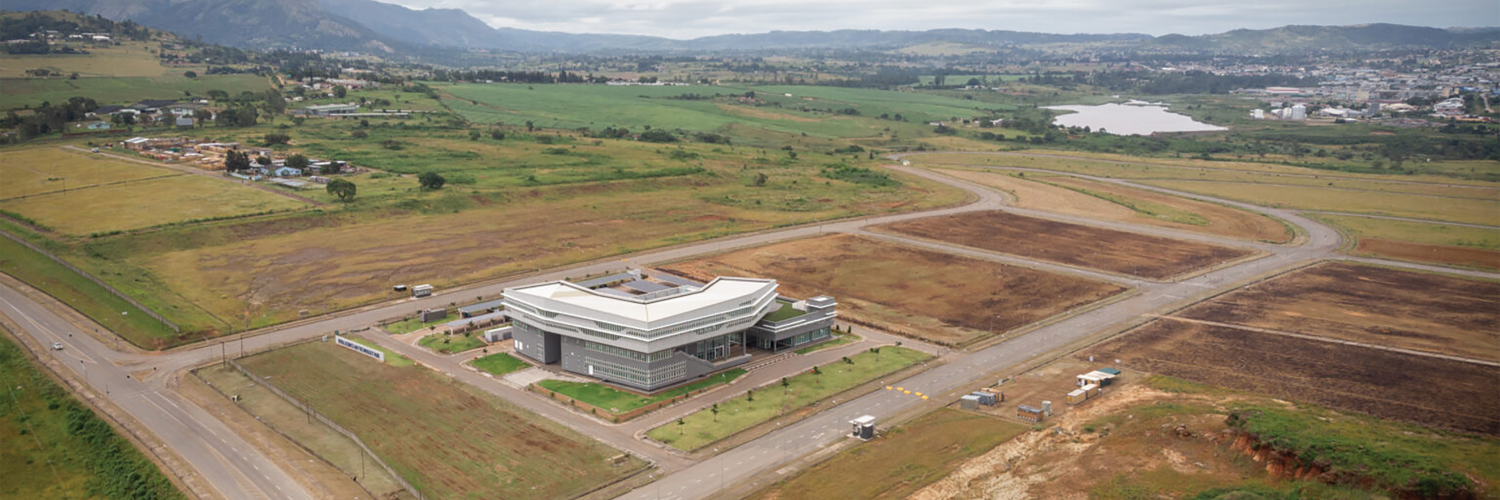
In 2012, they were forcibly removed — along with around 180 other people — to make room for the government-sanctioned “special economic zone,” (SEZ), also called the Royal Science and Technology Park.
The “brainchild” of eSwatini’s king, and his “insatiable desire to help stimulate economic growth,” as one press release put it, the SEZ was meant to be an oasis for new business. Instead, grass and weeds are slowly reclaiming vacant plots while many families forcibly removed to make way for it still hold anguished memories over the saga.
Wide, empty boulevards go nowhere, lined with streetlights that aren’t in operation. One lone building — a multi-storey government office complex — stands in a surreal ghost land of nearly 400 acres. That the much-vaunted project has become a white elephant, has left a sour taste in the mouth of the families forcibly removed in 2012 to make way for it.
The investigation has also shone the spotlight on the flow of money linked to the gold trade between Zimbabwe and other African countries on the one side and Dubai in the Middle East – and so too the ability of some of South Africa’s banking giants to thwart the illicit cash transactions.
Leaked documents show that in less than one month, from late November 2018 to mid-December 2018, 10 transactions worth about $4.7 million at the time (R67 million at the time) were made from a murky South African “cash-in-transit” company to Schofield, who then sent about the same amount to Mint of eSwatini in the SEZ, from where the money went on to Dubai, United Arab Emirates. eSwatini’s authorities deemed the transactions suspicious.
The EFIU’s analysis led it to suspect an illicit operation to launder money and smuggle gold through the kingdom — connecting eSwatini to a much larger operation involving gold smuggling and money laundering across southern Africa and stretching to the gold markets of Dubai.
This operation was exposed by Al Jazeera’s Investigative Unit, a partner in Swazi Secrets, in its 2023 Gold Mafia investigation. Al Jazeera’s exposé showed how rival gangs controlled Zimbabwe’s gold trade, smuggling the precious metal across borders and helping Zimbabwe’s regime evade sanctions.
These gangs, linked to heads of state and their inner circles, help criminals launder illicit money through international gold transactions.
At one stage, South Africa’s leading bank, Nedbank, was described by eSwatini’s Central Bank in a report attached to a 2019 letter as having “weak anti-money laundering and counter financing of terrorism controls and is under close monitoring.”
Nedbank did not answer questions from ICIJ about the involvement of one of the implicated key allies of the king, whose company had a business account at the bank’s branch in the kingdom, saying that it “is bound by client confidentiality and therefore does not disclose client matters.” The bank added:
“Nedbank eSwatini is governed by strict and robust internal policies as well as statutory/regulatory guidelines.”
For its part, the Central Bank of eSwatini highlighted the risk the SEZ posed as a potential gaping hole in the country’s economy, through which millions in illicit funds might flow, and which could make the country a haven for “criminals that will abuse the financial system.”
In the view of the central bank, the SEZ had the potential to be an open wound through which eSwatini’s fragile economy risked haemorrhaging millions of dollars.
* ICIJ has indicated that it would be publishing more Swazi Secrets stories from the leaked documents in the coming weeks.