 WeeklySA_Admin
RITES: It was regrettable that they did not see the dawn of the freedom to which they had dedicated their lives, says Ramaphosa…
By Monk Nkomo
The South African freedom fighters who died in exile and whose remains were returned from Zimbabwe and Zambia this week, should be honoured by the building of a free and equal society, creation of employment opportunities in a country where the poor are lifted out of poverty.
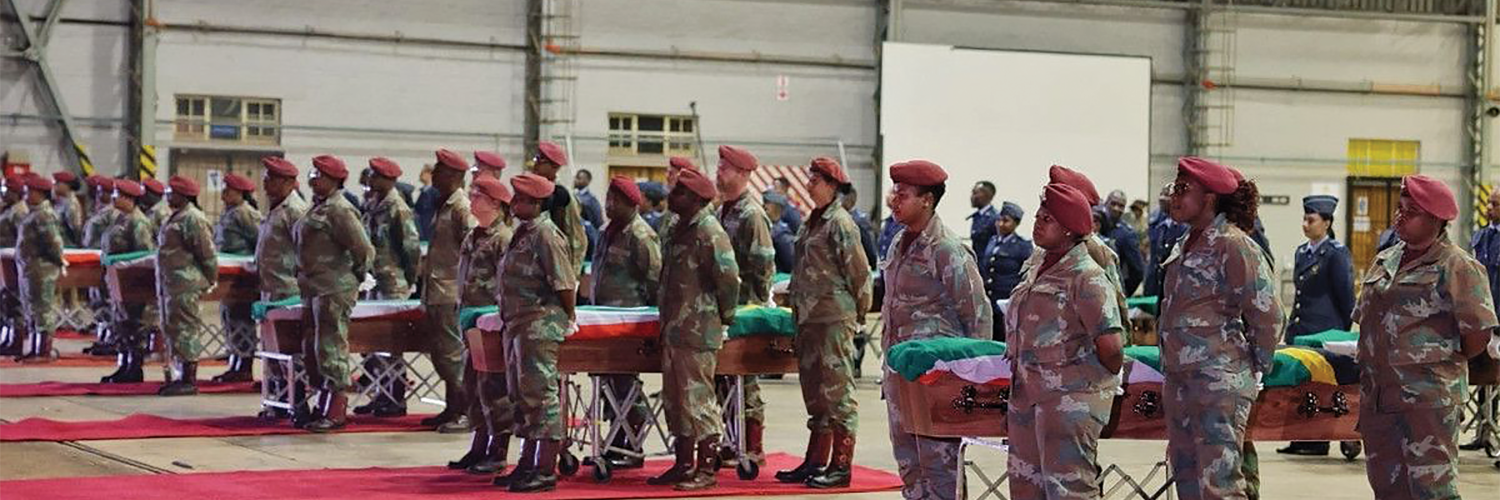
This was said by President Cyril Ramaphosa at the official welcoming ceremony of the remains of 49 ANC and PAC liberation fighters which was held at Freedom Park in Tshwane on Friday. The sombre occasion was attended by several dignitaries including former President Thabo Mbeki, senior government officials from Zambia and Zimbabwe and family members of those who died in these two countries.
‘’ While the freedom fighters belonged to different political traditions, they were united by a common vision of a free South Africa. And though they departed this life many years ago, their ideals and their values continue to guide South Africa we are building.
Today we celebrate the return to our soil the remains of heroes and heroines of our struggle for freedom. Through the act of repatriation, we reinstate their citizenship,’’ said Ramaphosa.
Their remains were being returned to the land of their birth and restored to their families and their people. Decades ago, these freedom fighters left a country that was at war with itself. They left a country in which the fundamental rights of its people were brutally and cruelly suppressed by apartheid, which was declared a crime against humanity.
‘’Today, their remains return to a free and democratic South Africa. It will forever remain a source of regret that they were never to see the dawn of the freedom to which they dedicated their lives. It is fitting that we gather at Freedom Park to honour them. It is here at Freedom Park that we remember our struggle for liberation and the many men and women who fought so that we may be free. It is here that we celebrate the achievement of our democracy’’.
Some of the remains included those of Duma Nokwe, an advocate and Secretary-General of the African National Congress; John Nyathi Pokela, who was Chairman of the Pan Africanist Congress and Edwin Letsholo Makoti, another prominent leader of the Pan Africanist Congress who was a founding member of the PAC and was Secretary for Publicity and Information in the PAC Central Committee at the time of his passing in Harare in 1989.
Ramaphosa said although there were other freedom fighters who were also honoured and whose names were not as familiar, their sacrifice and their contribution to South Africa’s freedom was no less profound and was no less valued. The names of all these freedom fighters would forever be inscribed at the Wall of Names in Freedom Park so that the nation may never forget.
Through the reparation of the remains of these freedom fighters, the country was giving further effect to the Preamble of its Constitution. In the Preamble, the nation is enjoined to recognise the injustices of their past and honoured those who suffered for justice and freedom in their land.
‘’We are called on to heal the divisions of the past and establish a society based on democratic values, social justice and fundamental human rights. Their activism and their sacrifices continue to inspire our efforts to build a better life for all’’.
The President added that they owed their everlasting gratitude to the countries that offered these freedom fighters shelter, support and, in the end, a fitting resting place. They were grateful in this instance to the governments and peoples of Zambia and Zimbabwe for having taken great care of these compatriots and for enabling their remains to be repatriated.
While the country remembered the heroes and heroines through monuments and acts of memory, ultimately the greatest tribute the nation can pay them was to build a South Africa in which all people were free and equal.
‘’We must honour their memories by working with greater determination to lift the people of South Africa out of poverty and to create employment and opportunity. We must work to end all forms of violence. We must build safe homes and communities. We must tear down the divisions between black and white, between men and women, between rich and poor. The return of these freedom fighters reminds us of the calibre of activists that led us on the path to democracy’’.
Ramaphosa added : ‘’It reminds us that, wherever we are and whatever we do, we are called upon to be agents of change. We are all called upon to be activists. In our actions, in our conduct, we must follow their example.
We must strive for unity, not division. We must hold ourselves to the highest standards of integrity and probity. The journey of these patriots reflects the powerful and irreversible ties of solidarity and friendship among Africans and the peoples of the world’’.
The return of these remains from Zambia and Zimbabwe marked the start of a process to return the remains of fallen freedom fighters from several other countries. The Exile Repatriation Project would continue, in fulfilment of the duty the government owed to those who fought for South Africa’s freedom, to their families and to the generations to come.
‘’We must continue to honour those men and women whose love for their country and its people motivated them to sacrifice their lives for freedom’’.
Some of the names of the freedom fighters whose remains were received from Zambia and Zimbabwe this week:
• Duma Nokwe : He was an advocate and Secretary-General of the African National Congress at a crucial moment in our struggle for liberation. In exile, he was a prominent voice on the continent and around the world in support of the cause of the South African people.
It is perhaps a sign of his esteemed place in the history of the liberation movement that his remains were exhumed still wearing the ANC scarf in which he was buried in Lusaka in 1978.
• John Nyathi Pokela was Chairman of the Pan Africanist Congress who spent more than a decade on Robben Island for his activities as a member of the Azanian People’s Liberation Army, then known as Poqo.
He is remembered for the vital role he played in forging unity within the PAC. He passed away in Harare in 1985.
• Edwin Letsholo Makoti, another prominent leader of the Pan Africanist Congress. He was a founding member of the PAC and was Secretary for Publicity and Information in the PAC Central Committee at the time of his passing in Harare in 1989.
• Florence Mophosho, a stalwart of the struggle who is remembered for her commitment, sacrifice and fiery spirit. She was a great leader of the ANC and a pioneer in the struggle for women’s rights. She helped us understand that no society can be free until its women are free.
• Basil February is also a name writ large in the history of our struggle. As a member of the Luthuli Detachment of Umkhonto we Sizwe, he was killed in action in the then-Rhodesia during the Wankie Campaign.
* Todd Matshikiza, a composer, musician and writer of great renown and achievement. His music and his writing earned him much acclaim, but it also earned him the ire of the apartheid state, which banned many of his works and forced upon him years of exile. He passed away in Lusaka in 1968.