 WeeklySA_Admin
NEGLECT: SA black under-development is multi-generational, a socio-economic malaise that last a lifetime
By Sandile Swana
According to Professor Tom Weisner, an international renown cultural and human development expert, the most critical factor in the development of a human being is where they grow up, the context in which they are prepared for life.
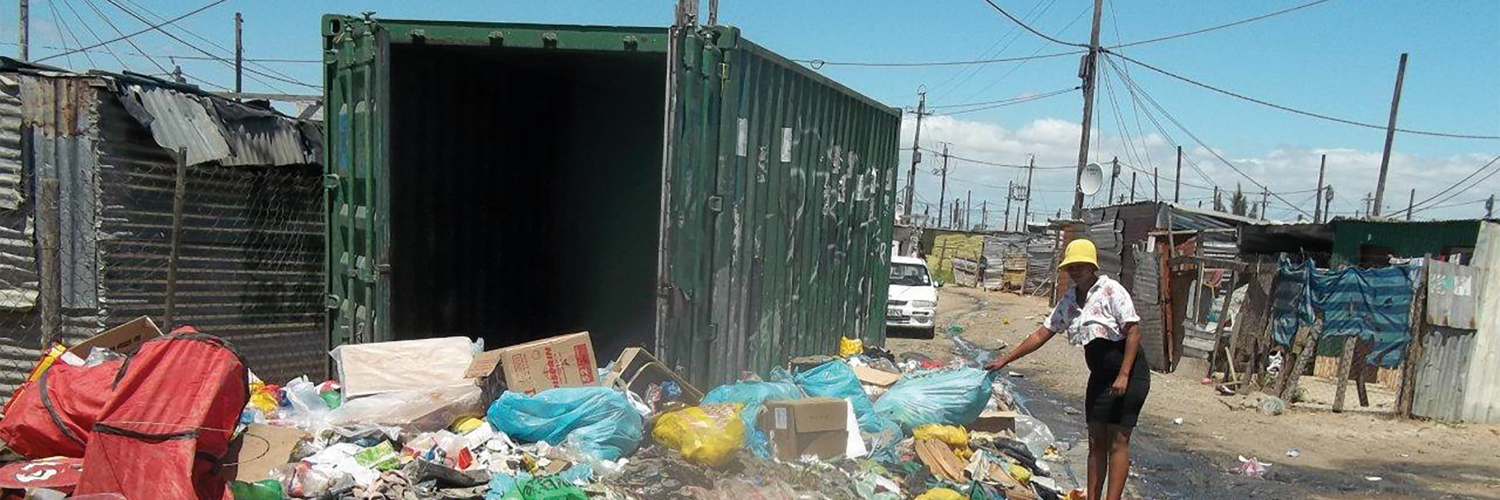
Ideally that place should add value to the person, and be attractive and memorable. Driving through Dobsonville in Soweto and Kagiso in Krugersdorp, black townships, what you see is filth, heaps of rubbish, roadside spaza shops made up of torn and dirty sails, small houses in small and congested yards.
The environment is unkempt, riddled with poverty and unemployment. A human settlement is a human-made system for creating a certain type of human-being, who reflects that eco-system that they grow up and live in.
The town planner, architect and political leader ought to design any human settlement according to their philosophy and intentions about future residents of the settlement. Regrettably black townships are not places that create fondness for the place, but instead inspire a need to flee to greener pastures in the leafy suburbs and beyond.
Edwin S Dalmaijer, Sophie G Gibbons et al, writing in 2021, said: “Growing up in relative poverty can profoundly affect children’s educational attainment. Children from poorer backgrounds typically start school at a disadvantage relative to their peers, and this gap widens over the school years (Andrews et al, 2017). This relationship is not merely correlational: even small increases in income can improve disadvantaged children’s school readiness.
“The impacts of early socio-economic disadvantage can last a lifetime. “ We must remember that this system of disadvantage was embedded in the design not only of black townships but also in the design of Bantustans.
My father worked for the Transkei Agricultural Corporation in the mid-1980s. He once mentioned that top agronomists told them that the reformulated villages were designed for poverty and at best agricultural mediocrity.
In the early 1970s I had lived with my grandparents on their farm granted to them under the Mpondo law in the 1940s in the village of Luzupu, in the then Transkei.
It was one continuous piece of land, with a wattle plantation for poles and fire wood, an orchard of about 1 000 trees, a vegetable section and a few hectares of mielie, sorghum and soya fields. They were exporting soya to the then Transvaal of the old SA.
I attended the same mud school as my father which was pioneered by my grandfather with the help of the chief and villagers. They built the school with their own labour and resources.
Around 1976 or soon after, I was already back to living in Soweto, that village was reorganised under an “apartheid betterment scheme” and my family lost everything on that farm until today.
That reorganisation introduced multi-generational poverty across generations in the village, five generations now.
These schemes were called “village betterment schemes” according to scholar Prof P A McAllister, with their net effect posing a serious economic downgrading of black people in the rural areas.
The year 1976 represented a double-hit for our family. I was a student in Soweto during the uprising and my grandfather was being dispossessed of a land that gave context of my development.
Whites were kept, as remains the case today, in human settlements where the development eco-system was several times more superior in all important ways to black areas, even beating many European countries.
Black areas like Soweto, Umlazi, Khayelitsha, Cape Flats, Phoenix, Mankweng, among others, have maintained the principal ingredients of under-development, especially multi-generational under-development and poverty.
It is not enough to complain that South Africa has the most unequal society in the world, which was the intentional policy and practice of all governments since 1910, including Job Reservation Act, the 1913 Land Act, the Bantu Education Act and many more discriminatory laws.
We must emphasise that underdevelopment perpetuates itself across generations – it is governed by the context, Soweto is a context as is Sandton a context. Scholars argue along the same vein:
“The impacts of early socio-economic disadvantage can last a lifetime. It is associated with a poorer transition into the labour market (Gregg & Machin, 2001), and higher odds for low income, low qualifications, worklessness, and depression (Feinstein & Bynner, 2004).
This long-term impact can create an intergenerational cycle of disadvantage, with risk factors cascading to future generations. (Griggs & Walker, 2008;N Smith & Middleton, 2007).”
RDP houses and all kinds of poverty schemes are programmes for black people. Whites do not attend township schools, for clear developmental reasons.
Blacks try all means possible to attend white schools and white universities. It is quietly understood that the township and the black village are systems of long-term multi-generational under-development. Opportunities for multi-billion-rand investments are reserved for whites as are top jobs.
Investment summits are a matter of White Monopoly Capital- not some black dudes. Blacks do not have the balance sheets to play for big stakes in the economy.
Once you want to create a conducive environment for human and youth development, then certain things must be eliminated: noise, domestic chaos, crime, leaking sewage, shortages of food, clothing, lack of space for studying and so on.
In simple terms, the design of any village or township must include areas for effective academic study at home, local libraries, high levels of employment, clean and well-maintained recreational facilities and support services such as health clinics, among others.
The place must be like a healthy womb in a healthy mother for you – it must add value, be memorable and attractive.
Scholars affirm the fact that these conditions we see in black human settlements are inimical to human development: “Indeed, Sheridan and colleagues use a network approach to demonstrate that deprivation is tightly connected with cognitive performance, more so than with emotional reactivity measures (Sheridan et al,2020).
Importantly, although cognitive ability is partly hereditary, it is also impacted directly by environmental factors such as socioeconomic status (SES).
Whatever hereditary talents a person may have, the ecosystem in which they live and grow up determines how far they will develop as contributors to humanity.
It helps little to find some isolated over-achievers from black townships and the reorganised apartheid villages, when the overwhelming majority are sinking in under-development, according to prevailing scholarship.
Over-achievers are man-made through coaching and mentorship as part of an ecosystem. A human settlement must be a place that is designed, or even redesigned, to encompass those ingredients of superior human development and thus becomes attractive and memorable to all.
Soweto or Cape Flats would have to be reimagined to be rich in positive and consistent high quality developmental ingredients.
Certainly, the facilities and their design must be inspirational, however the communities must themselves be helped into seeing themselves as critical development agents collectively. That brings more wisdom, formal and informal accumulation of knowledge and diligence in how resources are used, conserved and preserved by the community.
Every human settlement needs elders and guardians who conserve and develop it as a system for human development across generations taking cognisance of the history and culture of the area.
The Western Cape developed world class musicians such as Abdullah Ibrahim, Jonathan Butler, among others, the question is whether a system was created to expand and sustain the processes that creates that individual and collective success.
Similarly, Mdantsane produced many boxing world champions and boxing became a community sport, but Mdantsane was never redesigned to be a world boxing mecca and international sports business node. Everything remained at ghetto level and never was an attempt to create widespread and expanding human development.
There is a need to recreate Mdantsane as a place that humans from all over the world are attracted to, and locals are legitimately proud of because of its positive effects and general fruitfulness.
• Swana is an independent political and governance analyst, principal consultant at the Centre for Strategic Leadership