 WeeklySA_Admin
SOVEREIGNTY: In this two-part interview, author speaks to France-based journalist and author Alex Anfruns Millán on the “Pan-African revolution” in Mali, Burkina Faso, and Niger”…
By Pascual Serrano
In recent years, three West African countries, Mali, Burkina Faso, and Niger, have experienced coups d’état with a common denominator: a national and sovereign uprising against France, its former metropolis, still dominant in the economy, defence and international relations.
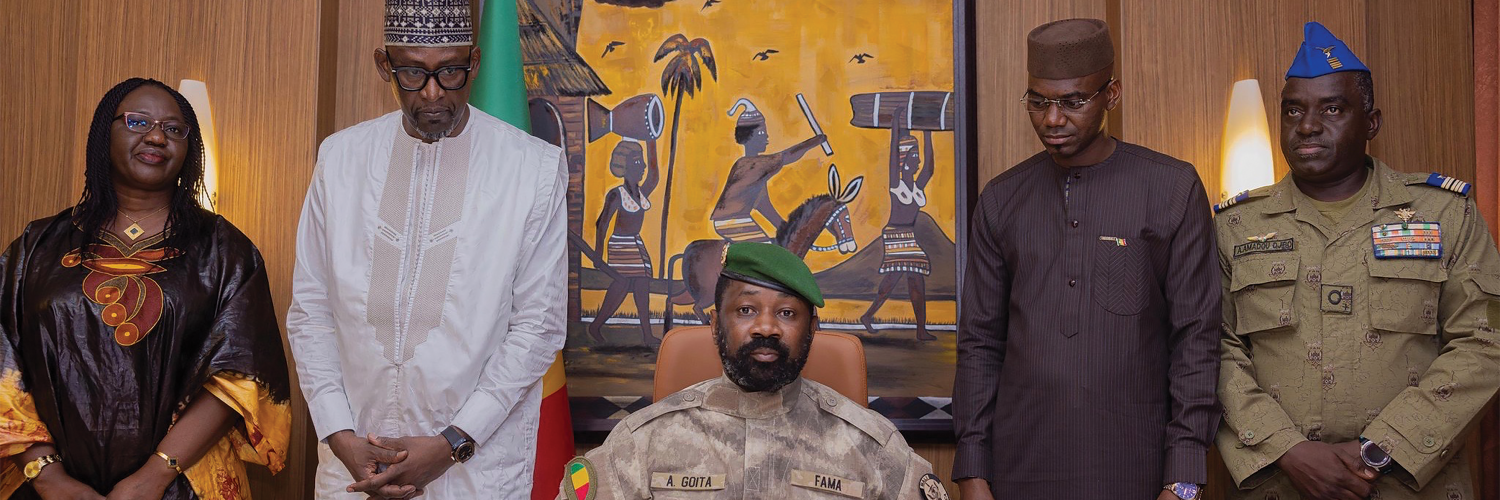
Military leaders have overthrown puppet rulers of France and established provisional governments, at the same time provoking indignation, sanctions and threats of military intervention from Western powers.
It is not easy to obtain rigorous information in the West that is free from the interests of the European powers in these events. Hence, the value of Alex Anfruns Millán in writing the book Niger: another coup d’état… or the pan-African revolution?
Although born in Catalonia, Anfruns has been living between France and French-speaking Africa. For four years, he published the monthly Journal de l’Afrique and has translated and written about the wars and coup attempts in Mali, Syria, Venezuela and Nicaragua, specialising in Africa and Latin America. He is currently a professor in Casablanca and researches the right to development from a pan-African historical perspective. Below is an excerpt from an interview conducted by author Pascual Serrano with Alex Anfruns about his book and the events in the region during his time in Barcelona:
Pascual Serrano: Last July, a group of soldiers overthrew the Government of Niger and established a transitional government. What do you think this blow means for the country and the region?
Alex Anfruns: On July 26, 2023, a group of well-known military personnel who are part of the Niger Presidential Guard take power. That date is the culmination of a regional sovereignty process that already began in 2020 in a coup d’état in Mali, which then had another coup in 2021, and in 2022 in Burkina Faso as well.
That is, in the space of about 3 years, we have a series of military coups d’état that contradict the dominant vision that states that the place where the Army should be is in the barracks, and that it does not have to get involved in political life. In the case of these African countries in the Sahel, in West Africa, what happens is that they react to a progressive awareness among the people. Many African people, millions of people, have been mobilizing for a number of reasons.
In recent years, there has been a rebirth of a feeling of dignity and struggle for sovereignty among the population, particularly in Mali. When the rejection of the presence of French troops in the territory began, they managed to expel them and then progressively also in Burkina Faso and Niger. It is an entire regional process in which the military intervenes in Niger for several reasons.
Mali has what is known as the triple border, the region of Liptako-Gourma, where all terrorist groups circulate from one territory to another. It so happens that there has been foreign military dominance for more than ten years in those countries, especially France. One of the pretexts for that presence was the fight against terrorism. The people have begun to wonder how it could be that a presence of more than a decade on the ground of thousands of foreign troops, with the most advanced technology of Western armies and with an impressive defense budget, fails to counteract or neutralize those terrorist groups that multiply over the years.
So two countries, which reject the foreign military presence and which have their own military forces, rebel and are later joined by Niger.
I consider the Niger coup to be a culmination of this process. They observe that there was connivance, or at least acceptance, on the part of France of these Islamist terrorist groups, because they could not eradicate them. The people think that terrorism was an alibi or an excuse simply to justify the foreign military presence, but then they did not eradicate these terrorist groups. This is part of the discourse of African people. If we listen to the leaders of Mali, Burkina Faso and now Niger, the discourse is that the source of terrorism is Western.
For example, the Chief of Staff of the French Army, who was in charge of the French troops in Mali, said that his presence in the country should be for at least 30 years. Nobody can believe that the French army needs three decades to eliminate African terrorist groups.
On the other hand, those in charge of the French army have given legitimacy to the Tuareg groups as political actors that demand an independence that implies a territorial partition of Mali, even the French media collect the statements of their spokespersons. But everyone in the Sahel knows the close relationship between those Tuaregs and terrorist groups.
PS: Numerous analyses of the region address the role of ECOWAS, the Economic Community of West African States. Can you explain it?
AA: ECOWAS is a regional group of fifteen West African countries, founded in 1975, whose mission was to promote the economic integration of the region. It was an economic development project, but the problem is that, in recent years, it has become a tool of interference in the hands of France. France uses the allies it has in the region such as Ouattara [Alassane Ouattara, president of the Ivory Coast], or president Macky Sall, who has recently left through the back door in Senegal. These actors are joined by Bola Tinubu, who is in Nigeria. They are actors who have put themselves at the service of French interests, and ECOWAS has revealed itself in the cases of Mali, as well as Burkina Faso and Niger, as a tool to exercise a policy of sanctions. These sanctions have caused suffering in populations with incredible extreme poverty, and it is then that it is clearly seen that ECOWAS does not care about the suffering of the population.
They are subjected to a blockade of all kinds, so that the population lacks access to electricity, medicines, and food. It is seen that this association no longer fulfills the function for which it had been created and these three countries make the historic decision at the end of January of a definitive irreversible departure from ECOWAS. So the neocolonial architecture of France is being dismantled a little.
In the case of ECOWAS, it has been an actor whose weight is now in decline.
PS: I would like you to explain a little more about how NATO’s intervention in Libya has affected the region?
AA: The war in Mali already has as its origin the destabilization in Libya. In fact, it has been a lesson that the African people and leaders have learned, because they have realised their historical error in not opposing in a clear and frontal manner, and in not protecting Gaddafi, who also had a pan-African vision. Whether European politicians and Western public opinion in the hegemonic media like it or not, Gaddafi’s Libya is perceived, including his legacy, as a historic contribution to Pan-Africanism.
His legacy has been so influential that, despite Libya being located in North Africa, at two points in Niger’s recent history there have been two coups d’état related to Libya. One was shortly after the president of Niger established relations with Gaddafi’s Libya, in the case of Hamani Diori, who suffered a coup in 1974. A few months earlier he had made a defense agreement with Libya. And in the case of Mamadou Tandja [president of Niger overthrown in 2010 by a coup d’état], one of the reasons why he was deposed was because he clearly opposed the interests of France and established relations with China, with Iran, with Venezuela, and also welcomed Gaddafi.
That same France that also occupied a large part of the territory of Mali and that did not allow the Malian Army to solve its terrorism problems, because it prevented its own National Army from accessing its territory, because it was under French military control.
In the case of Niger, the French imperialist strategy is stopped and that has historical significance. In my opinion this has a very strong symbolic load, something like the battle of Dien Bien Phu in the war between Indochina and France. That is to say, there is an awareness that the moment when Vietnam defeated the French Army in 1954 is being repeated.
Then, the awareness was created within the African people that the defeat of the European man, the white man, was possible and from there an anti-colonial movement began that was greatly reinforced. That is to say, on a symbolic level, Niger is important because of the hope it also gives to the African people to see that it is possible to defeat these threats of war and these sanctions policies. – Globetrotter/People’s Despatch
* The second part of this interview will be published in the next edition