 WeeklySA_Admin
PHENONENON: In the first months of the Gaza war that began on October 7 2023, more than 550 000 Jewish Israelis left the country because of the conflict, according to the writer of this article, quoting official statistics…
By Eugenio Garcia Gascon
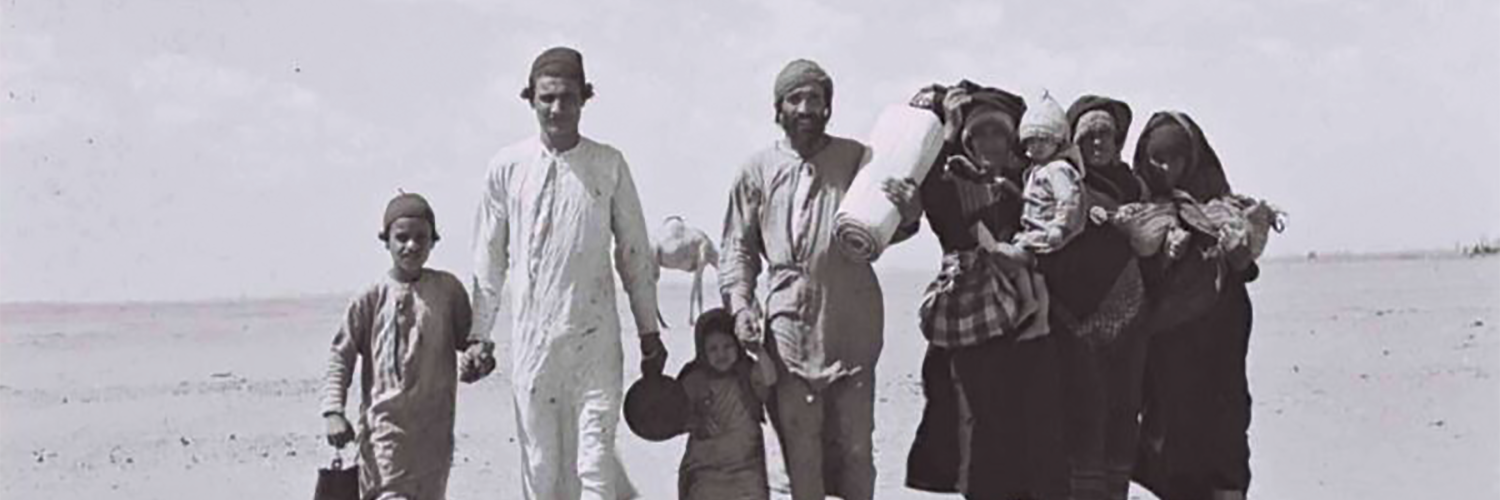
The basic foundation on which the Jewish state has been built has been aliyah, which means ascension, and by extension means the emigration to Israel of any Jew from anywhere in the world.
Aliyah began in the late 19th century from Western Europe, and continues to this day. Sometimes they are massive, as happened after the fall of the Soviet Union, and sometimes they constitute a tiny trickle from different parts of the planet.
The opposite of aliyah or ascent is yeridah or descent, which by extension refers to Jews who live in Israel and who, for whatever reason, leave the country and emigrate abroad, say to the United States or Europe.
The yeridá was for a long time a taboo and little-used word, and it continues to have negative connotations. Jewish Israeli families in which one of their members decides to permanently emigrate abroad, that is to say practice yeridá, do not usually raise the subject in public, beyond the first family circle, since yeridá is socially frowned upon.
A few weeks ago a statistic based on official data was published according to which, in the first months of the Gaza war that began on October 7 2023, more than 550 000 Jewish Israelis left the country because of the conflict. There is no way to know how many of those Israelis will return at some point and how many will decide never to return, but the data, which is barely discussed in the media, is worrying for Zionism.
In recent months that number from the first months of the conflict – 550 000 – has continued to grow, but at the moment there is no way to quantify it exactly. It is possible that it will be updated later and that within a year or two a more definitive assessment of the consequences of the Gaza war for the Jewish population of Israel can be made.
In any case, this yerida is something that has never happened before, at least with such intensity. It is true that more than 30 years ago, during the first Iraq war, a significant number of Jewish Israelis left Israel following the attacks from Iraq, but it was largely a temporary phenomenon and very few did not return.
What is happening now is of a different magnitude, as it is affecting many more people. On the one hand, in recent years many Jewish Israelis have taken the time to obtain a second passport, usually a European one, a gesture that was unthinkable just a few decades ago.
Whoever obtains it uses that second passport as a safety net for what may happen. The second passport would be something like a guarantee or insurance in case things go wrong and you have to go to less inhospitable places. This approach is novel in terms of quantity.
There has always been Jewish Israelis leaving Israel, but never in the proportions we have seen in recent months.
There will always be diaspora Jews who make aliyah, that is, immigrate to Israel, but the prevailing impression is that these Jews will become increasingly radical. The country is radicalising very quickly. I don’t think many moderate families in the United States would consider emigrating to a place where they will be ruled by extremists, as is the case in Israel. This means that the country as a whole will turn more towards radicalism, a serious circumstance for its future.
Commenting on the recent International Court of Justice decision calling on Israel to abandon Jewish settlements in the occupied Palestinian territories, an Israeli journalist has corrected the court in The Hague by saying that Israel does not occupy the West Bank, and that they are actually the radical Jewish settlers from the West Bank who are occupying Israel. And this is not a simple irony, but something very true, with all that it implies.
A personal note: a Jewish Israeli friend who lives in Tel Aviv told me this July that when he retires, in three years, he will emigrate to the West, that is, he will do yeridah. He is thinking about Spain or Italy as places of residence, he has not decided yet.
Until recently my friend was a radical likudnik, but he has suddenly come to the conclusion that Israel is becoming more inhospitable every day. He works in a liberal profession and does not lack money; he can live anywhere in the world he chooses. It is probably not a unique case.
The country is rapidly becoming more extremist and less welcoming to Jews around the world, a trend that did not start with the October 7 war but goes back before, and which poses an existential threat to the future of the Jewish state. – Globalter
* Eugenio Garcia Gascon has been a correspondent in Jerusalem for 29 years. He is a Cirilo Rodríguez journalism award winner
Comment
OUTRAGE OVER RACIST KILLINGS
Black people continue to bear the brunt of racism – an evil which still endured in a country where those who are poverty-stricken can be brutally killed and their bodies tossed to pigs to devour for reasons best known by their murderers. Maria Makgatho (45) and Kudzai Ndlovu (35) were allegedly shot dead and their bodies dumped into a pigsty on a farm in Sebaya outside Mankweng. Mabutho Ndlovu (44), Kudzai’s husband who was in their company, narrowly escaped death after being shot and seriously injured. He was treated at a local hospital and discharged.
The only sin the three had committed to deserve this barbarous treatment was to dare visit the farm where they rummaged through a heap of garbage looking for expired foodstuff to help feed their impoverished families. Instead of attracting sympathy, like thousands of other South Africans who are living in abject poverty because of the country’s economic woes, both women were gunned down. Their bodies were found decomposed inside a pigsty after they went missing for almost a week.
The murder of the two women – on Women’s Month – and 30 years after our democracy, has reminded all peace-loving South Africans that the scourge of racism still had deep roots in the economic, spatial and social fabric of this country. Racism was still a feature of every day life in South Africa and reflected the apartheid legacy of oppression and colonialism.
Three people, including the farm owner and two of his employees have since been arrested. They briefly appeared in court on Friday and are expected to appear again on Friday, August 30 for a bail application. They are facing charges of murder, attempted murder and defeating the ends of justice. The tragic killing of the two women is an indictment of our socio-economic crisis where those who cried for help were met with bullets instead of being fed and provided with shelter and love. It is also a shame that defenceless and poor women should be mowed down during the month when the country was celebrating women’s achievements and raising awareness about their equality. What a shame!
The alleged bestial crime has triggered deep outrage in the Mankweng area and sent shock waves around the country with community leaders, civic and political organizations condemning the racist attacks and calling on the prosecuting authorities to act swiftly in making sure the perpetrators are brought before court, convicted and sent to jail for as long a time as possible.
South Africa has, in the past 30 years, made some progress to eliminate the scourge of racism, but this evil keeps on rearing its ugly head especially in rural areas where certain white people, mostly farmers, still treated Black people as slaves. To them Black people are just objects that can be shot on sight and fed to their animals.
This crippling poison of racism which still persisted in this country despite laws that declared it as a criminal offence, should be effectively dismantled and laid to rest. South Africa has no room for this brutal animal.