 WeeklySA_Admin
Law: Collapse constituted a ‘historic and horrific disaster’ which remained fresh in the memory of many South Africans..
By Monk Nkomo
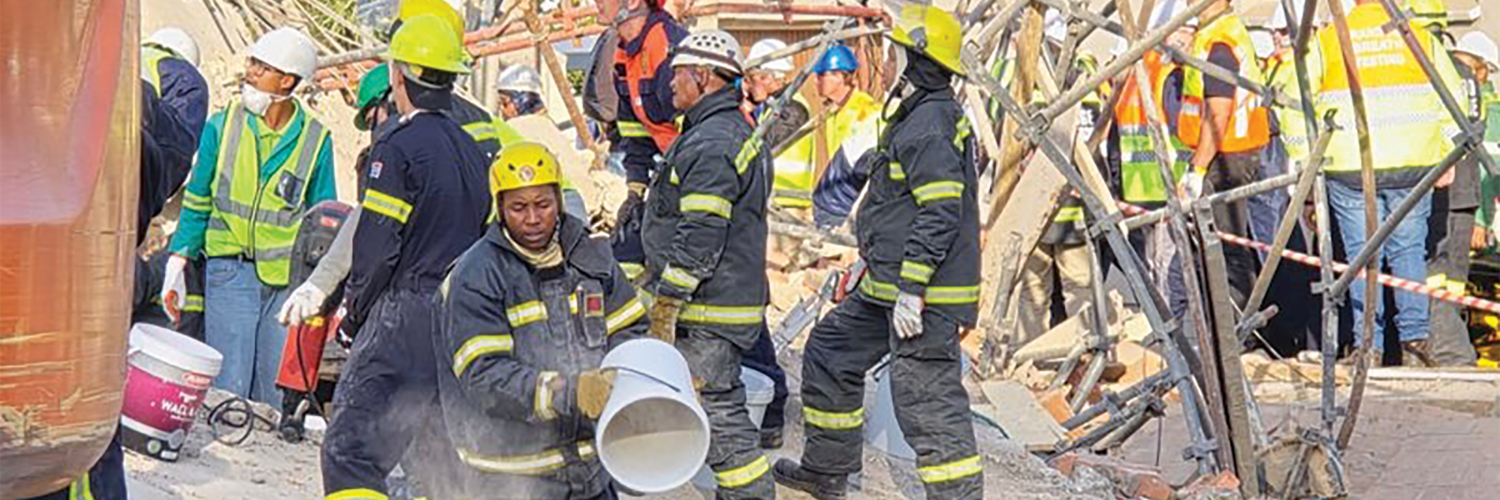
The collapse of a residential building in George, Western Cape which claimed the lives of 34 people last year, was a result of serious systematic irregularities that included unqualified engineers, an incompetent technical manager and the approval of the building plans while the construction was already underway.
These findings are contained in a final report by the National Home Builders Registration Council (NHBRC) which were released by Human Settlements Minister, Thembi Simelane. The NHBRC, in line with its mandate, had initiated the investigation into the tragic event which included forensic experts to determine the factors that had led to the collapse of the building.
The investigation led to several findings which included irregularities in homebuilder certification, engineering, technical tests, inspection model, homebuilder grading process and structural defects.
The investigation revealed that the collapse of the building on May 6, 2024, was a result of systematic failures across multiple non-compliance with regulatory standards and mismanagement by both the NHBRC and the project’s personnel.
‘’ These failures involved irregular upliftment, late enrolment inspection lapses, material quality issues and safety violations. The report points largely on the failures of inspectors and internal controls in as far as NHBRC is concerned’’, Simelane said.
Based on these findings, the NHBRC have since suspended all the officials implicated in the report which has also been submitted to law enforcement agencies for further investigation amid recommendations that all officials mentioned in the report be held accountable for their actions.
The report also recommended that these officials should face charges including dereliction of duty, misconduct, negligence, dishonesty and misrepresentation in official inspection reports.
The findings by the NHBRC included the following :
* The George municipality approved the building plans when the construction was already underway. This means the work on site started before approvals were finalised;
* The competency of the Technical Manager was found wanting. The investigation revealed significant deficiencies in the oversight and assessment of the manager’s qualifications as the latter was not thoroughly re-assessed at the time of appointment. According to the report, this played a major role in the technical missteps observed during the construction;
* There were gaps in the competency of key personnel. This included unqualified personnel who lacked qualifications in engineering or quantity surveying playing critical roles such as inspectors;
* The inspections carried out by the NBC personnel on the project, were marked by several lapses and failures that significantly compromised the regulatory oversight required for such a large- scale project;
* The enrolment process demonstrated significant non-compliance with NHBRC’s enrolment procedures resulting in critical regulatory breaches and unauthorised approvals;
* There were irregularities in the registration of the certification process.The company in question inaccurately presented its capabilities during the registration phase and failed to declare its intention to construct a multi-story building. This omission breached NHBRC’s policies which required transparency regarding home-builder’s intended project scope in technical capacity.
Simelane said a few weeks ago, they committed that they were going to take the nation into confidence about the findings of the National Home Builders Registration Council’s (NHBRC) investigation into the collapsed building . They did this with the understanding that this matter was of great public interest.
‘’One of the three strategic priorities of the 7th administration is to build a capable ethical and developmental State. It is for this reason that we brief the nation on the findings of our investigation because we believe in transparency and are committed to addressing the shortcomings within the Human Settlements sector we are overseeing’’.
Simelane said on the 6th of May 2024, they learned with shock that the Neo Victoria project, a residential building that was still under construction, had collapsed in George, Western Cape. The collapse constituted a historic and horrific disaster which remained fresh in the memory of many South Africans.
‘’This terrible disaster will forever linger in the memories of the survivors, their families and friends. Sadly, it claimed 34 lives and some of the survivors are still recovering from a devastating day that changed their lives.
‘’As a caring government, we want to promise the families and friends of the departed workers, who got befallen by this tragic incident during that fateful day in the hands of negligence which could have been avoided, that their lives are in not in vain’’.
Based on these findings, the investigation report also made several recommendations to enable NHBRC to improve its processes, thus ensuring enhanced quality assurance.
The recommendations included that NHBRC registration certificate must state clearly the types of buildings a homebuilder is registered to construct, that NHBRC establishes a dedicated or ad-hoc peer review team to independently review high risk projects such as multi- storey buildings, conducts a comprehensive competency skills audit of inspectors and develops a thorough due diligence process to evaluate all information submitted during the registration phase.
The report went further to recommend that technical managers be full-time onsite during critical stages of construction, that inspection be conducted within five days and that NHBRC staff must not be allowed to use another staff member’s login credentials.
The collapse of the building led to the loss of life. It tarnished the NHBRC’s reputation that had been built over the years.
‘’Therefore, we shall not hesitate to act against those who bring and have brought shame to the institution, including our own. The Department had on a proactive basis reviewed the applicable processes and regime that was under operation relative to the NHBRC and found the need to strengthen the regulatory environment’’.