 WeeklySA_Admin
IMPUNITY: New law includes provisions for attaching movable properties belonging to drivers who fall foul of road regulations…
By WSAM Correspondent
SAnews – Motorists can expect the full implementation of the Administrative Adjudication of Road Traffic Offences (AARTO) Act – which seeks to reduce the high rate of fatalities on the roads and improve driver behaviour – in July next year nationwide.
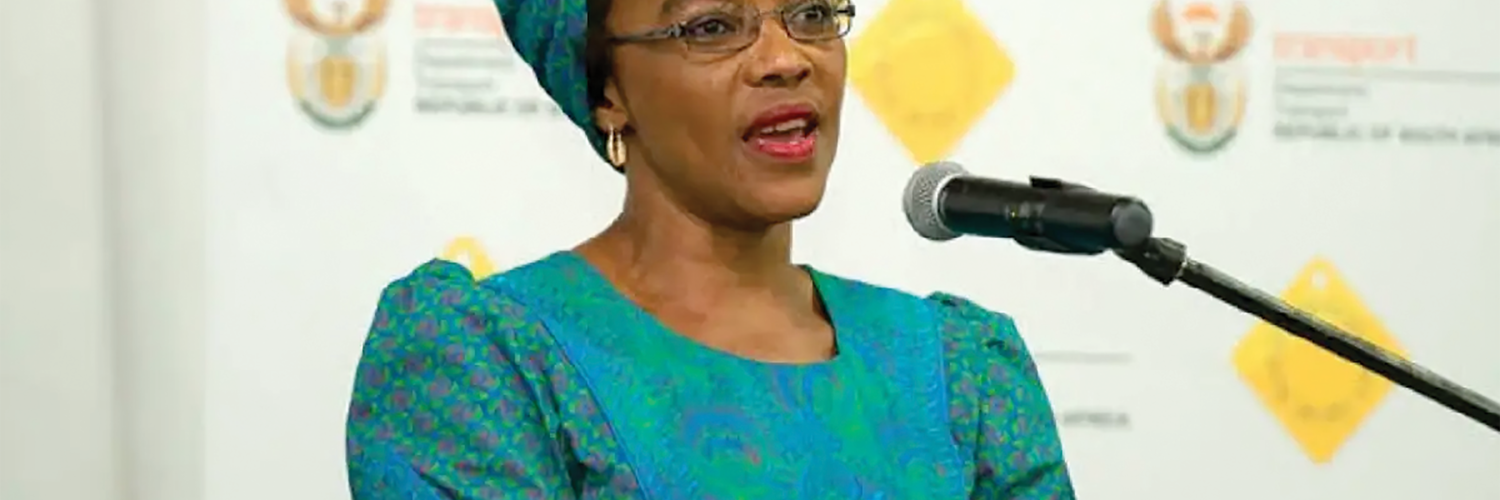
Addressing a media briefing in Johannesburg yesterday, Transport Minister Sindisiwe Chikunga said 43 service outlets across various provinces have already been established.
“As we proceed with the national rollout of AARTO, we will proclaim implementation in 69 municipalities by the end of this calendar year, while AARTO will kick in in the remaining municipalities by July 1 2024.
“We are working closely with the Department of Cooperative Government and Traditional Affairs (COGTA) in ensuring that all municipalities have the requisite capacity to implement the law,” the Minister said.
Chikunga welcomed the recent ruling by the Constitutional Court on the constitutionality of the AARTO Act as it confirmed that indeed the law was constitutional and no aspect of it encroached on the executive powers of other spheres of government.
“The ruling affirms our long-held view that this is a necessary law to advance our efforts in arresting the carnage on our roads. We welcome this judgement as it provides clarity on the mandate of the national government to determine and enforce norms and standards that apply uniformly across the country.
“A fragmented system of adjudicating road traffic offences based on the whims of individual provinces would undoubtedly result in chaos and render road traffic law enforcement interventions ineffective,” the Minister said.
She said the AARO Act would reinforce other interventions such as classifying traffic policing as a 24-hour, seven-day job, alongside the regulation of driving schools and introduction of an National Qualifications Framework (NQF) level 6 training for traffic law enforcement officers.
“The implementation of this law across the country has been pending for 25 years, with pilots in place in the Cities of Johannesburg and Tshwane. With this judgement having cleared the path for the implementation of AARTO, we will move with speed to roll out its implementation across the country without delay.
“We have had the occasion to engage with the Road Traffic Infringement Agency (RTIA) in order to assess our state of readiness for accelerated rollout of AARTO across all municipalities in the country. “We have completed requisite processes to implement the AARTO adjudication process as well as the electronic service of infringements. The latter will come into effect as soon as the President proclaims the AARTO Amendment Act,” the Minister said.
The Department of Transport is ready to finalise its recommendations to President Cyril Ramaphosa for the appointment of a tribunal and the proclamation of implementation of the AARTO Act nationwide, as well as the promulgation of the AARTO Amendment Act. “We have also completed the process of drafting regulations and have consulted with the Minister of Justice and all MECs.
“We are finalising the matter of concurrence by MECs and have received concurrence from the vast majority of provinces. This is a matter we intend to put to bed at the upcoming meeting of the Shareholders Committee, made up of MECs responsible for Transport and traffic matters.
“We will equally move with speed with the implementation of the point’s demerit system, an important cornerstone of the AARTO Act, intended to act as a deterrent for wayward motorist behaviour on our roads,” the Minister said.
Chikunga said the AARTO Act would make a difference by introducing severe penalties, which include attaching movable properties of infringers, putting an end to a culture of impunity. – SAnews.gov.za

ZIM PERMITS: HOME AFFAIRS MINISTER GEARS FOR EPIC BATTLE
Separation: He argues court order encroached into executive statutory powers…
By Monk Nkomo
The recent interim interdict granted by the High Court in Pretoria which declared the termination of Zimbabwean Exemption Permits by Minister of Home Affairs, Aaron Motsoaledi, invalid, unlawful and unconstitutional, cannot be allowed to stand as it disrupted the enforcement of immigration laws in South Africa.
In his application for leave to appeal the recent decision of the Full Bench, Motsoaledi submitted that there were compelling reasons for granting leave to appeal, one of which was that it was in the interest of justice for the matter to be referred to the Supreme Court of Appeal which could arrive at a different decision. Motsoaledi was of the view that the interim interdict granted in favour of the Helen Suzman Foundation and the Zimbabwe Immigration Federation encroached on the exercise of statutory powers assigned to him.
The order violated the doctrine of separation of powers and the just and equitable order issued by the Court was not appropriate. The factors taken into consideration by the Court in granting the substitution order were not exceptional at all.
‘’ The court erred in concluding that the Minister’s decision not to extend the exemption regime will implicate the right to dignity, the right to life, equality, freedom and security, freedom of movement, basic education, property and children’s rights’’.
In their ruling, the High Court also ordered that the Zimbabwe permit holders be allowed to enter and leave South Africa and that their permits be valid for a further 12 months until June next year. Motsoaledi had introduced these permits in 2017 and they were due to expire in December 2021. He extended the expiration deadline to June 30 this year and later to December 2023. His decision was then successfully challenged by the Helen Suzman Foundation and the Zimbabwe Immigration Federation who secured a temporary interdict against the Minister last month.
In his application for leave to appeal, Motsoaledi submitted that there were no threats of any breach of constitutional rights of ZEP holders. He had taken active steps by issuing directives which protected the constitutional rights of ZEP holders, their families and rights of children.
‘’ There is no threat of mass deportations and loss of their homes. Since the Minister took a decision in September 2021 and of the permits on 31 December, 2021, ZEP holders continue to engage in their day to day activities such as work, education and business in South Africa.
‘’The reasonable apprehension of irreparable harm is only imaginary and this has not been established by the applicants.’’
There was no factual and legal basis for the finding that the constitutional rights of ZEP permit holders were under serious threat of infringement if they were given the June 30, 2023 deadline. There was undisputed evidence tendered by the data analyst, Mr. Warwick Meier, that 81 percent of the ZEP holders frequently freely travelled to and from Zimbabwe.
According to Motsoaledi, the interim interdict issued by the Court would cause serious and irreparable harm. The applicants who had unsuccessfully applied for other visas and were rejected, would not be dealt with in terms of the relevant provisions of the Immigration Act 13 of 2002. This included deportation after the internal appeal and due judicial processes had been exhausted.
Motsoaledi also submitted that no evidence was tendered by the Helen Suzman Foundation and the Zimbabwe Immigration Federation to support the allegations that his decision violated any constitutional rights. The ZEP holders enjoyed certain protections including freedom of movement. ‘’ They are free to apply for one or other visas while in South Africa. They in fact, enjoyed better rights than they had under the exemption regime.’’
The Court misdirected itself by holding the view that there was a well-grounded reasonable apprehension that ZEP holders would suffer irreparable harm if the interim interdict was not granted. The exercise of the powers by the Minister involved a decision that was policy laden and polycentric. ‘’ The Court failed to heed the warning and could not resist the temptation of descending into the Executive terrain’’.
Addressing the issue of procedural fairness and irrationality, Motsoaledi, said the exemption holders were given a hearing albeit after the decision had been taken to scrap the exemptions. The Court failed to consider the evidence they had tendered to the effect that nearly 6000 representations were received and the majority of them were responded to. The Court was wrongly fixated on the notion that representations after the decision was taken, was unconstitutional and unlawful. This was a wrong premise. The Court erred in concluding that the decision of the Minister required compliance with the provisions of section 4 of PAJA thus requiring public participation. The Court in the main relied on a certain legal authority.
This was misplaced. ‘’The decision not to call for public participation was justified as the decision affected a specific category of persons and not the public.’’ Turning to the rights of children, Motsoaledi submitted that they were not implicated by his decision. A generalized statement about the breach of children’s rights was made. The Court however was left to speculate about the number of children involved.
‘’ The court erred by elevating the enquiry on regulation of the immigration status of parents to that of the rights of children, without balancing the competing interests and rights. In any event, the Court could have exercised its inherent powers as a guardian of minor children, and appointed a Family Advocate to furnish it with a report.’’
When granting the interim relief, the Court had failed to properly consider the requirements, particularly the fact that the requirements for an interdict should not be considered separately or in isolation, but in conjunction with one another to determine if the Court should exercise its discretion in favour of granting interim relief.
Motsoaledi said there were compelling reasons to grant leave to appeal to the Supreme Court of Appeal.