 WeeklySA_Admin
REGIMEN: A Mediterranean-style, plant-forward diet is emerging as one of the most powerful tools in cancer recovery, helping survivors reduce inflammation, improve overall health and lower the risk of recurrence — without giving up the joy of eating…
By Rochelle Broder-Singer
For many cancer survivors, ringing the bell at the end of treatment marks the beginning of another challenge — learning how to live well after cancer.
Among the biggest questions survivors face is one that seems deceptively simple: What should I eat now?
While the internet is flooded with conflicting advice, nutrition experts say the answer is less about miracle foods and more about building lifelong healthy eating habits.
According to oncology dietitian Federika Garcia of the Sylvester Comprehensive Cancer Center at the University of Miami, research increasingly shows that diet plays a meaningful role in cancer survivorship, influencing everything from inflammation and overall wellbeing to the risk of recurrence.
“There is so much information available that many people end up feeling overwhelmed,” Garcia explains. “Information overload is real, but we’re here to help survivors make informed choices.”
She stresses that nutrition should always be tailored to an individual’s cancer type, treatment history and medical needs. Those still undergoing treatment may require specialised dietary guidance from an oncology nutrition professional.
The Mediterranean advantage
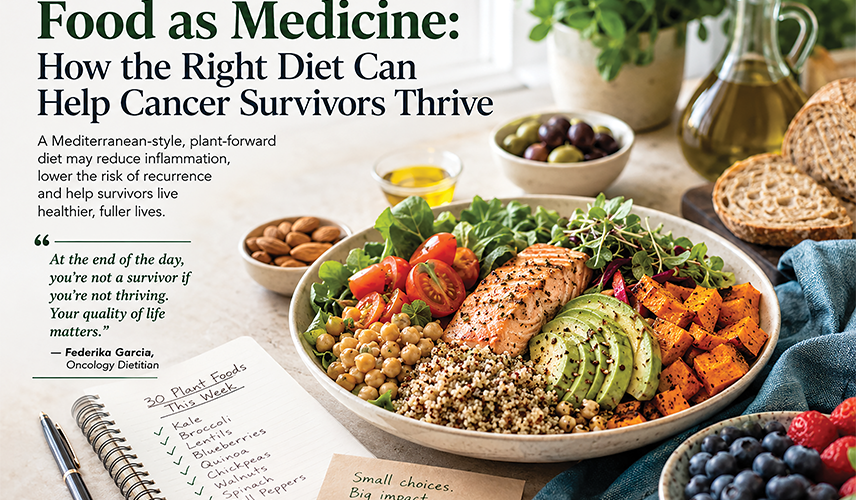
For most survivors, experts recommend following a Mediterranean-style eating pattern — widely recognised as one of the healthiest diets in the world.
Rather than focusing on restrictions, the approach encourages meals rich in colourful vegetables, fruit, whole grains, legumes, nuts, seeds and lean proteins.
“It’s about eating more plants,” Garcia says. “You don’t have to become vegetarian or vegan. We simply want to see a diet that is rich in vegetables, fruits, grains and legumes.”
A healthy cancer-survivor diet should include:
• A wide variety of vegetables, particularly dark green, red and orange varieties
• Whole fruits in different colours
• Beans, lentils and soy products
• Whole grains
• Nuts and seeds
• Lean proteins at every meal
• Herbs and spices for flavour and added health benefits
At the same time, survivors are encouraged to reduce their intake of ultra-processed foods, sugary drinks, refined grains, processed meats, excessive red meat and alcohol.
Why plants matter
Scientists continue to uncover the protective benefits of plant-based foods.
Cruciferous vegetables such as broccoli, cauliflower and Brussels sprouts contain natural compounds that may help protect cells from inflammation and DNA damage.
Orange and yellow vegetables like carrots and peppers provide carotenoids, powerful antioxidants that support immune function.
Whole plant foods are also rich in fibre — one of the most overlooked nutrients in modern diets.
Most adults should consume at least 25 grams of fibre daily, yet few achieve that target.
Beyond supporting digestion, fibre nourishes beneficial gut bacteria, promotes heart health, improves blood sugar control and may even help regulate hormones such as oestrogen.
A colourful challenge
Garcia encourages survivors to eat as many different plant foods as possible — aiming for around 30 different varieties every week.
Cancer survivor and writer Rochelle Broder-Singer embraced the idea by creating what her husband jokingly calls a “bingo card diet”.
She compiled a checklist of more than 40 plant foods she enjoys — from vegetables and fruits to beans, herbs, nuts and whole grains — ticking each one off throughout the week.
What started as a fun experiment has become a sustainable habit that naturally increases variety and nutritional quality.
Protein remains essential
Protein plays an important role in maintaining muscle mass, supporting healing and preserving healthy body composition after treatment.
Garcia recommends including lean protein with every meal.
Good choices include:
• Fish rich in omega-3 fatty acids
• Skinless poultry
• Beans and lentils
• Soy foods such as tofu and tempeh
While red meat does not need to disappear entirely, intake should be limited to about 340 to 510 grams (12 to 18 ounces) per week, in line with recommendations from the American Institute for Cancer Research.
Processed meats such as bacon, sausages and deli meats should be eaten as little as possible.
“There is no safe recommended amount for processed meats,” Garcia says.
Clearing up the soy myth
One of the most persistent misconceptions among breast cancer survivors is that soy should be avoided.
Garcia says current evidence shows exactly the opposite.
Whole soy foods — including tofu, soy milk and tempeh — are safe and may even offer protective benefits for women with hormone-sensitive breast cancer.
Research suggests consuming one or two servings of whole soy foods daily may help reduce recurrence and improve overall survival.
However, heavily processed soy products, including soy protein isolates found in some protein bars and meat substitutes, should still be approached with caution because evidence remains limited.
Does sugar feed cancer?
Perhaps no nutrition myth has caused more anxiety among cancer patients than the belief that “sugar feeds cancer.”
Garcia says the statement is misleading.
“Does sugar feed cancer? No,” she says.
That doesn’t mean unlimited sugar is healthy.
Excess added sugar contributes to obesity, diabetes and heart disease — conditions that can negatively affect cancer outcomes.
Experts recommend limiting added sugar to:
• Less than 25 grams per day for women
• Less than 36 grams per day for men
Naturally occurring sugars found in whole fruit are not considered harmful and remain an important part of a healthy diet.
Healthy eating should still bring joy
Perhaps the most reassuring message Garcia offers is that eating well should never become another source of stress.
She encourages survivors to make gradual changes instead of striving for perfection.
“Make one small change at a time and don’t think about food in black and white,” she says.
Life after cancer is about far more than simply surviving.
It is about regaining health, enjoying food, sharing meals with loved ones and building habits that support a long, fulfilling future.
As Garcia reminds survivors: “At the end of the day, you’re not a survivor if you’re not thriving. Your quality of life matters.” – Newswise