 WeeklySA_Admin
Tough: Burly American who was born of Jamaican immigrants grew up in the tough neighbourhood of brooklyn raised and by his mother
By Jacob Mawela
Amidst the current maelstrom gripping the American news media cycle regarding the almost 27-year-old unsolved mystery of who assassinated popular US rapper, Tupac Shakur – South African book publishing house, Jonathan Ball, couriered me a freshly off the press book containing content with heavy linkage to the ‘cold case’ titled, It Was All a Dream: Biggie and The World That Made Him.
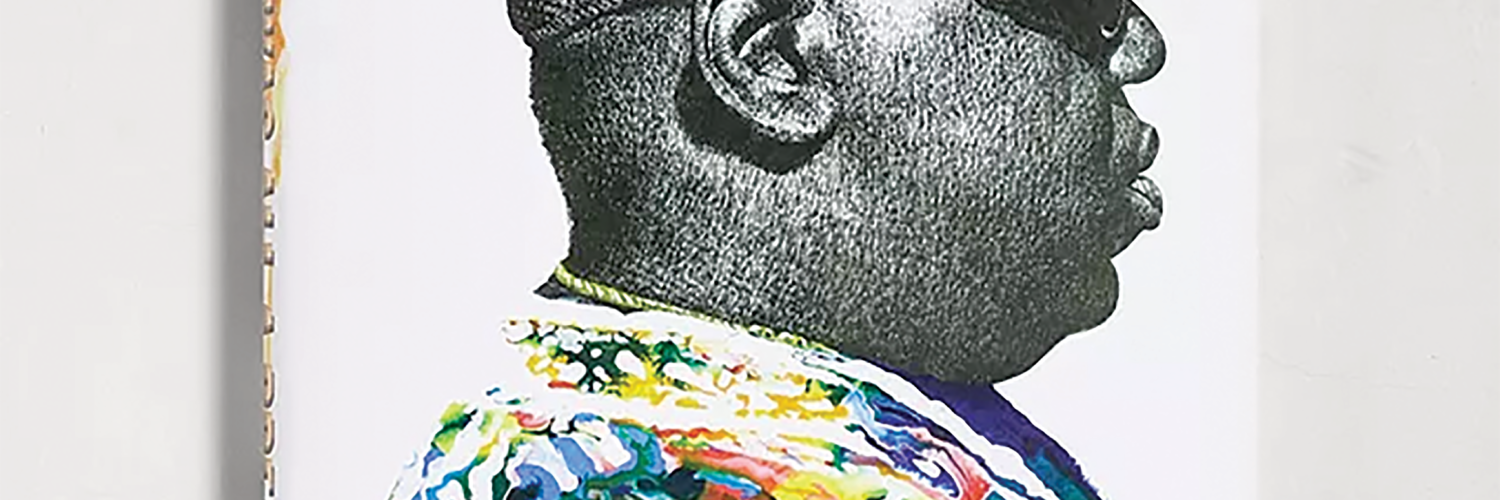
About one Christopher Wallace, a.k.a., The Notorious B.I.G., the paperback, authored by African-American scribe, Justin Tinsley, is delves into the life of the late Brooklyn native and the environment and people who sculpted him into what many in the Hip-Hop music culture came to regard as “the greatest rapper.”
A lock-stock-&-barrel account both armed and riddled with unfathomable experiences and raw cringe-worthy expletives – the content bleeds with perpetual parallels between the protagonist and Shakur to a point where both rappers’ tragic and heartbreakingly brief lives blur the line disposing reality from Hollywood-esque illusion!
About Biggie, Tinsley’s is also a tale of a New York City native based on the East Coast of the United States, who crossed paths with a fellow Big Apple Black brother, namely Shakur, strutting his stuff out of the West Coast of California.
Wallace was born in 1972 and died from a drive-by-homicide aged 24 in March of 1997 – whereas Shakur was born in 1971 and succumbed from gunshot wounds sustained from a drive-by-homicide, aged 25 in September of 1996.
Ensconced in both parallel destinies feature too the names of prominent music record label moguls, Sean “Puffy” Combs of Bad Boys Records and Marion “Suge” Knight of Death Row Records – the former presiding over East Coast-based artists and the latter over West Coast-based counterparts within a perceived or media-hyped dichotomy which at stake offered copious dollops of the booming Hip-Hop industry’s market, and which at its apex in the mid-1990s turned deadly to the point of prematurely snuffing the lives of the genre’s stars (including those of Wallace and Shakur)!
The East Coast (into which Biggie belonged) versus West Coast divide (which boasted Shakur as its undisputable exponent) turned ugly to an extent that when Shakur got shot four times (also the same number of times Biggie got shot) in a drive-by shooting in Las Vegas – some pointed accusatory fingers Biggie’s way. That, despite the two rappers having been buddies – albeit later falling out.
In the parallel mix also is the name of one Orlando Anderson, a gang member of the South Side Compton Crips who had an altercation with Shakur on the evening of a Mike Tyson fight in Las Vegas before the rapper got shot in the drive-by incident which ultimately claimed his life. Long considered a suspect in Shakur’s murder, Anderson was also present at a Los Angeles party Biggie attended some moments his life was also cut short in a drive-by shooting. Tragically, Anderson himself was to die at the young age of 23 in a gang-related shootout in Compton, unrelated to the Shakur case, in May of 1998.
Amidst the movie-like saga looms an erstwhile member of the Los Angeles Police Department who led a special investigations unit to solve both rappers’ homicides named Greg Kading. Kading’s findings uncovered a can of worms which implicated ‘Suge’ Knight in Biggie’s murder – and in the process reduced the slain rapper’s mom, Voletta, to tears! According to Kading’s findings, Knight had ordered the hit on Biggie based on a misunderstanding that the artist was involved in Shakur’s murder.
In what Kading came to refer to as, “perfect justice”, Biggie’s alleged assassin and an associate of Knight’s, Wardell “Poochie” Fouse, was to die in a hail of bullets, at 43 years of age, in July of 2003. Combs, Kading insinuated in relation to Biggie’s murder, will also suffer the consequences for the (bad) choices in his life.
Beyond the surreal accounts, the life of the heavyweight-built musician was verily steeped in the sort of hardscrabble reality familiar to Blacks living the American experience. A first generation American born of Jamaican immigrants, he grew up in the tough neighbourhood of Brooklyn raised by a single parent (his mother Voletta) after his dad, Selwyn eloped. “I don’t need that c..ks..er for nothing.
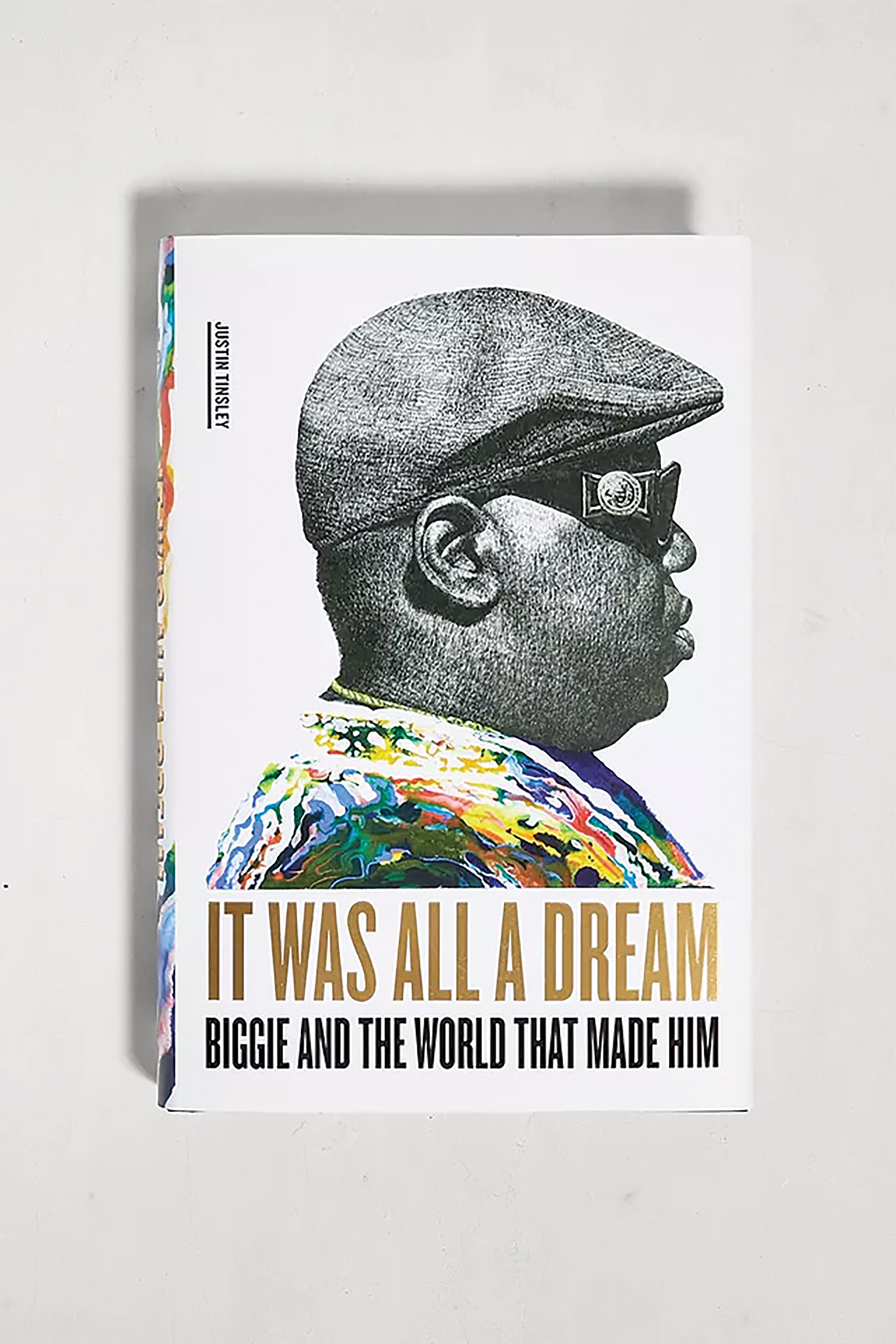
– BIGGIE AND THE WORLD THAT MADE HIM
I don’t need him for s..t … My moms is straight,” a grown up Wallace was to infer of his absent father.
Even though Voletta enrolled him in school, the man also known as Biggie Smalls pushed a hustle of peddling crack from Brooklyn to North Carolina – an occupation par for course in street credo terms!
The Sky Is the Limit hitmaker persevered through his environment until his demo tape caught the ear of one recording executive named Sean Combs (then with Uptown Records) – and ultimately led to his big career breakthrough with the 1994 release of his sensational first album titled, Ready to Die. Death appears to be a permeating theme in the rapper’s circumstances, with his sequel album titled, Life After Death, picking up from where a song titled, Suicidal Thoughts, ends.
Tinsley’s insightful narration depicts a relatable fellow mortal striving to realize the pinnacle of his cherished vocation. A fallible human for whom a “hommie” Damion “D-Roc” Butler took a gun charge and served time in prison – the tome also chronicles the moment the two rappers (who already harboured a mutual admiration of each other’s work) met for the first time in L.A. and ended up on a weed-smoking, gun-toting, steaks and French fries-eating bend which culminated in an impromptu rhyming between the duo.
The light-hearted rendezvous between the alpha male rappers of the East and West coasts happenstance long afore the deterioration of the duo’s relationship which was to include a nasty sexual innuendo involving the name of Biggie’s future wife, fellow musician Faith Evans, in a Tupac song’s lyrics!
It Was All A Dream is published by Abrams Press and distributed locally by Jonathan Ball Publishers and retails for R395 at reputable bookstores nationwide.
CRY BELOVED THE LAND
Disadvantaged: Author plumbs the depths of land dispossession in post-apartheid South Africa…
By Mpikeleni Duma
This is Our Land captures the daily struggles and unresolved questions post-1995, especially around the issues of the land.
Set in the North West Province, South Africa, where Mahlomola Jonas Mosoewu was first assaulted before he was pushed out of a speeding delivery vehicle and the Marikana massacre of mine workers by police. Memela depicts the story of poverty after almost 29 years of freedom from apartheid and land dispossession.
In Lefatshe, the author, as far as geography is concerned, concerns himself with what happened “on the ground”. He asks the reader to focus on the landscapes in the story as well as the setting, in order to familiarise himself or herself with the culture of the people of North West and farmworkers.
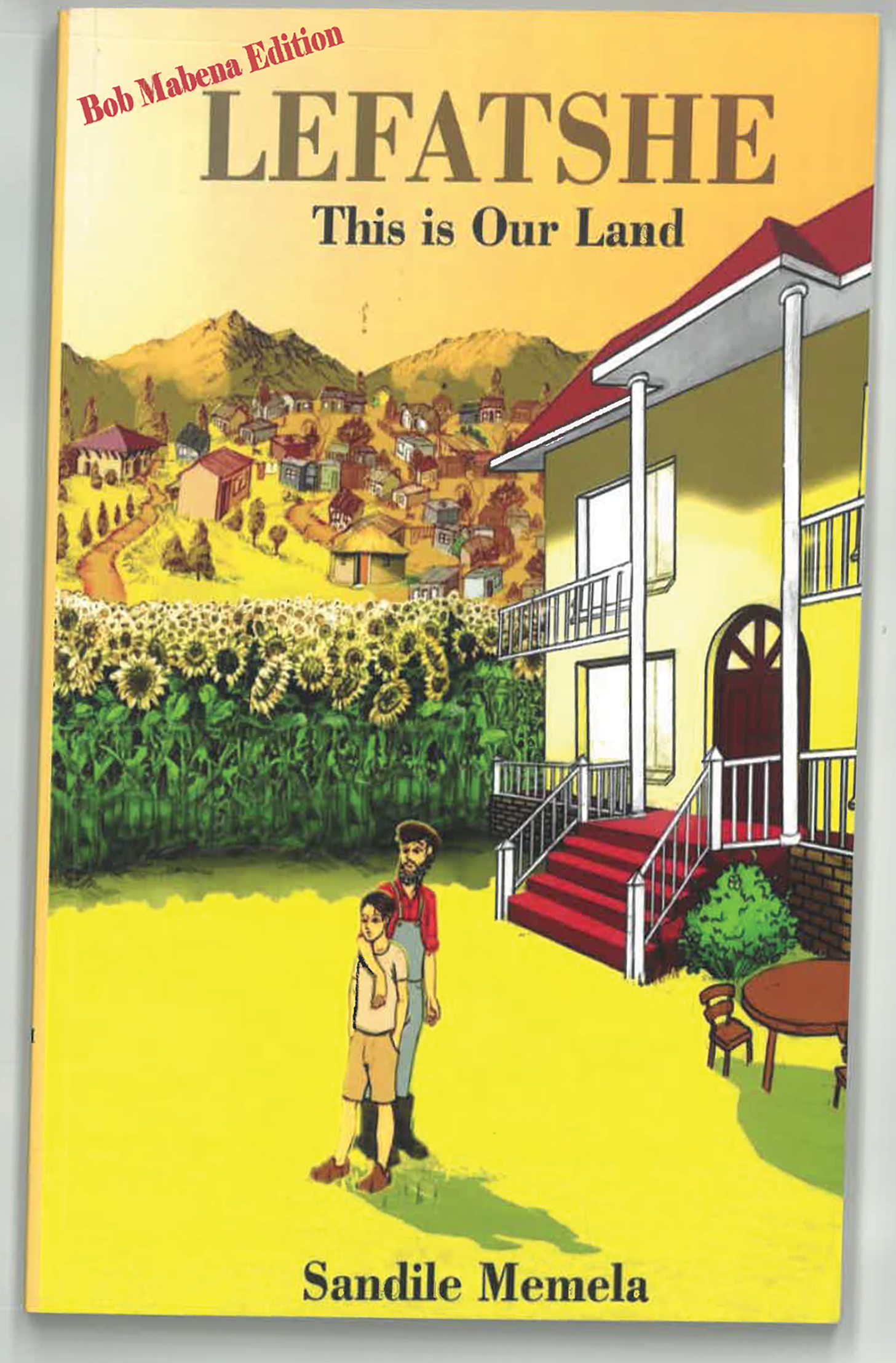
Of course, the landscape does not usually feature prominently in every single text, but Lefatshe does. For example, looking at the opening chapter of the book, there are some detailed passages about two characters, “Sechaba and Larona” in the land of plenty.
Memela depicts Sechaba and Larona waking up in the land of plenty, but only to find themselves bereft of a share of the fruits of their homeland. For three days in succession, they had been starving, and surviving only on water and sugar. No bread. No butter. The latter was a luxury in their lives. Their mother, Lerato, had been giving them soft porridge for the past week. But now, they had run out of maize meal, and Lerato had resorted to offering them starch water, a sugar and water cocktail, which had become a common alternative to tea in many impoverished communities.”
The story of Lefatshe, within a geographic context, is relayed through the eyes of Sechaba and Larona characters. The reader is reminded of working class struggles in the post-apartheid South Africa and the mass shooting of mineworkers at Marikana, North West, by security forces of the democratic government and the accumulation of capital.
Memela writes that the struggle against apartheid was the struggle of the working people for better health, safety and living conditions and that their exploitation deepened in South Africa with a new black bourgeois as an ally of local and international capital. “I vowed to write the book to tell the story of the trauma and agony of this country. For me, the land question is an urgent matter. For there will be no peace until black people have a sense of belonging and ownership in South Africa, “ writes Memela. The historic novel is also a tribute to the late Disc Jockey Bob Mabena, the iconic radio personality whom Memela says triggered the idea of this novel.
Ngugi Wa Thiongo in his book Weep Not Child has written about a “road that ran across the land”. It is within this context that Memela brings to the fore the struggle of women as heroines in the ongoing struggle against poverty. Lefatshe conscientises the reader to sense that people are hungry and hungry for information as geopolitics take a new direction. BOOK PRICE R150
- LEFATSHE This is Our Land. Author: Sandile Memela: Published: 2023