 WeeklySA_Admin
IMPUNITY: The deadly paralysis of Joburg’s inner-city, where criminal networks rule, residents live in peril amid hijacked buildings fiasco…
By Themba Khumalo
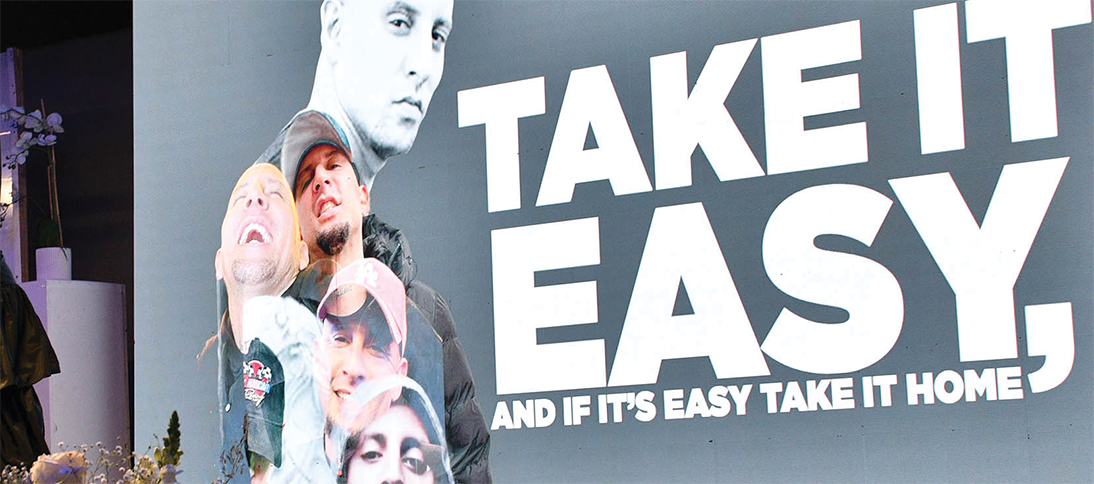
Warrick Stock, known to the world as DJ Warras, did not die because he was careless, unlucky, or in the wrong place at the wrong time. He died because Johannesburg’s inner city has been allowed to rot — a festering, criminal-infested cesspool.
It has metastasised into a killing ground where criminal authority is enforced with bullets, fear, and impunity.
DJ Warras did everything a citizen could do to protect himself. He went to court, securing five protection orders against the individuals who had threatened his life. He invoked the law, placed his trust in a system that promises to shield the innocent. And yet, on Tuesday, 16 December 2025, in broad daylight, in the very heart of Johannesburg’s CBD, he was gunned down. Five court orders. Five solemn promises of protection. And still, nothing.
The law crumbled the moment it was put to the test. The state, which claims to stand between its citizens and violence, shrank from its duty. The law failed him with shocking, unforgivable cowardice, leaving justice impotent and his life extinguished before it could intervene.
He died because an abominable theatre of cowardice and litigation has replaced the machinery of the state. Criminal syndicates roam the city with impunity, their power consolidated behind armed enforcers, illegal electricity, and fear. Meanwhile, NGOs, wielding court orders and self-styled moral authority, have become unwitting custodians of these deadly fiefdoms. Litigation is not protection here — it is preservation. Preservation of overcrowded, fire-trap buildings, preservation of criminal profit, preservation of human suffering.
And then there is the funding. Who bankrolls these organisations that cloak obstruction in the guise of virtue, deliberately freezing Johannesburg in decay, leaving armed syndicates unchallenged, and consigning residents to daily terror? The money flows — opaque, unaccountable, and shielded from scrutiny — a toxic lifeline for paralysis. In its wake, human lives are incinerated, sacrificed to procedural theatre. Every Rand poured into litigation instead of decisive action is a Rand drenched in blood — the currency of death.
A City Hollowed: The Making of a Deadly Landscape
The collapse began in the late 1990s. Post-apartheid Johannesburg saw a mass exodus of businesses and middle-class residents from Hillbrow, Berea, Jeppe, and Marshalltown. Towers and apartment blocks, once bustling, now stood abandoned — silent witnesses to criminal opportunity and neglect.
Initially, occupation was informal, a desperate search for shelter. By the early 2000s, criminal syndicates had identified these buildings as cash registers, weapons caches, and private fiefdoms. They imposed rent enforced with threats, bullets, and terror.
Power replaced survival. Armed guards patrolled hallways, illegal electricity ran through walls like veins, and corridors were so overcrowded that a single spark could ignite a funeral pyre. Municipal inspections were sporadic, timid, and easily deflected. Every delayed eviction, every aborted intervention, strengthened criminal dominion.
Enter the NGOs. Court papers, interdicts, and procedural applications — all ostensibly in the name of human rights — froze lethal conditions in place. Buildings that could have been reclaimed, repaired, or rendered safe remained cages. Syndicates thrived behind paper shields, and funds flowed to sustain these organisations. Every grant and donation underwriting litigation that preserves danger is a moral transaction: money for paralysis, bureaucracy for blood.
The Fires, the Deaths, the Ignored Warnings
This is not hypothetical. In August 2023, a five-storey building in Marshalltown, illegally occupied and hijacked, erupted in flames, claiming more than seventy lives. Children, women, and men were trapped in corridors turned furnaces. Experts had repeatedly warned of illegal electricity, blocked fire escapes, and overcrowding. Evictions had been delayed for years by litigation. The authorities watched, paralysed, as human beings burned.
Claridge Court in Hillbrow tells a similar story: two decades of fire, collapse, and armed intimidation, frozen in place by court interdicts. Jeppe Street Towers, Berea Apartments, Zambesi House — each a testament to a city where criminal enforcement on the ground, litigation in the courts, and bureaucratic paralysis converge to produce predictable human catastrophe.
It was at Zambesi House that DJ Warras met his end. He was not a vigilante. He was a citizen attempting to restore order, to install security systems, to make a building marginally safer. And for that, he was executed.
Each building is a microcosm of moral collapse. Residents live in perpetual terror: fires, ceiling collapses, armed assault — all inevitable in a system designed to fail.
Inside the Buildings: Horror in Detail
Step inside one of these hijacked buildings. The stench of decay clings to every corridor. Electricity snakes dangerously along walls, sparking intermittently. Makeshift partitions create labyrinths where dozens of people live packed together, some cooking in tiny, flammable shanties inside hallways. Water is rationed; waste piles up; stairwells are blocked by furniture and belongings.
Armed enforcers patrol like feudal lords, demanding rent, bribes, or “protection” fees.
Children shuffle barefoot across debris-littered floors. Parents whisper warnings in the dark: do not linger near the stairwell after curfew, do not draw attention. Every step is a gamble. Every sound a potential threat. And yet, every attempt to reclaim these buildings is challenged. Every interdict stalls intervention. The result is a human cage maintained by bureaucracy, litigation, and fear.
City and Provincial Complicity
The City of Johannesburg has long known the hazards. Reports, inspections, and warnings exist, yet enforcement is timid, delayed, and consistently derailed. Every postponed eviction is a victory for criminal networks. Every procedural indulgence allows syndicates to consolidate power.
Gauteng province, responsible for housing oversight, has similarly failed. Emergency relocation programmes and fast-track housing courts are promised repeatedly, but delivered rarely. Without decisive provincial leadership, municipal enforcement flounders, litigation multiplies, and hazardous buildings remain untouched.
This is not oversight. It is institutional complicity. Every delayed action, every hesitant official, every indulgence of paralysis reinforces criminal fiefdoms. Every human life in these buildings becomes collateral.
Ignored Solutions, Lost Lives
Urban planners, fire experts, law-enforcement officials, and housing specialists have repeatedly warned and outlined solutions. Syndicates must be prosecuted under organised crime statutes. Housing courts must be fast-tracked with real authority. Emergency housing must be scaled immediately. Reclaimed buildings should be placed under state custodianship. NGOs must be held accountable when litigation perpetuates life-threatening conditions rather than protecting the vulnerable.
These solutions are practical, humane, and urgent. Yet decades of indecision, bureaucratic timidity, and obstruction leave human life dangling — and often extinguished.
The Human Toll
The human cost is unrelenting. Children sleep beneath ceilings ready to collapse. Families navigate corridors packed with people, belongings, and the ever-present threat of armed enforcers. Women whisper prayers in the dark; men calculate rent and bribes as if survival were arithmetic.
DJ Warras’ death stands as a stark emblem of the cost of daring to challenge criminal control. These are not statistics. They are people — citizens failed by law, bureaucracy, and litigation masquerading as virtue.
Johannesburg has been warned repeatedly. Fires, fatalities, structural collapses, and murders like that of DJ Warras all speak the same truth: indecision kills; obstruction kills; cowardice kills.
The city now stands at a crossroads. It can tolerate continued paralysis and accept that more lives will be lost. Or it can act decisively: dismantle criminal networks, enforce the law without hesitation, reclaim and rehabilitate buildings, and hold to account those whose actions preserve danger rather than protect life.
Excuses have run dry. Words have failed. Each day of delay adds fuel to a tinderbox. Each hesitating official fans the flames of inevitable death. The inner city is a crucible of failure, and every adult who hesitates is complicit in its carnage.
The warning is not theoretical. It is written in fire, rubble, litigation, and blood. DJ Warras’ death is a brutal testament to a simple, merciless truth: when morality, governance, and law fail together, human life becomes expendable. And in Johannesburg, for far too many, it already is.