 WeeklySA_Admin
Four white security policemen face charges for murder of the anti-apartheid student activist shot 12 times in bed 37 years ago…
By Sonti Maseko
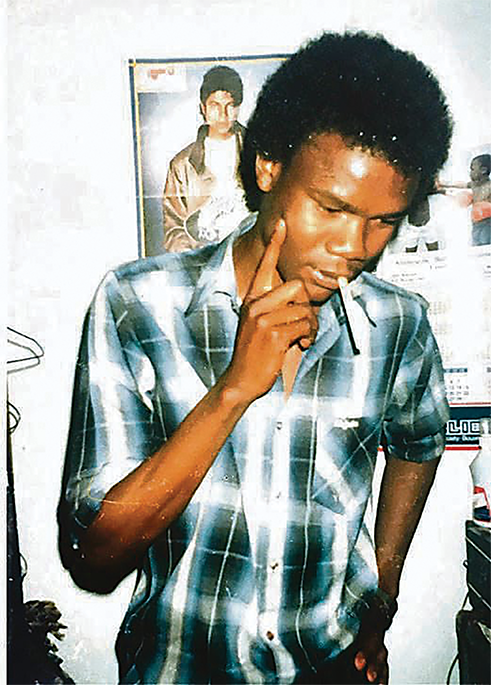
Four former apartheid security policemen who were let off the hook for the brutal murder of an anti-apartheid student leader who was shot twelve times as he lay on his bed in Daveyton, Benoni, thirty-seven years ago, are now expected to face the music – thanks to the confession by one the accused who has since spilled the beans on how the crime was committed.
LONG ARM OF THE LAW
APARTHEID COPS FACE MUSIC 37 YEARS AFTER STUDENT LEADER SHOT 12 TIMES IN BED
Caiphus Nyoka of 999 Lemba Street, Daveyton in Benoni, was sleeping with three of his friends at the outside rooms of his parents’ home on August 23, 1987, when they were allegedly awakened by the four policemen who, backed by other police units, smashed down the door and demanded to know who amongst them was Nyoka. After identifying himself, the police ordered his three friends to leave. They then allegedly pumped twelve bullets into his body and head and left. No reasons were given for the heinous crime.
The four accused – Johan Marais (62), Leon Louis van den Berg (72), Abram Hercules Engelbrecht (60) and Pieter Egbert Stander (61) – are expected to appear in the Benoni Magistrate’s Court on November 18, 2024 to face charges of murder, conspiracy to murder and defeating the ends of justice. They are alleged to have planned the execution of the anti-apartheid leader who was also a leader of the local Congress of South African Students( Cosas) and SRC President at the Mabuya High School in Daveyton.
Three of the policemen who were fingered as the alleged killers, were let off the hook when they appeared at an inquest hearing in 1989 to determine if any of them should be held liable for Nyoka’s death. The court ruled that none of them could be held criminally responsible as they had acted in self defence when they fired the twelve shots that killed the student activist.
However following a new course of discovery including an alleged confession by one of the policemen whose conscience apparently drove him to at last tell the truth – albeit almost forty years after the commitment of the horrible crime – the National Prosecutions Authority then initiated new charges against the four policemen.
The arrests followed the alleged confession of the murder by one of the accused, Marais, to a journalist of the Afrikaans language newspaper, Rapport in October, 2019. This then led to an investigation by the Hawks and three of the policemen – Marais, Engelbrecht and Van den Berg, who had initially appeared at the inquest, were arrested and indicted. Further investigations by the Hawks led to the arrest of Stander.
Despite frequent references and recollections about South Africa’s apartheid past, details set out in the charge sheet and from renewed coverage of the case based on past witness testimonies, the case is likely to be a renewed shock experience and extraordinary glimpse into the past, recalling South African lives under apartheid and the South African Police of the apartheid State.
The 1980’s decade saw the country falling under an unrelenting and violent resistance to apartheid and the state being governed under a succession of emergencies precipitated by increased clashes mainly in Black townships between the apartheid security forces and political activists.
Against this backdrop, the policemen being summoned to court to face charges for killing Nyoka belonged to units in the South African Police known then as the security branch and the Riot police branches, who met on the evening of August 23, 1987 and planned to ‘’silence ‘’ Nyoka in a plan commanded by Van den Berg, one of the accused.
Marais and Stander were members of the Riot Unit, Van den Berg, the commander of the security branch in Benoni while Engelbrecht was a member of the security branch in the area.
The State contends that the four accused had ‘’acted in the furtherance of a common purpose’’ in the commission of the alleged offences and in furtherance of the apartheid policies of the time.
In earlier reports about the family’s efforts to pursue justice, it had been reported that in 1997, Nyoka’s sister, Alegria, had testified at a sitting of the Truth and Reconcilliation Commission in Benoni about how she was prevented or blocked by an ‘’aggressive white policeman’’ when she tried to exit through the kitchen door of the house to get to the backyard to see what was taking place during the police raid on the day her brother was brutally murdered.
It was further established that no member of the SAP involved in the raid that ended in the killing of Nyoka came forward before the TRC. The case that was reported by the family could not be taken further by State authorities until the alleged confession made by Marais in 2019.
The case of the Nyoka family has been added to the list of cases taken up by the legal firm, Webber Wentzel, one of the country’s biggest legal practices which has represented several apartheid victims and their families. Nyoka is amongst many political activists who were silenced by the barrel of the apartheid gun for being vocal against the unjust and racist policy of apartheid. His name is among a long list of others who died violently at the hands of apartheid security police.
They included Black Consciousness leader, Steve Biko, Ahmed Timol, Neil Agget, Nokuthula Simelane, the COSAS 4 and others whose cases were prosecuted under a watching brief by Webber Wentzel to ensure proper investigation and prosecution of these cases.
‘’Representing TRC families is a core component of our pro bono practice. We came on record for the Nyoka family shortly after the Marais (confession) article was published,’’ said lawyer, Jos Venter.
NEXT WEEK: THE WAY A COOKIE CRUMBLES…HOW THE NYOKA MURDER POLICEMAN, MARAIS, DECIDED TO TELL ALL IN A CONFESSION THAT LED HIM AND THREE OTHERS BACK IN THE DOCK