 WeeklySA_Admin
PULSATING: The author’s 500-plus-page paperback tome throbswith identities of familiar landmarks and figures in history…
By Jacob Mawela
“Barber, do you read your Bible?” A 25-years young man answering to the service of God by way of his station in life, enquired of a barber who had queried why he never tipped for service rendered.
The inquirer was short and tiny, grew a moustache which he kept neatly trimmed, displayed a dapper sense accentuated by a wardrobe of bespoke suits and possessed good looks and charm which, according to a lifelong associate, “attracted women in droves!”Although a Negro born into a very brutally racist United States, he had, whilst studying at a seminary, a White girlfriend who he flaunted in front of those of like colour who didn’t harbour interracial dalliances and, in the US of that period – would go to extremes such as lynching dark-skinned offenders!
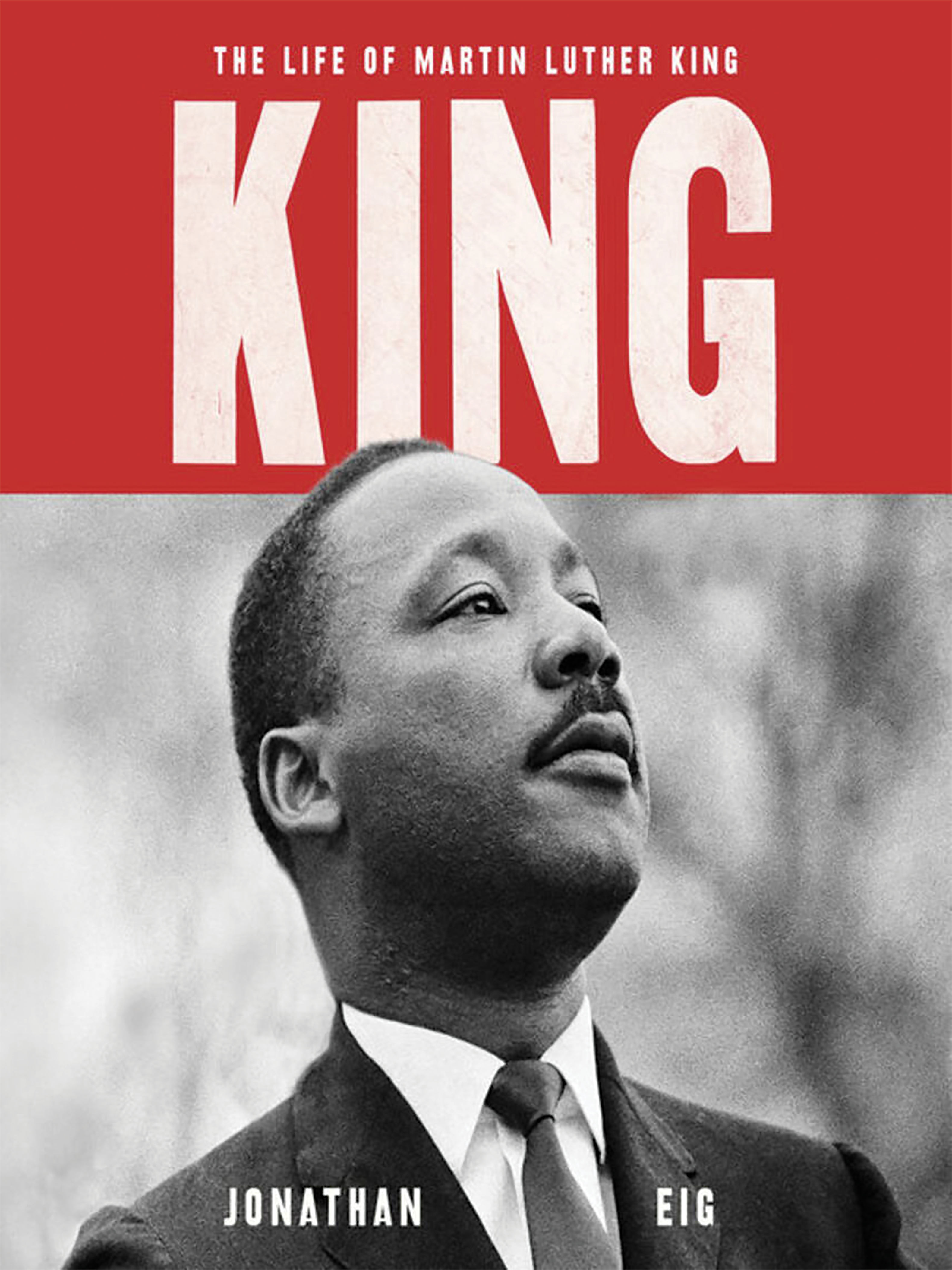
– THE LIFE OF MARTIN LUTHER KING
He was said to believe in love so much so that he disregarded a colleague’s advice to, “cool it down”, with a woman he was involved in an extra-marital affair with – and ran the risk of media exposure which would compromise his standing as a figurehead of the civil rights movement in 1950s and 60s America. “What you say might be right, but I don’t care … I have no intention of cutting off this relationship,” he retorted – going on to aver during a sermon, as if to justify his indiscretion, that, “we know how to be just, and yet we are unjust.”
If South African author, Jonny Steinberg’s Winnie & Nelson book exposed Nelson Mandela as having been involved in extra-marital shenanigans, so does American author, Jonathan Eig’s regarding a fellow Nobel Peace laureate (a recipient in 1964 to Madiba’s 1993 award) – in spite of the latter being married to a woman the poet Maya Angelou waxed over as “destined to become a steel magnolia.”
Yet for all Eig’s subject’s knack for attracting women, one stylishly dressed Black woman proved an exception from the horde by registering her non-flattered state when she plunged the steel blade of a letter opener into the man’s chest whilst he was signing books at a Harlem department store!
American author, Jonathan Eig’s portrayal of this review’s subject of interest goes further – owing mainly to recently declassified Federal Bureau of Investigation files – than the well-documented legacy which long entered him in the pantheon of all-time history’s colossal figures!
Eig’s 500 plus page paperback tome throbs with identities of familiar landmarks and figures in history such as those of the Edmund Pettus Bridge (the Selma, Alabama site of the event which became referred to as “Bloody Sunday” when White law-enforcement officers violently dispersed African-American civil rights movement protesters in 1965), Selma, Montgomery, John F. Kennedy, J. Edgar Hoover, Malcolm X (who once referred to the subject as an Uncle Tom), Stokely Carmichael, Rosa Parks, Harry Belafonte, Muhammad Ali, James Baldwin, et cetera. King – The Life of Martin Luther King, paints a church pastor who drank, smoked, played pool and ate his favourite Southern foods in massive quantities with his hands because it was too delicious to let utensils interfere with their consumption (a city boy who ate like a country boy – as his wife observed.)
TIME FOR BLACK WOMEN TO LEAD
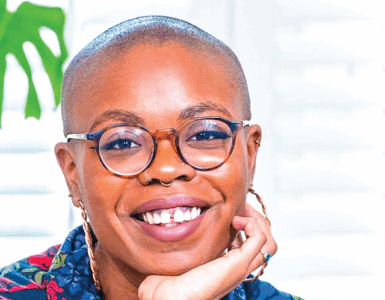
DIASPORA: The book draws lessons from prominent figures such as Shirley Chisholm, the first woman to run for president of the United States (in 1972); Nomzamo Winnie Madikizela-Mandela…
By WSAM Correspondent
ITHACA, N.Y. – At the First Pan African Conference in 1900, W E B DuBois called the 20th century “the century of the colour line.” Echoing this language, scholar Carole Boyce Davies calls our current era “the century for claiming Black women’s right to leadership,” in her new book, “Black Women’s Rights: Leadership and the Circularities of Power.”

Extending her research on writing by Black women around the world, Boyce Davies, the Frank H T.] Rhodes Professor of Humane Letters, Professor of Literatures in English and Africana Studies in the College of Arts and Sciences at Cornell University, examines the stories of Black women political leaders in Africa and in the global African Diaspora.
The book draws lessons from figures including Shirley Chisholm, the first woman to run for president of the United States (in 1972) on a leading party ticket; Nomzamo Winnie Madikizela-Mandela of South Africa; and assassinated Brazilian politician Mariella Franco.
“I wanted to find out what are the limitations, barriers, challenges of Black women’s leadership,” Boyce Davies said.
In the following question-and-answer interview, Cornell University’s College of Arts and Sciences spoke with Boyes Davies about the book.
Question: What is your vision for the beginning of the 22nd century as Black women claim their right to leadership?
Answer: I think we are finally being able to see steps towards that fulfilment, especially since we are only 20 years into the 21st century. I am predicting, though I won’t be around to see it, that with time, women’s leadership, good and bad, as with male leaders, good and bad, will be fulfilled. I say “good and bad” because the assumption is that when women become leaders, they will have to be perfect, but there is no similar expectation for men. People were happy just to have Barack Obama as a Black leader and have not really assessed, beyond charisma, his actual accomplishments.
Q: How do personal accounts from Black women in leadership – such as Shirley Chisholm, Kamala Harris and Stacey Abrams to name a few – benefit other Black women and the whole nation?
A: These are all steps towards the process of full representation. I consistently argue that women represent half the world and so are due at least that portion of representation, resources. Shirley Chisholm was willing to run, even if she did not get the Democratic Party nomination, to demonstrate that it could be done. Kamala and Stacey benefit from the fact that Chisholm put herself out there and faced the barrage of negativity of conjoined racism and sexism but still made major gains in positioning Black women for leadership. Even if Kamala and Stacey never achieve their full promise, we have to assume that these were necessary steps along the way, and they themselves learn from their mistakes – as we the supportive onlookers also learn.
Q: Where does the concept of “the circularities of power” originate, and how is it a guiding principle in your book?
A: “Circularities of power” is a bit Foucauldian, as Foucault argues that power should not be seen always in terms of dominance but in the ways that it can circulate through communities and that even the oppressed have power that they do not often use. I discuss this in the introduction and provide the reference. But even before thinking of using that framing,
I had been using a discourse of “circularities” instead of “migrations,” intending to capture the fact that these processes are never unidirectional.
Q: Your book mentions several African women writers and dedicates a chapter to feminist literary leadership. How have African women writers advanced the cause of Black women’s rights?
A: Women writers have imagined these frameworks of movement, of leadership, of power consistently. I was struck by what became policies started with writers like Ama Ata Aidoo of Ghana already describing and talking about women’s issues that needed to be addressed, and these became finally commonplace assertions of feminist and legal theorists as they went into the various legal protocols at state, national and international levels, especially in Africa and the Caribbean. It is in the imagination where realities begin to have a certain tangible possibility, which is the work of the creative in any case – to see beyond the given reality.

- Boyce-Davies is a Caribbean-American radical intellectual committed to social justice. She is currently the Frank H.T. Rhodes Professor of Humane Letters in the College of Arts and Sciences and Professor of Africana Studies and Literatures in English at Cornell University.