 WeeklySA_Admin
CONNECTION: From Kalusha Bwalya’s Liga MX legacy to South Africa setting up camp in Pachuca, the 2026 FIFA World Cup is reviving decades of football, cultural and historical ties between Mexico and Africa…
By Ivan Pech
After the warm reception for the Democratic Repulic of the Congo at the FIFA intercontinental playoffs in Guadalajara, visiting African fans can expect a joyful camaraderie in Mexico.
Playing in Mexico’s top men’s club football division, Liga MX, is not the most common career path for African footballers.
However, there is a long history between Mexico and the African continent, including in football. That connection will surely deepen this coming June when at least three African countries make Mexico their “home base” for the 2026 World Cup.
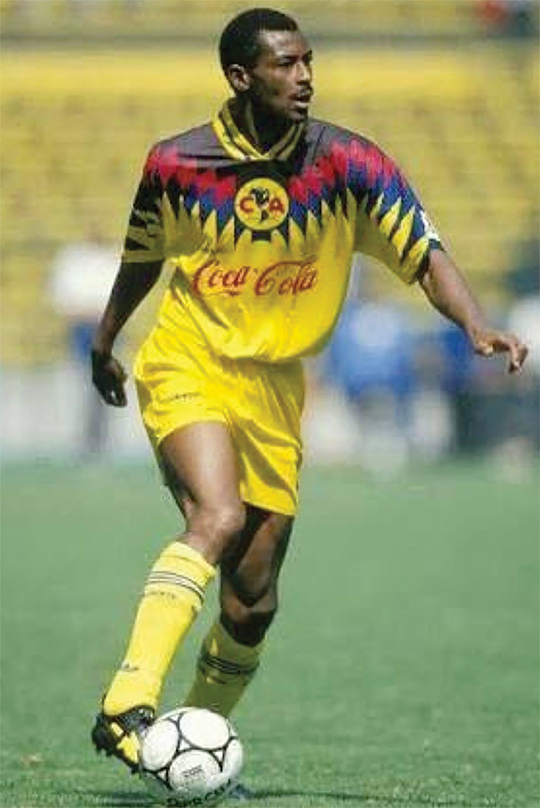
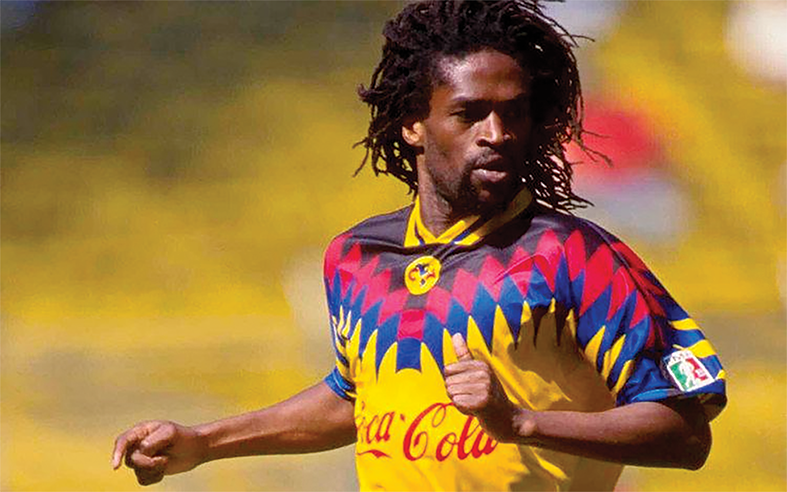
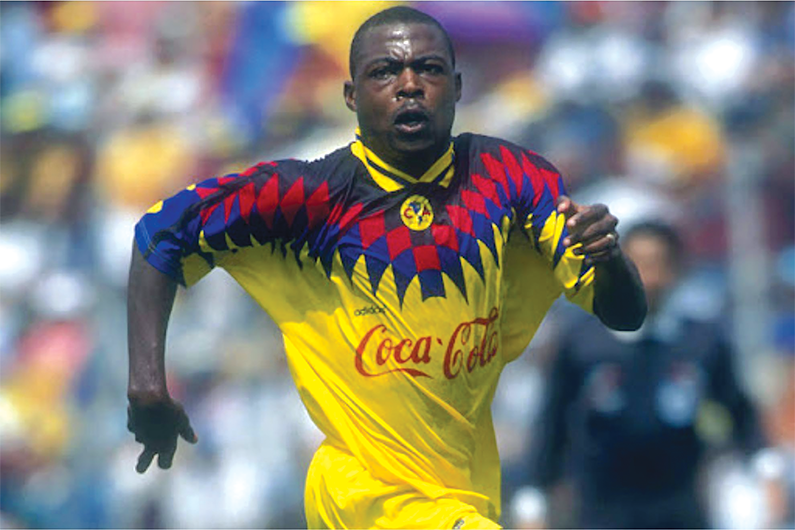
The first player in history to play for a Mexican professional football club was a Moroccan footballer named Mohamed “Abdul” Abderrazak. Little is known about him, but he played at Club Puebla in 1951. The most successful era for African players in the Liga MX came in the early to late 1990s, when some of Africa’s finest players came to play in the league. The most famous were Zambian striker Kalusha Bwalya, who played for Club América in Mexico City, and Cameroonians François Omam-Biyik and Jean-Claude Pagal.
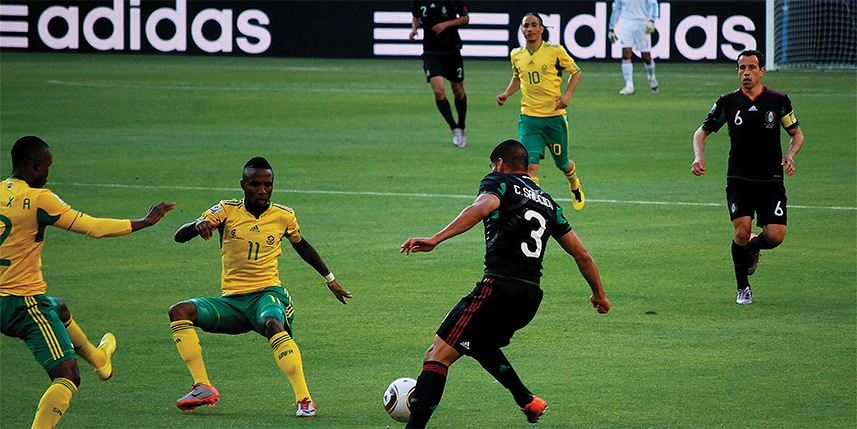
Sixteen years after South Africa and Mexico opened the 2010 World
Cup together, the same fixture will again launch football’s
biggest spectacle, renewing a bond that stretches far beyond the game…
Omam-Biyik and Pagal were members of the Cameroon side that shocked the world at the 1990 World Cup in Italy, beating defending champions Argentina in the opening match, and then going on to reach the quarterfinals.
Omam-Biyik became a cult hero at Club America, while Bwalya, who currently serves as president of the Zambian FA, is unfortunately best remembered for missing an open net against Cruz Azul.
Later, the wonderfully creative Achille Emaná, who was Cameroon’s number 10, won the 2014 CONCACAF Champions League with Cruz Azul.
SA’s trio in Mexico
In this era, Cape Verdean Djaniny Tavares (at Santos Laguna between 2014 and 2018) and Moroccan Oussama Idrissi (at Pachuca in 2023) also became fan favorites. Both countries are heading to the World Cup this year, but while both players have represented their national teams in the past, neither will be going this time around.
Currently, there are only three African men signed to Liga MX clubs (with one in the U-20 league), however, African women—especially a trio of stars from South Africa—are reviving the golden era of Bwalya and Omam Biyik in the Liga MX Femenil.
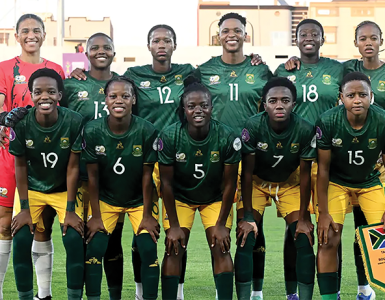
They are Amogelang Motau (Tijuana), Hildah Magaia (who has recently left Tijuana for Deportivo de La Coruña’s women’s team), and Jermaine Seoposenwe (who is now at Monterey, where she has already won two championships after retiring from international duty).
At the last Women’s AFCON, Liga MX had five players in the tournament. Liga MX Femenil has become increasingly popular and lucrative over the last few years, so it’s no surprise that African players choose it to showcase their talents.
In addition to local professional leagues, events of the last few months around the Men’s FIFA World Cup may have also signaled a new chapter in the relationship between African football and Mexico. This past March, the Democratic Republic of the Congo was in Guadalajara for its intercontinental playoff match against Jamaica.
Thousands of Mexican football fans filled the streets and traveling Congolese fans were met with respect and love. The chant “Congo hermano ya eres mexicano” (“Congo, my brother, you are now Mexican”) became a rallying cry of solidarity throughout their visit.
Before the match, the hotel staff in Guadalajara even gave the Congolese players a guard of honour, complete with pompoms and balloons. Win or lose, the team felt the camaraderie, which is something this 2026 World Cup will desperately need. This is not the first year that African teams will be in Mexico for a World Cup. Morocco came in 1970 when, after boycotting the 1966 edition, African countries were awarded their first direct qualification slot.
In 1986, both Algeria and Morocco represented the continent—Algeria couldn’t advance out of the group stage, but Morocco made it to the Round of 16 where they were eliminated by West Germany.
This time, however, feels different. And, if the hospitality given to the DRC during the intercontinental play-offs is anything to go by, visiting African teams and their fans are in for a treat.
The DRC will be based in Houston, but will travel back to Guadalajara for a group stage match versus Colombia on the 23rd. They and their fans can surely expect the same passion and warmth they felt in March.
South Africa has decided to set up a base camp in Pachuca, the capital of the state of Hidalgo, known by Mexican fans as the “birthplace of Mexican football.”
Hugo Broos, South Africa’s manager, said he wanted the team to acclimatise to the high altitude of Mexico City before their opening match on June 11, so the nearby home of Pachuca Football Club was an appropriate venue.
On a recent visit for a facility pre-check, he complimented quality and was taken back by the warm reception given to him by the Mexican people.
Tunisia is choosing Monterrey as its base camp, where it will play two games. Khalil Chemmam—a former player that was selected for the 2018 World Cup squad but did not make the final twenty-two, and now a board member of Tunisia’s FA—said he hopes Mexican locals support his team.
Beyond the pitch, Mexico and the African continent share a deep history. According to Mexico’s National Institute of Statistics and Geography, about 2.6 million people in Mexico identify as Afro-Mexican, underscoring a significant but often under-recognised dimension of the country’s identity. They include people brought as slaves during Spanish colonisation or more recent immigrants from elsewhere in Latin America, the Caribbean, and Africa itself.
The most famous African person born in Mexico is the actress Lupita Nyong’o, who was born there while her father, an academic, was working there. She holds Mexican citizenship.
Afro-Mexican presence is also visible in football. Among the most prominent Afro-Mexican figures are the dos Santos brothers, Giovani and Jonathan, sons of Afro-Brazilian footballer Zizinho. Giovani, in particular, holds a symbolic place in this story, having started in the opening match against South Africa at the 2010 World Cup—one of the most visible moments of Afro-Mexican representation on the national team.
On the pitch, Mexico’s encounters with African teams have been limited but meaningful. Tunisia defeated Mexico at the 1978 World Cup, and South Africa famously opened the 2010 World Cup with a draw against Mexico on June 11 2010.
Sixteen years to the day after that opener, the same fixture will reappear as the opening match of the 2026 World Cup, echoing that earlier moment and symbolically renewing the connection between Mexico and the African continent.
Ivan Pech is a freelance writer from Mexico