 WeeklySA_Admin
SOVEREIGNTY: Morocco tries to “bypass” the United Nations over the issue of the future of the disputed territory – all with the help of the West…
By Ricard Gonzalez
In recent years, Morocco has managed to get several Western powers to change their position regarding the Western Sahara conflict to align with the Rabat theses, although to different degrees.
The first was the United States under Donald Trump, and the last was Macron’s France, both of which have gone furthest in recognising Moroccan sovereignty over the Sahara. Germany and Spain also moved as a toll to achieve reconciliation with Rabat after it manufactured diplomatic crises with both countries based on excuses. It is what has been called “the diplomacy of anger,” and so far, it seems to have worked.
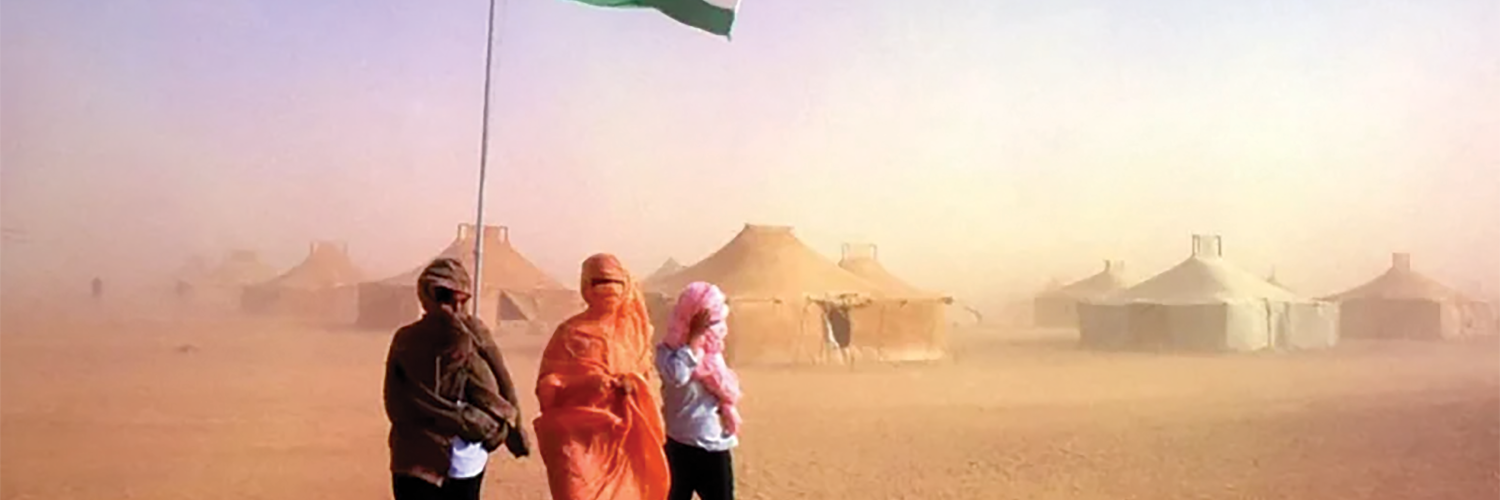
Morocco has claimed authority over Western Sahara since 1975, but the United Nations (UN) does not recognise Moroccan control, calling the disputed territory a “non-self-governing territory”. Morocco controls the most populous area along the Atlantic coastline, more than three quarters of the country. The rest of the country – about 30 percent – is controlled by Sahrawi Arab Democratic Republic.
According to Sorbonne University professor Khadija Mohsen-Finan, Morocco’s goal is to “isolate the UN,” the institution that has so far played a key role in the conflict.
In its resolutions, the United Nations has made it clear that the conflict in Western Sahara is framed in the context of the decolonisation process of Africa, and therefore, the Sahrawi people have the right to self-determination.
To the extent, that the Western powers support the Moroccan autonomy plan for Western Sahara, they are undermining the international law that they wield so much in the war in Ukraine. Now, the Polisario Front hopes that Morocco fails in its attempt.
“To the extent that these are unilateral decisions, they will not affect the legal background of the conflict, nor do they bring us closer to its resolution,” maintains Oubi Bouchraya, Polisario representative to the UN in Geneva.
“Morocco has never had the real will to cooperate with the UN in the search for a resolution to the conflict. The positions of Western countries only serve to gain time in the exploitation of the territory’s resources,” emphasises Boucharaya, who describes the Moroccan regime as “feudal and zero democratic.”
In 2020, the Polisario broke the ceasefire in force since 1991, but the conflict is low intensity. Both Mohsen-Finan and Bouchraya agree that they consider the application of the autonomy plan proposed by Morocco to be unviable.
“Once Morocco has managed to control the territory, I see it as unlikely that it will transfer it to an autonomous government,” says Mohsen-Finan.
“I think it is more feasible to give us independence than autonomy because that would cause problems for the regime because other regions would also want autonomy,” says the Sahrawi diplomat.
Given the historic relations between Morocco and France, which have been very close for decades, Emmanuel Macron’s decision to align himself completely with the Rabat theses in the Western Sahara conflict, was not surprising.
According to experts, various reasons explain why this decision has led to a hostile reaction from Algeria, but those related to security and the greater business opportunities that Morocco offers stand out.
“Macron tried to reach out to Algiers, but things didn’t quite work out and that left a bitter taste in his mouth. France needs to, at least, have a good relationship with one of the two countries,” explains Professor Mohsen-Finan.
Economic considerations also seem to have weighed when choosing between Rabat and Algiers, since, given the current level of tension between both countries, it seems impossible to maintain good relations with both at the same time.
“There are important French companies that are already present in Western Sahara, a region rich in natural resources that Morocco exploits. It was important that they were in tune with the country’s position,” says Mohsen-Finan.
The way in which the decolonisation process took place marked Paris’ relations with the former Maghreb colonies: in Morocco, there was a pact with the country’s elites, in Algeria a bloody war that caused wounds that still fester.
Hence, the various tenants of the Elysée Palace have always felt closer to the Alawite monarchy, and it is even speculated that it was French diplomats who suggested to Rabat the main lines of the autonomy plan to resolve the dispute with the Polisario Front that presented in 2007. Since then, Paris had given veiled support to this idea.
The turning point in the West’s position in Western Sahara came in late 2020, when the Trump administration recognised Moroccan sovereignty over Western Sahara in a three-way pact that included the establishment of diplomatic relations between Rabat and Tel Aviv.
Then, Rabat, with the support of the American superpower under its arm, believed it had a historic opportunity to transform the status quo of a conflict frozen for decades in its favour and put the European Union, a key actor, in its sights.
The objective was to follow in the footsteps of the United States. For the bloc to move in the right direction, it was necessary for the Franco-German axis, the driving force behind so many decisions at the European level, to do so first, as well as Spain, whose voice is heard with special attention as it is the former colonial power.
The success of Moroccan diplomacy is notable because it has not only achieved these three European countries, Germany. Spain and France, not only modified their respective official positions regarding Western Sahara under pressure and in the face of the risk, later confirmed, of damaging their relations with Algiers, but did so by entering into a kind of auction to see who was more accommodating with Rabat.
First, Germany stated that the autonomy plan was “a good basis” for resolving the conflict. Later, Spain surpassed it, saying that it was the “most serious, realistic and credible” base. Finally, France won the auction by defining the autonomy plan as “the only basis.”
Instead of coordinating to confront Moroccan pressures, European countries engaged in a kind of competition, one of the main keys to Morocco’s success.
Likewise, it is also worth noting the weak response to the Moroccan pressure strategy offered by Algeria, which did not put everything on the grill in the same way, as well as Rabat’s ability to convince its allies that it was better for them to take advantage of its counterparts than maintaining a principled position. – Globalter
* Ricardo Gonzalez He is a journalist and political scientist. He works mainly in the Maghreb, the Middle East and Europe
Comment
PREPAID METERS ARE A BURDEN FOR THE POOR
The installation of prepaid electricity meters by municipalities especially in Black-owned households in South Africa’s townships, has created a burden for millions of community members who can no longer afford the ever increasing energy tariff increases spearheaded by power utility, Eskom.
The increases , which forced the municipalities to pile this load on the consumers, has led to hundreds of thousands of impoverished communities to live below the poverty-datum line with many having to go to bed without food.
This painful experience is supported by Dr. Isaac Kwamena Nunoo of the University of Cape Town’s School of Economics in his doctoral thesis in which he highlighted the crucial role of electricity in enhancing household welfare in this country. The study underscored that vulnerable or impoverished South African groups were the most affected by energy poverty when using prepaid meters. Results of his research examined the connection between prepaid electricity meter systems and food security and found that households using prepaid meters were more likely to experience hunger or food insecurity . The presence of prepaid electricity meters was associated with a 3,9 % higher likelihood of overall household hunger as well as a 4,7% and 4,4% higher likelihood of hunger among adults and children respectively.
Low-income households often lacked sufficient cash savings or a steady cash flow, making it challenging to cover essential expenses like food, electricity and other necessities. When these households prioritised paying for electricity, it reduced the remaining income available for food, leading to a higher likelihood of food insecurity.
This financial strain forced difficult trade-offs, highlighting the tough choices impoverished families must make between maintaining basic utilities and ensuring adequate nutrition.
Poverty-stricken consumers have to bear with high electricity tariff increases annually which are driven by Eskom to keep abreast with their budgets. This, in turn put pressure on municipalities who lumped the burden on poor consumers. Nunoo’s findings revealed that households using prepaid meters were 3,35% more likely to experience energy poverty compared to those with post-paid systems.
Black people have suffered under the yoke of poverty for too long a time precipitated by a history of apartheid when they were relegated to being labourers earning meagre wages by the white racist regime. It is unfortunate that Black people were still trapped in this cycle of poverty despite the ushering of democracy under the ANC government in 1994. Nunoo suggested that the combined use of prepaid meters with the free basic electricity programme, could alleviate energy poverty.
We call on the government to initiate a system that can help the poor in affording the ever increasing electricity tariffs because the introduction of prepaid meters has proved to be a commodity that can only be afforded by the rich.