 WeeklySA_Admin
UPLIFT: Mrs South Africa 2023 finalist Terisa Hsu-Lee, a Kyalami resident, mother, and business owner, boasts a resume that includes being a Fourways “passion-preneur” and the owner of Ever Beauty SA Emporium.
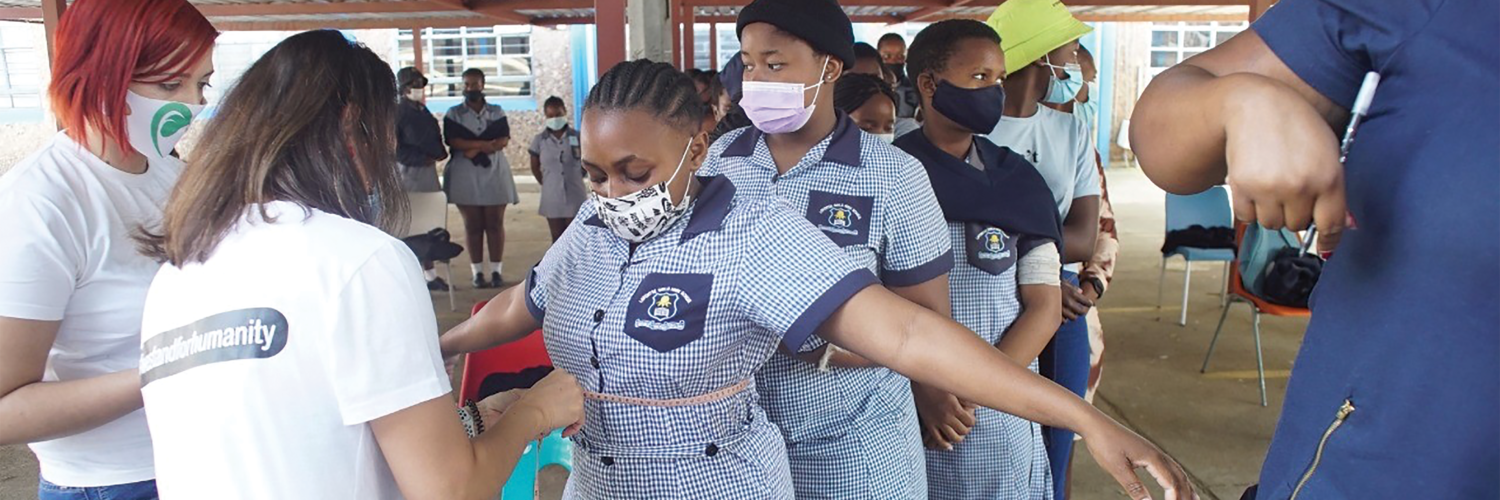
As part of charity work under the auspices of Mrs South Africa pageant, Hsu-Lee is working very closely with two NPO foundations, Impilo Collection Foundation and the Jessica Matheson Foundation. Impilo Collection Foundation believes in uplifting and empowering victims of Gender-Based Violence and Femicide (GBVF) through various social projects, such as #EmpowerHER bra drive, an initiative which empowers and restores dignity to young girls. Impilo Collection Foundation was alerted to the need for quality bras for women in need and teenage girls who cannot afford their first bra and due to their changing bodies are often objectified.
Bras collected are donated to women and girls facing these challenges in impoverished communities as well as to women’s shelters around Gauteng.

Terisa was also approached by the Jessica Matheson Foundation to be their official spokesperson. 16 year old Jessica Matheson suffered from bioplar disorder and committed suicide on the 20th April 2022. In her memory the Foundation is working towards having a counsellor or social worker available at every government school to deal with depression, anxiety, drug addiction and other mental illnesses affecting school children.
The Mrs South Africa pageant is a self-discovery and empowerment programme that highlights diversity, ambition and confidence. It showcases some of the country’s most remarkable and talented women and equips them with the skills and tools necessary to achieve their dreams. The programme is designed to empower married women and the CEO of Mrs SA, Joani Johnson, is proud to work with so many strong, inspirational and formidable women. The programme teaches leadership, entrepreneurship, marketing, self-promotion and self-discovery to ensure that all participants have a life-changing experience.
HOW TOXIC MARRIAGE CAN AFFECT YOUR IMMUNITY SYSTEM
DESTRUCTIVE: A pattern of negative communication in a relationship could leave physical and emotional wounds on either partner…
By WSAM Correspondent

COLUMBUS, Ohio – A tendency for one or both spouses to avoid or withdraw from tough conversations could set up married couples for emotional distress, bad feelings about their relationship, chronic inflammation and lowered immune function.
This is the key finding of a recent research which has reviewed data from a 2005 Ohio State University study that showed the stress couples feel during a brief argument could slow their bodies’ ability to heal from wounds by at least a day – a landmark finding at the time showing how psychological stress affects immunity.
A fresh look at the data shows that when married couples typically communicate with each other in negative ways, both spouses – and women in particular – suffer emotionally and their immune function wanes, in the form of having wounds that take longer to heal. The analysis revealed that the health consequences of negative communication patterns were evident even before the 2005 study began: these couples arrived at the lab with higher blood markers for inflammation. The initial trial showed that one stressful argument – in a lab, recorded and analysed by researchers – could harm immune function. This new study suggests that the more combative arguments in the lab were linked to more negative typical marital communication for these couples – and those daily patterns are a likely culprit behind persistent negative emotions and biological markers that can lead to poorer health outcomes.
“Marriage is associated with better health, but chronically distressed marriages can worsen health,” said researcher Rosie Shrout, who completed her postdoctoral research on the topic at Ohio State’s Institute for Behavioral Medicine Research (IBMR).
“It’s important to understand what is going on behind the scenes that contributes to these effects,” said Shrout, now an assistant professor of human development and family science at Purdue University. “What we’re seeing is that both chronic daily negativity and acute negativity, and their combination – experiencing both of those – is particularly bad for couples’ emotions, relationships and immune functioning”. The new study was published in the journal Psychoneuroendocrinology.
The 2005 research was co-led by Jan Kiecolt-Glaser, professor emerita of psychiatry and psychology at Ohio State, whose decades of discoveries as a leader of the IBMR have shown the many ways in which stressful life events are detrimental to health.
The 2005 work involved 42 married heterosexual couples who had been together for an average of 12 years. Researchers tested the baseline level of a proinflammatory protein in their blood and used a device to raise small blisters on each partner’s forearm – the wounds’ healing progress was monitored as an indicator of how well each participant’s immune system was functioning. In the new study, statistical modelling of the qualitative and biological data showed that couples’ negative communication patterns – specifically mutual avoidance or demand/withdrawal – had cascading effects on how they felt after the lab conversations, and on their inflammation and immune function measures. “If they were more negative typically on a day-to-day basis, and were negative in those specific interactions, they rated the discussion more negatively and less positively, they felt fewer positive emotions, and their wounds healed more slowly,” Shrout said. “That chronic negativity and acute negativity had emotional, relational and immune effects – most notably for women.”
In contrast, couples who reported more mutual constructive communication patterns rated the lab conversations more favourably. A few specific findings suggested how insidious the effects of poor communication patterns could be: wounds healed more slowly in couples who mutually avoided talking about tough topics and also showed fewer positive behaviours during lab discussions. Even when mutual avoiders were more positive while trying to resolve conflict, that positivity didn’t help their wounds heal more quickly.
Kiecolt-Glaser, who has led a number of marriage and health studies, said it did not take long for married couples to have expectations of what the marriage was like, that could override any evidence to the contrary. In a bad marriage, a negative behaviour was perceived as reinforcement of this expectation, while in a good marriage, a negative behaviour was taken as a sign one’s partner was in distress.
“This study provides a window into relationships: What couples say about their relationship really did translate not only into how they behaved, but also what they said about the behaviour, and their biology,” she said. “They walked into this study situation, and the way they’re responding may in part be because that’s what they’re expecting. They have such well-worn tracks in terms of interactions that it’s hard to derail the train.”
However, that did not mean all was lost, Shrout noted – couples had lots of options to pursue education or therapy to help them learn better communication skills.
Published on the 98th Edition