 WeeklySA_Admin
HISTORICAL: Thaba Bosiu showcases culture through music, dance and totems…
By Victor Mecoamere
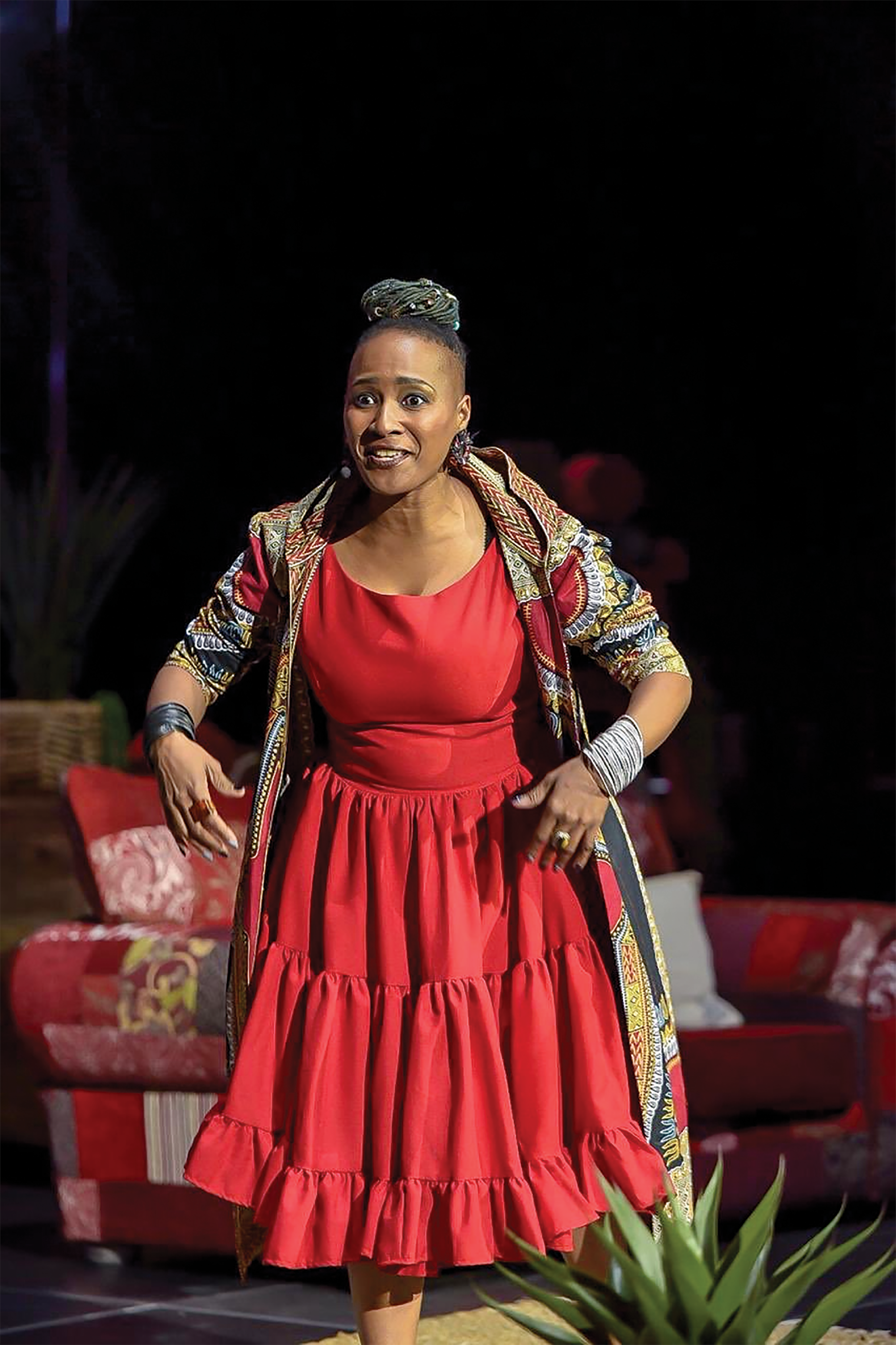
BASOTHO’S RICH HISTORY
EXACTLY a year ago, versatile artist Napo Masheane left Johannesburg, Gauteng to take a new position as the first black female artistic director of the Performing Arts Centre of the Free State, Pacofs in Bloemfontein since 1969.
Today, Masheane is living the dream of seeing herself leading a ninety nine percent black team, crew and cast of Thaba Bosiu – The Musical, a potentially seminal theatre production that she has conceived and directs.
Masheane has collaborated with costume designer Moleboheng Fynn, choreographer Sello Pesa, set and costume designer Wilhem Disbergen and musical directors Luthando and Ntobeko Ngcizela who are best known Afro pop music duo, the Jaziel Brothers. And South African State Theatre head Aubrey Sekhabi is in the mentoring role known as a dramaturge, which can be loosely described as an overseeing literary adviser or editor in a theatre piece, an opera, or film company.
In the production – which Masheane said showcases the majesty of the Basotho nation through music, dance, indigenous games and totems – the audience is shown how the Basotho people lived at the time when Morena Moshoeshoe I escaped the ravages of the Difaqane or Mfecane Wars in THE 1800S.
The stage set design depicts Thaba Bosiu, Sesotho for a mountain at night, during the occupation of King Moshoeshoe, which is a plateau situated in the Phuthiatsana Valley, south-east of the Lesotho capital, Maseru. The drama celebrates the rich heritage of the Basotho, and it reflects Moshoeshoe’s triumphs, trials and tribulations. Significantly, Thaba Bosiu is where Moshoeshoe effectively defended his people from attacks by Shaka Zulu’s soldiers and the Afrikaners until 1868.
Further describing the production, Masheane said, “Thaba Bosiu – The Musical is woven as a ‘choreo-poem historic musical play’ that has a strong symbolic and experimental context that epitomises the formation of the Basotho nation. In its centralised poetic licence, the Sesotho and English languages carry the bilingual narratives, while the physical theatre is embodied in the life stories of Basotho people, and in all this creative mix, my goal as a playwright was to weave all these aspects to express the historical narrative of the Basotho people.”
In explaining how she formulated the production, and what she hoped aspirant creatives and performers could learn from the show, Masheane said, “For Thaba-Bosiu, these questions were: ‘What if bo-nkgono-nkgono were to rebirth themselves as this mountain, that we can climb, see, hear, touch, and feel?’
And, ‘Could it be that through dipina, diboko, dithoko, difela le ditshomo tsa bo-nkgono-nkgono in a state of rebirth, and reincarnating as Thaba Bosiu (the- mountain-of-the-night), so as to display a rainbow of diverse cultures and traditions that are a cross between the existence, experience, and the screams and dreams of Morena Moshoeshoe I, who was the founder of Batho, of the Basotho nation?’ Also, my work often speaks for itself, thus, I cannot determine what aspirants can or should take from it. Mine is to spit the lines as a playwright, and to breathe life into those lines on stage, as a director. Then the others must find or question the pieces of the overall narrative that may be resonating with them.”
Masheane said she was happy that ninety nine percent of the collective talent is from the Free State province, “and they are a mix between unknowns, soon to be known, and several well-known names and faces; you need to unearth it from the home town’s street corners. Besides, there is so much talent that remains hidden or which is under estimated, here in the Free State province. What’s more, some of us had to leave our own birthplaces for so that we should be recognised. But now the tables have turned, and ours is to stay, shine and flourish at home, first, before the world tells us otherwise.”
THERE’S NOTHING BETTER THAN A FREE HUMAN BEING
ACTIVISM: Julian Bahula cherished liberation above all else
By Victor Mecoamere
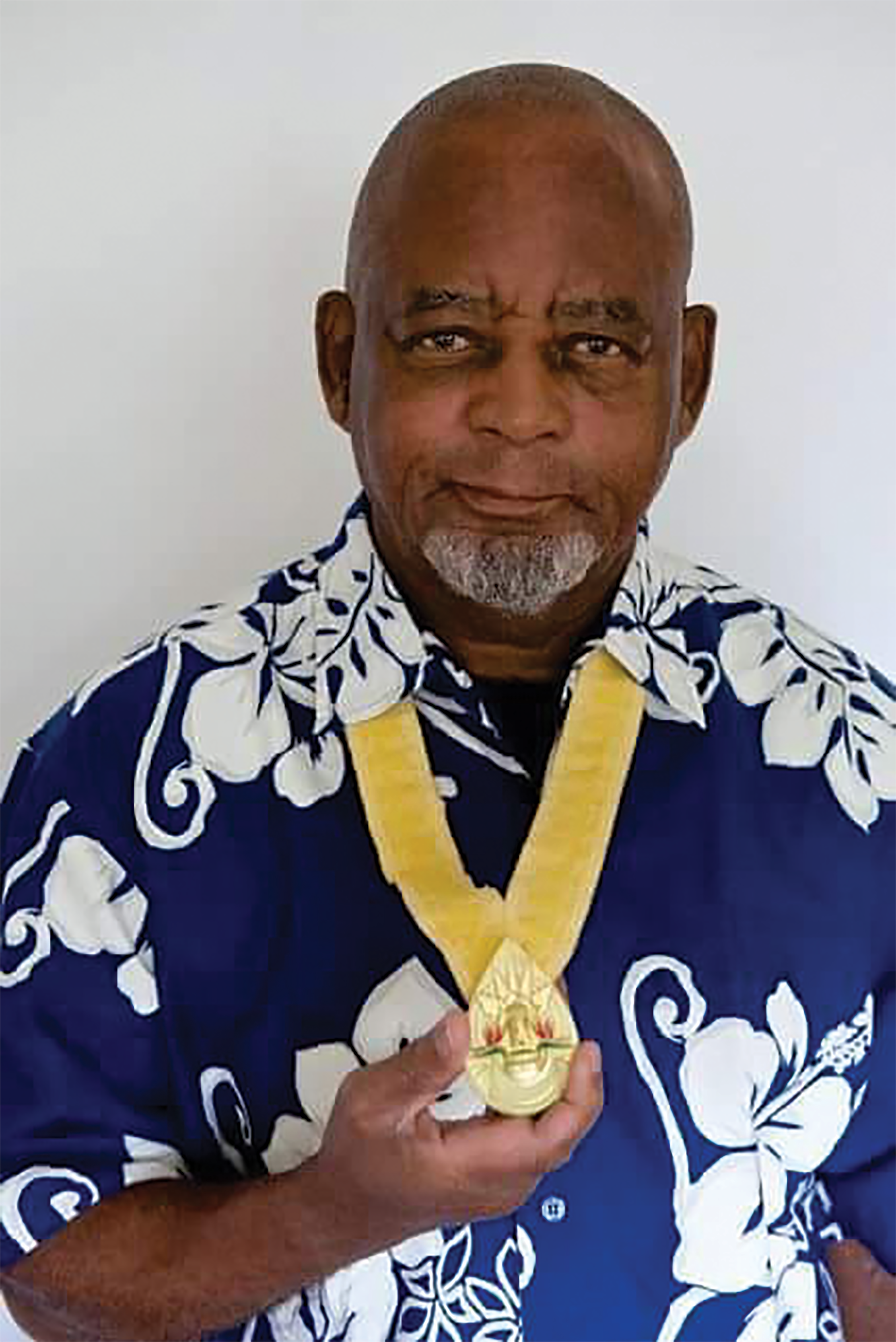
There’s nothing better than a free human being. This is the poignant assertion of Malombo Jazz Band founding member Julian Bahula, who died after an illness in Johannesburg at the weekend aged 85 and had spent the better part of his living days in exile overseas.
While Bahula is best remembered as a vital cog on drums in the famous three man outfit together with flautist Abe Cindi and guitarist Philip Tabane – which was formed in Mamelodi, Pretoria in 12 – his chief mission while he was the emancipation of his fellow South Africans from the vile shackles of apartheid.
Soon after he had arrived in London, England in 1973 together with several fellow members of the Johannesburg Hawks, what was uppermost in Bahula’s mind was how he could play a meaningful role in the liberation struggle as a musician and an activist, and to this end, he joined the African National Congress and worked tirelessly as an integral part of the Anti-Apartheid Movement fundraising ventures. Bahula later pioneered the Mandela Birthday Concert events. Saxophonist Hugh Masekela headlined the inaugural event in London in 1983.
While he was speaking to interviewer Clyde Macfarlane of the Quietus music magazine in January 2015, during which Bahula made the profound statement above, he state that “I don’t regret my career choices,” and that “There’s nothing better than a free human being. Then boldly declared that “I could’ve made a lot of money and forgotten the apartheid struggle, but that was never an option.”
It was thus unsurprising that at the time of his death, Bahula was a proud recipient of the Order of Ikhamanga, Gold, which he was presented by former President Jacob Zuma in 2012 for his commendable contribution to and achievement in in the field of music, the arts and the struggle for a free and democratic South Africa. In England, Bahula, who was born in Eersterust, Pretoria, South Africa in 1938, formed the group Jabula, which combined with saxophonist Dudu Pukwana’s band and became Jabula Spear in 1977, and later Bahula formed the Jazz Afrika band.
Bahula, who thrived as a composer, performer and music promoter who used music to keep the South African political struggle front of mind worldwide, also told Macfarlane that he used music as a weapon for the liberation struggle. “I used my music as a weapon; people would sit up and listen when we played,” Bahula said. “If we had left South Africa in 1963, I’m certain we would have made a big name for ourselves. South African music was just catching on at that time because Miriam Makeba had opened the gate. I toured South Africa with Steve Biko and a political theatre group called the Tecon players. We played at universities, and Steve would give incredible speeches about black consciousness. I decided to leave the country after that as it wasn’t safe, which proved to be a wise move. I brought the drums with me to England of course.”
After Macfarlane asked him about the inaugural Mandela Birthday Concert, which was also known originally as the African Sounds concert, Bahula said, “The ANC liked my idea of Free Mandela/65th Birthday concert, and its success led to ANC gigs in other countries like the Netherlands, Sweden, Denmark and Norway. The concert gave Mandela and other political prisoners an international profile, so it’s a great thing I came to this country. My contribution was easy because I enjoyed playing the music so much.
People stood up and took notice after the concert. I had many congratulations, both from the ANC and from people in England who opposed apartheid. By now everyone loved what I was doing musically.”
A memorial service was planned for the Mamelodi Community Hall in Mamelodi, Pretoria on Thursday.