 WeeklySA_Admin
OUTRAGE: As deadline for public comment draws nearer, petition to protest against drastic RAF amendments collects more than 13 000 signatures…
By WSAM Reporters
With two days left before the deadline for public comment on the contentious Road Accident Fund (RAF) Amendment Bill to be submitted, legal experts have again urged the Government to drop the drastic changes proposed to the current law.
They have warned that the proposed RAF amendments arguing will severely restrict the rights of drivers, passengers and pedestrians to claim compensation for injuries they suffer in a motor vehicle accident will be taken away. Established in 1997, the RAF provides compensation to the victims of road accidents. In its place, the bill proposes to provide significantly curtailed “social benefits”.
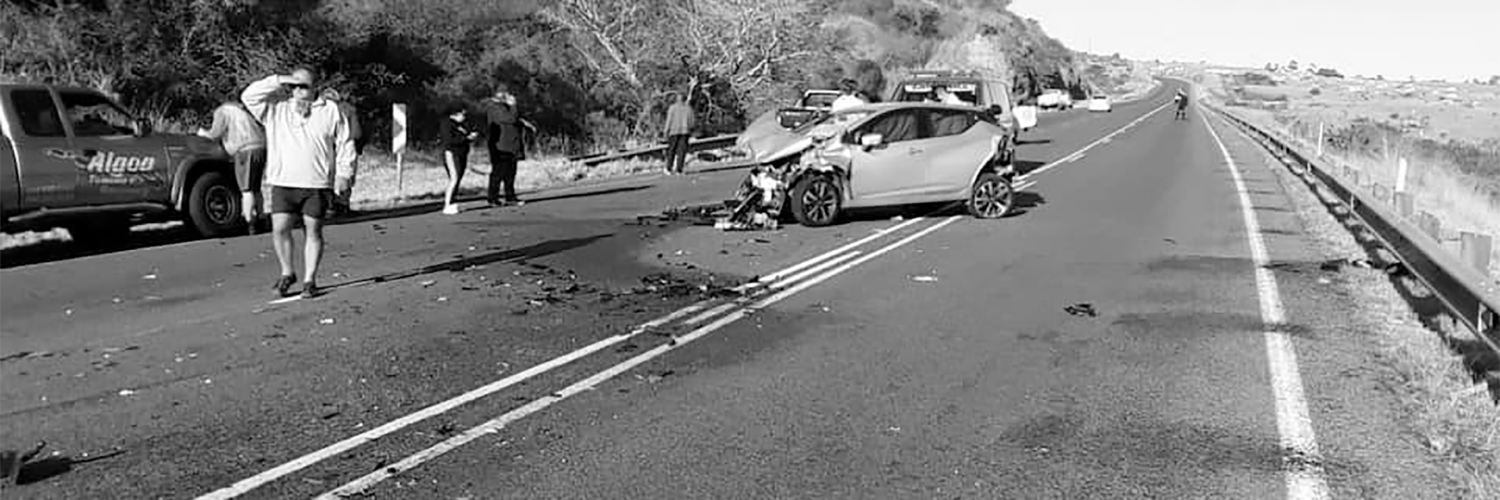
There are more than 800 000 road accidents in South Africa every year – which translates into roughly 2 200 crashes on our roads daily – according to the South African National Roads Agency. All road users contribute directly or indirectly to the fund through the fuel levy, estimated to be about R45 billion a year.
Growing public opposition to the draft bill have galvanised into a petition which has attracted more 13 000 signatures through DearSouthAfrica public participation platform, calling on the Government to desist from interfering with the current RAF law.
The Personal Injury Plaintiff Lawyers Association (Pipla), which represents about 300 personal injury lawyers, has been working collaboratively with a number of law societies to raise objections to the proposed amendments since the Department of Transport published a draft bill on September 8. The last effective day for public comment is on Sunday.
In interviews with various media, Advocate Justin Erasmus said the changes offered very limited benefits and amounted to a drastic restriction of existing rights, which will affect all South Africans, particularly the poor and marginalised.
He said it was baffling that the RAF sought to change the current law when there was nothing wrong with it, and when the body had claimed to have reserves running to millions in their financial reporting last year.
“The question then is, if it ain’t broke, why fix it?” he asked in a television interview this week. In effect, limited benefits will be paid and the changes amount to a drastic restriction of existing rights which will affect all South Africans. Some of the most important restrictions on existing rights are:
Currently, a claim for loss of income is paid out in a lump sum. Under the new system claimants will receive annuity (partial) payments that will eventually equal the lump sum.
There is also the qualification that the amount payable is subject to periodic review of the Fund’s liabilities. If a claimant dies before the full annuities are received the payments will stop and their heirs will inherit nothing. Claimants will no longer receive compensation for pain, suffering, disfigurement and shock as this category of damage will be totally abolished.
The Bill seeks – among other things – to:
- Reorganise the powers and functions of the Fund;
- Repeal the Fund’s authority to appoint agents to administer claims;
- Simplify the Act by moving procedural and administrative matters to the regulations and Board Notices; to limit the liability of the Fund to motor vehicle accidents occurring on public roads;
- Remove the obligation for the Fund to compensate a third party for non-pecuniary loss; and
- Provide for the provision by the Fund of injury and death benefits subject to prescribed limits and periodical review. Innocent injured parties also would still be denied the common law claim against the guilty party for the balance of his or her loss.
In its 2020 annual report, the RAF said, as part of the transformation of the Fund, certain aspects of the Act would be reviewed to focus on areas that contribute largely to the financial sustainability and easing of the administration of the Fund.
In a comment to the Saturday Star, Collen Msibi, spokesperson for the Department of Transport, said, “The bill is out for comments. The department will welcome all views and suggestions for its consideration.”
To become a law, the bill will be considered by and pass through both Houses of Parliament, National Assembly and the National Council of Provinces. Once passed by both Houses, it will be referred to the President for his approval to become law. Following the approval, it will be published in the Government Gazette as Acts of Parliament.
PROPOSED RAF CHANGES INVOKE PUBLIC FURY
CONTENTIOUS: What are the consequences of the new Road Accident Fund Amendment Bill 2023?
By Raznae Narayanasami
The Department of Transport published a draft Road Accident Fund Amendment Bill on 8 September 2023. The amendment bill aims to make a lot of changes to the way the RAF actually works, but one of the more contentious points is moving away from a compensation model to a “social benefits” model.
Should the draft bill come into effect as law, the rights of drivers, passengers and pedestrians to claim compensation for injuries which they have sustained in a motor vehicle collision will be severely prejudiced. This article aims to highlight some of the more important restrictions on existing rights that the public should be aware of.
Loss of earnings
Loss of earnings are currently paid out to claimants in a lump sum. This amount is capped subject to inflation. However, under the new system, a claimant will receive annual payments that will eventually equate to the lump sum. The amount payable to victims will be subject to a periodic review of the RAF’s liabilities. If the claimant dies before the full amount is received, the payment will automatically stop, and heirs will not benefit.
A periodical re-assessment means that a claimant will have no certainty on whether future benefits will be payable. Essentially, the loss of earnings compensation is put into place to put a claimant back in the financial position they would have been but for the accident and without a lump sum payment or a guaranteed annual payment, a claimant would have little or no chance of attaining financial rehabilitation.
General damages
Currently, claimants receive compensation referred to as general damages, which is an amount of money awarded for pain and suffering for claimants that have sustained serious injuries. The new system seeks to abolish the claim for general damages from the RAF. It must be taken into consideration that by removing the claim for general damages, some victims may end up receiving no benefits from the RAF, even if they sustained serious injuries.
An example may be of a pensioner or an unemployed person who was rendered a paraplegic or quadriplegic, or who may have suffered an amputation or significant brain injury. All these injuries have a severe impact on the victim’s activities of daily living and emotional well-being and have permanent and lasting consequences for the victim for the rest of his/her live, yet the victim will not be compensated for the pain and suffering he/she will suffer for the rest of their lives.
Medical expenses
Another major effect of the amendment which will have a direct impact on the public is that medical aids will no longer be able to be reimbursed for accident-related medical expenses which they pay out. This will drastically increase premiums for all medical aid members because the industry is forced to mitigate the risk of members not being covered by the Road accident Fund.
The amendment bill adds a list of circumstances where claimants are explicitly excluded from receiving compensation from the RAF. This includes zero liability on the fund where:
- The accident did not occur on a public road. Currently, a claimant is covered for negligent driving of a motor vehicle irrespective of where the accident took place. The draft bill proposes that in order for a claimant to qualify for compensation, the accident must have occurred on a public road. For example, injuries suffered by persons in a parking lot, driveway of their home or other private roads will not be covered.
- Hit and run accidents. Currently a claimant is covered if there is a hit and run accident. The bill seeks to abolish the so-called hit and run accidents and excludes claimants from claiming compensations where the motor vehicle is unidentified.
- Any driver, pedestrian, or cyclist is over the legally prescribed alcohol limit, regardless of who caused the accident, or was a pedestrian crossing a highway. This also excludes their dependents from claiming a loss of support, should they pass away as a result of the motor vehicle accident.
- The vehicle operator’s passenger liability insurance cover provides cover in relation to the passengers injured or killed in the motor vehicle accident.
- The motor vehicle accident occurred in circumstances where a producer, importer, distributor, or retailer is liable for the harm caused by, or arising from the driving of a motor vehicle involved in the accident, as is contemplated in section 61 of the Consumer Protection Act, 2008 (Act No. 68 of 2008).
- The motor vehicle accident occurred in circumstances where the motor vehicle was driven while filming a movie or an advertisement, or during drag racing, or during the performance of a stunt, or a similar event.
- The claimant is not a South African citizen or direct permanent resident as defined in the Immigration Act, 13 of 2002 (as amended).
As highlighted above, should the proposed bill come into effect this will have dire consequences for the public as a whole. Therefore, the public is encouraged to participate by objecting to the proposed bill before 8 October 2023. Objections can be made at https://dearsouthafrica.co.za/road-accident-fund/.
- Article sourced from Adams & Adams and GoLegal