 WeeklySA_Admin
TRIAL: They claim to suffer from various health conditions and stated that they are financial providers for their families….
By WSAM Reporter and SA news
Two former apartheid-era police officers, who were convicted for the premeditated murder of Congress of South African Students (COSAS) leader, Caiphus Nyoka, will remain in custody pending judgment in their bail application.
Former Sergeant, Abraham Hercules Engelbrecht and former Sergeant Pieter Stander (60) were convicted in the Pretoria High Court recently for the 1987 murder of Nyoka while a third accused, Major Leon Louis Van Den Berg, was acquitted.
“Following their conviction, the two applied for bail pending sentencing. In affidavits before the court, they claimed to suffer from various health conditions and stated that they are financial providers for their families.
“The state opposed their release, arguing that both men were convicted of a serious offence, they pose a flight risk, particularly Stander, who has previously worked outside South Africa and failed to fully disclose potential assets abroad, despite having worked in Iraq and Afghanistan since 2015,” National Prosecuting Authority (NPA) spokesperson Lumka Mahanjana said.
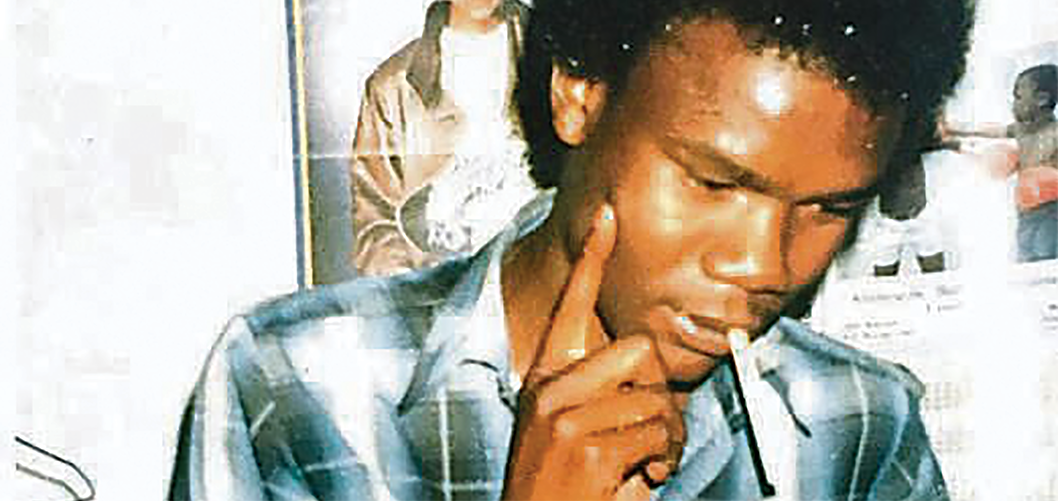
Nyoka – who was a prominent anti-apartheid activist and student leader – was killed in a hail of bullets at his family home in Daveyton, in 1987.
“On the evening of 23 August 1987, Engelbrecht and Stander, both members of the Reaction Unit within the then South African Police, met to plan the killing of Nyoka. “They devised a plan to raid his home. In the early hours of 24 August 1987, at approximately 2.30 am, Stander, Engelbrecht and other Reaction Unit members arrived at Nyoka’s homestead and stormed his room. They found him sleeping with three friends.
“After identifying Nyoka, they removed his friends from the room and proceeded to shoot him nine times. He died on the scene from multiple gunshot wounds,” Mahanjana said.
Judgement on the bail matter has been reserved while sentencing proceedings are to be heard in July 2026.
Another former apartheid-era police officer, Johan Marais, who was with the co-accused, pleaded guilty to Nyoka’s murder in the North Gauteng High Court in Pretoria. He was sentenced to 15 years direct imprisonment by Judge Mokhine Mosopa on July 10 this year. The court found that he had failed to take the court into his confidence and that his expression of remorse was unconvincing.
The bullet-riddled body of Nyoka, a student activist, was found in his room after Marais and several other police officers kicked the door open and burst into his room in the backyard of his parents’ home in Daveyton, Springs in the early hours of August 23, 1987 where he was sleeping with three of his friends.
It was the State’s case that Nyoka’s murder was planned by apartheid police officers. After identifying him, his three friends were removed from the room and Nyoka, who was also President of the Students Representative Council at the local Mabuya High School, was murdered. He died in a hail of bullets fired by the police.
After struggling for 37 years to identify his killers, Nyoka’s family breathed a sigh of relief at last that could bring closure to this tragedy when Marais (65), who was the Section leader of the Reaction Unit 6 in Dunnottar, Springs, pleaded guilty to his murder.
Charges of murder against the former apartheid police officers emanated from the findings of the Truth and Reconciliation Commission which established – after evidence from several witnesses including the police – that Nyoka was executed by police in cold blood. Three of his friends – Excellent Mthemba, Exodus Nyakane and Elson Mnyakeni – were taken to the Benoni Headquarters of the Security Branch and tortured.
‘’ The Commission finds that the killing of Mr. Caiphus Nyoka by members of the Benoni Security Branch constitutes a gross violation of human rights and holds the Minister of Law and Order, the Commissioner of Police and the Head of the former State responsible’’.
The Commission also found that the torture of Nyoka’s three friends, constituted a gross violation of human rights and held the Benoni Security Branch, the Commissioner of Police and the Minister of Law and Order responsible.
During the TRC hearings, Nyoka was allegedly linked to eight hand grenades and six limpet mines found on two men on 23 August 1987. The men told the police that they had received the contents of the bag from him, and that they were supposed to return to his home that night. The two men, Daniel Moseng and Moses Mahlangu, were taken to Daveyton police station and the bag was given to Sergeant Engelbrecht of the Security Branch.
Arrangements were made to arrest Nyoka. One of police officers, who knew Nyoka, was to identify and arrest him with the help of two sergeants. Any other people who might be in the room were to be removed, as the police did not know how Nyoka would react.
According to the TRC report, when the group of police officers arrived at the house, they knocked and ordered the occupants to open the door. Getting no reaction, they kicked the door. Inside, one of the police officers used his flashlight to identify Nyoka. He saw three other men and took them outside immediately.
‘’He heard Marais ordering Nyoka to keep still. The next moment he heard shots and ordered the three men to lie down on the ground’’.
Two police officers simultaneously shot at Nyoka when they saw him trying to reach for ‘’something like a weapon under the bed.’’
It was later established that Nyoka had sustained about ten gunshot wounds to his body.
Three of his friends were arrested and taken to Benoni police station for questioning. According to these three young men, they had attended a funeral in Daveyton with Nyoka and had gone to a shebeen together afterwards. In the evening, Nyoka said they could all sleep in his room. They talked about the funeral and then went to sleep until the police kicked down the door.
According to the TRC report, at the police station, the three were interrogated and tortured. Nyakane heard someone screaming while he was left in an office in the Daveyton police station.
‘’Later, he was placed in a locker and smelled tear gas fumes. He was taken to another office and his face was covered with a cloth causing him breathing difficulties.
He was given electric shocks on both hands. As the shocks continued, the cloth was tightened. He was hit in the face. An object was then put in his mouth and he was shocked again. He fell to the floor still handcuffed to the chair’’.
During the torture, he was questioned about whether he knew two other men, which he denied. He was later taken back to the previous room and placed in a locker again. He peeped through the door and witnessed two other people being put inside lockers.
He also heard more screams. He was later taken back to Daveyton and released. – SA news and WSAM Reporter.