 WeeklySA_Admin
LEGITIMACY: From John Paul II to Benedict XVI, papal visits to Cameroon have often come when Paul Biya’s government faced political turmoil…
By David Tonghou Ngong
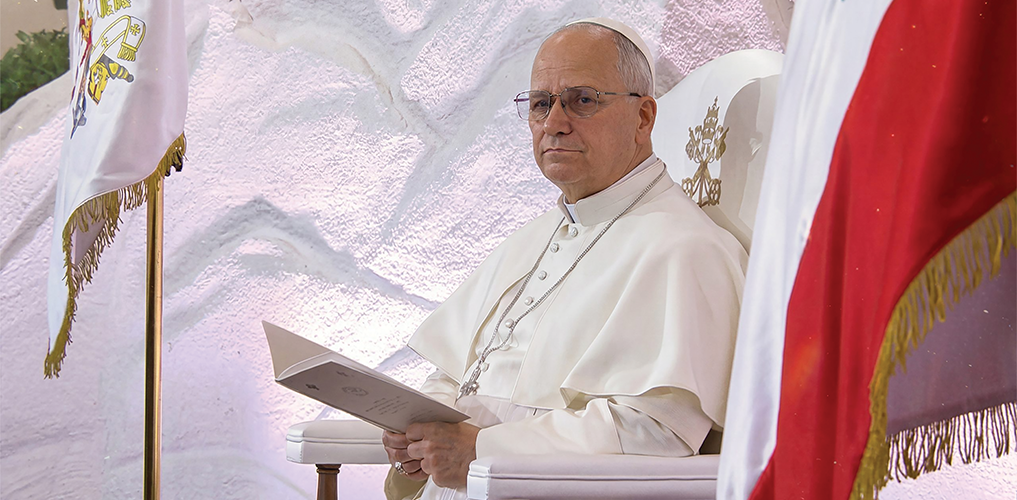
If Pope Leo XIV makes his visit to Cameroon, as announced last month, it will be the fourth time a Roman Pontiff has visited the central African country of about 30 million people.
The visit would put Cameroon on par with only one other African country that has received four papal visits in the last 40 years—Kenya, exceeding those made to the DRC (50 million Catholics) and Nigeria (25 million Catholics).
Why should Cameroon receive more papal visits than the DRC or Nigeria? Is Cameroon in need of more pastoral care than these two countries? Is Cameroon more important to Catholicism in Africa than, say, the DRC or Nigeria?
The timing of Papal visits to Cameroon is important to consider; they are usually made during times of crisis, periods of upheaval that threaten the survival of President Paul Biya’s regime. Pope John Paul II made the first visit to Cameroon in 1985.
Biya, a Catholic, had just been handed power by his Muslim predecessor, Amadou Ahidjo, in 1982. In 1984, there was an attempt to remove Biya through an unsuccessful coup d’état. Biya was still purging the government and the military when Pope John Paul II visited the country in 1985.
Even though the pope did not say much about what was happening at the time, news outlets did not fail to notice that he had come to give a Catholic president moral support. At the time, Biya had been president for a little more than two years.
The second visit from Pope John Paul II was in 1995, and the occasion was ostensibly to sign the synodal document Ecclesia in Africa. However, the early 1990s was a time of significant political upheaval in Cameroon. Biya had been forced by popular protests to consent to multiparty democracy.
A highly contested election took place in 1992 that was believed to have been won by the opposition candidate, Ni John Fru Ndi. When Fru Ndi declared himself the winner, he was placed under house arrest for about three months while Biya tightened his grip on power. This period also saw the murder of Catholic religious leaders in Cameroon, including Fr. Engelbert Mveng in April 1995, just prior to the Pope’s visit in September that same year.
Even though he raised the question of insecurity in Cameroon, the papal visit was seen as blessing the presidential couple, thus granting legitimacy to a brutal dictatorship.
In 2009, the third visit occurred under the papacy of Pope Benedict XVI. One year before this visit, Biya revised Cameroon’s Constitution to remove the presidential term limit. This change led to widespread riots and dozens of deaths. During the visit, Benedict XVI described Africa as a continent of hope but said nothing about the death and destruction orchestrated by the Biya regime.
Now, in the wake of recent and contested elections in Cameroon, with evidence that Biya’s win was rigged, Pope Leo XIV is planning what is being described as a pilgrimage and pastoral visit. A Cameroonian Catholic priest, Fr. Ludovic Lado, wrote to the Vatican urging the Pope not to visit under the circumstances. The Vatican ignored his entreaties, once again showing that when the Biya dictatorship is under stress, the Catholic Church, in the person of the Roman Pontiff, stands ready to lend moral and political support.
And herein lies the essence of Catholic neo-colonialism in Cameroon. Neo-colonialism describes a magic trick, a sleight of hand, that is designed to detract from where real power in a post-colony lies. In this case, the denizens of former colonies are given the impression that they are in control of their destiny, that they have a say in the government that rules them.
However, real power lies elsewhere, in a foreign land. It does not matter whether Cameroonians voted for the Biya regime. Biya always ends up stealing the election and brutalising the people.
And the Vatican is always on standby to grant the ignominious regime papal blessing. Here we see a Machiavellian appropriation of the church to sanctify state brutality and, in this case, the dehumanisation of Cameroonians.
If Pope Leo XIV goes to Cameroon next month, he will hold a Mass in which Biya and his wife Chantal will be center stage in the Eucharistic celebration. In that one act, the magic trick of Catholic neo-colonialism will again be performed.
* David Tonghou Ngong is originally from Cameroon and is a professor of religion and theology at Stillman College, Tuscaloosa, Alabama
It does not matter whether Cameroonians voted for the Biya regime. He always ends up stealing the election and brutalising the people. And the
Vatican is always on standby to grant the ignominious regime
papal blessing. Here we see a Machiavellian appropriation of the church to sanctify state brutality and, in this case, the dehumanisation of Cameroonians…
Comment
CAF’S DECISION UNDER SCRUTINY
The decision by Confederation of African Football to strip Senegal of their Africa Cup of Nations title which they won in January this year, and award it to Morocco has ignited a storm of controversy that goes far beyond the result of a single match.
At the heart of the matter lies not only the conduct of Senegal’s players, but also the consistency, credibility and timing of CAF’s disciplinary processes. There is little dispute that walking off the pitch—for about 20 minutes—constitutes a serious breach of football regulations. Such actions undermine the authority of match officials and disrupt the integrity of the game. If Senegal indeed violated CAF rules, then disciplinary measures were not only justified but necessary to preserve order and fairness in continental competitions. However, the critical question is not whether Senegal should have been punished, but when and how that punishment should have been applied.
CAF’s decision to act retrospectively, more than two months after the tournament concluded and the trophy had already been awarded, raises serious concerns about governance. By allowing the result to stand at the time—despite the alleged infraction—CAF effectively endorsed the outcome of the match and, by extension, Senegal’s triumph.
To reverse that decision later creates the impression of inconsistency and, worse, administrative indecision. Rules in sport must be applied swiftly and transparently. Delayed justice often feels like selective justice. To rub salt to injury, Morocco was awarded the title with a 3-nil victory.
From Senegal’s perspective, the sense of grievance is understandable. A national team cannot celebrate victory, return home as champions, and then be told months later that their achievement has been nullified. Such a reversal damages not only the players but also the supporters and the broader credibility of the competition. It also raises questions about whether proper procedures were followed immediately after the incident. Why was the issue not resolved before the final whistle was effectively ratified in the tournament’s official outcome?
On the other hand, Morocco’s protest highlights an equally important principle: that no team should suffer from an opponent’s breach of the rules. If Senegal gained any advantage—psychological or otherwise—from their temporary walk-off, then Morocco had every right to challenge the legitimacy of the result. CAF’s responsibility was to adjudicate that protest fairly and promptly, not belatedly. Fairness in sport is not only about the correctness of decisions—it is about their timing, transparency and consistency. In this case, CAF may have upheld its regulations, but it has done so in a way that leaves African football looking uncertain, reactive and deeply divided.
The CAF Appeal Board should be reminded that it was the referee who decided that the match must continue after the 20 minutes delay and his decision should be deemed final. It is a shame that results of Africa’s great soccer spectacle had to be decided in the boardroom.
We also wonder how the Morocco national team is going to celebrate such a huge victory – without having scored a single goal.